






A melody flowing through the mountains
Chen Chunfei turns inward, painting inner and spiritual landscapes inspired by Tibet’s sacred mountains. Her vivid canvases transmute the natural world into a site of calm and reflection, inviting viewers to slow down and look beyond the surface of things.
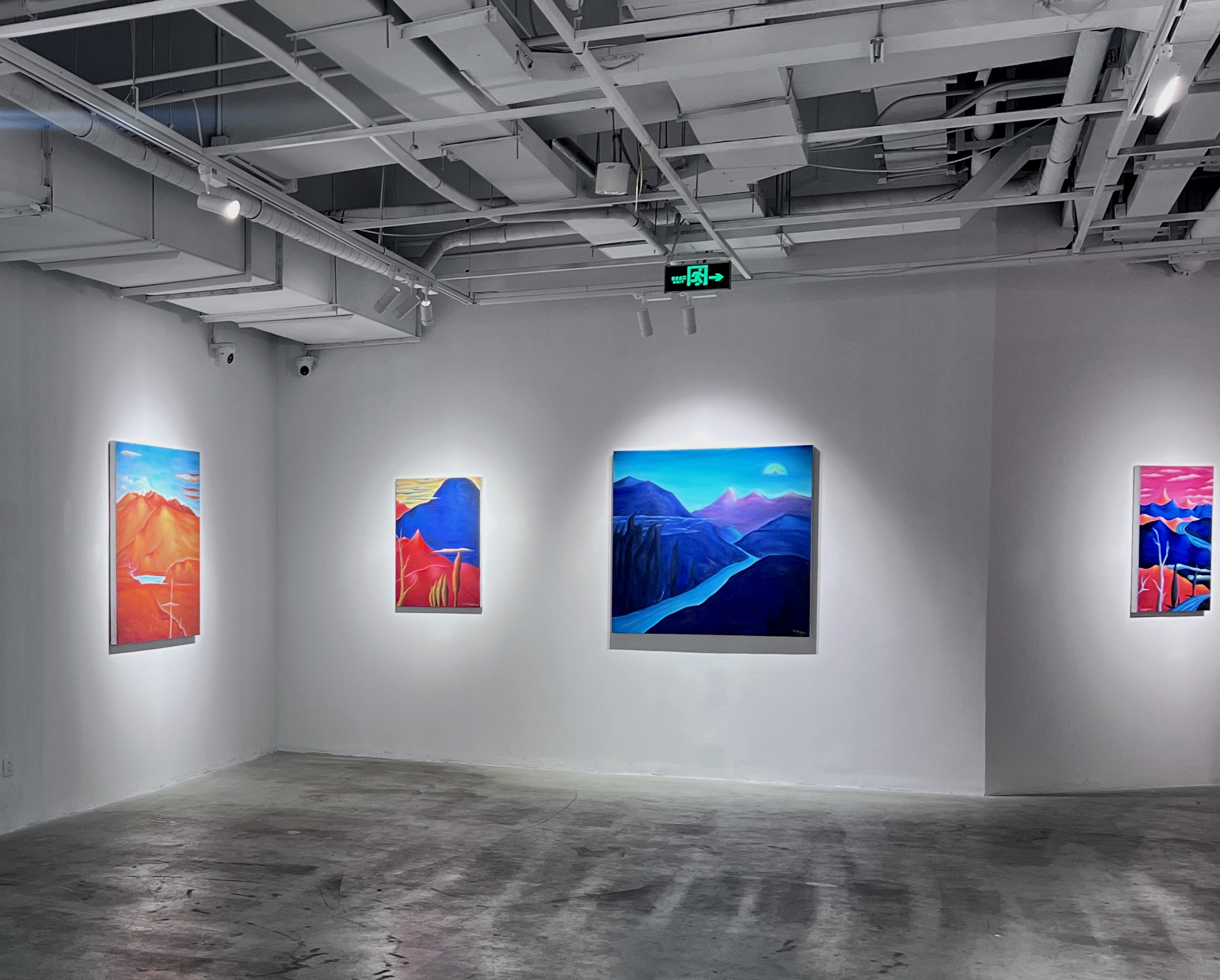
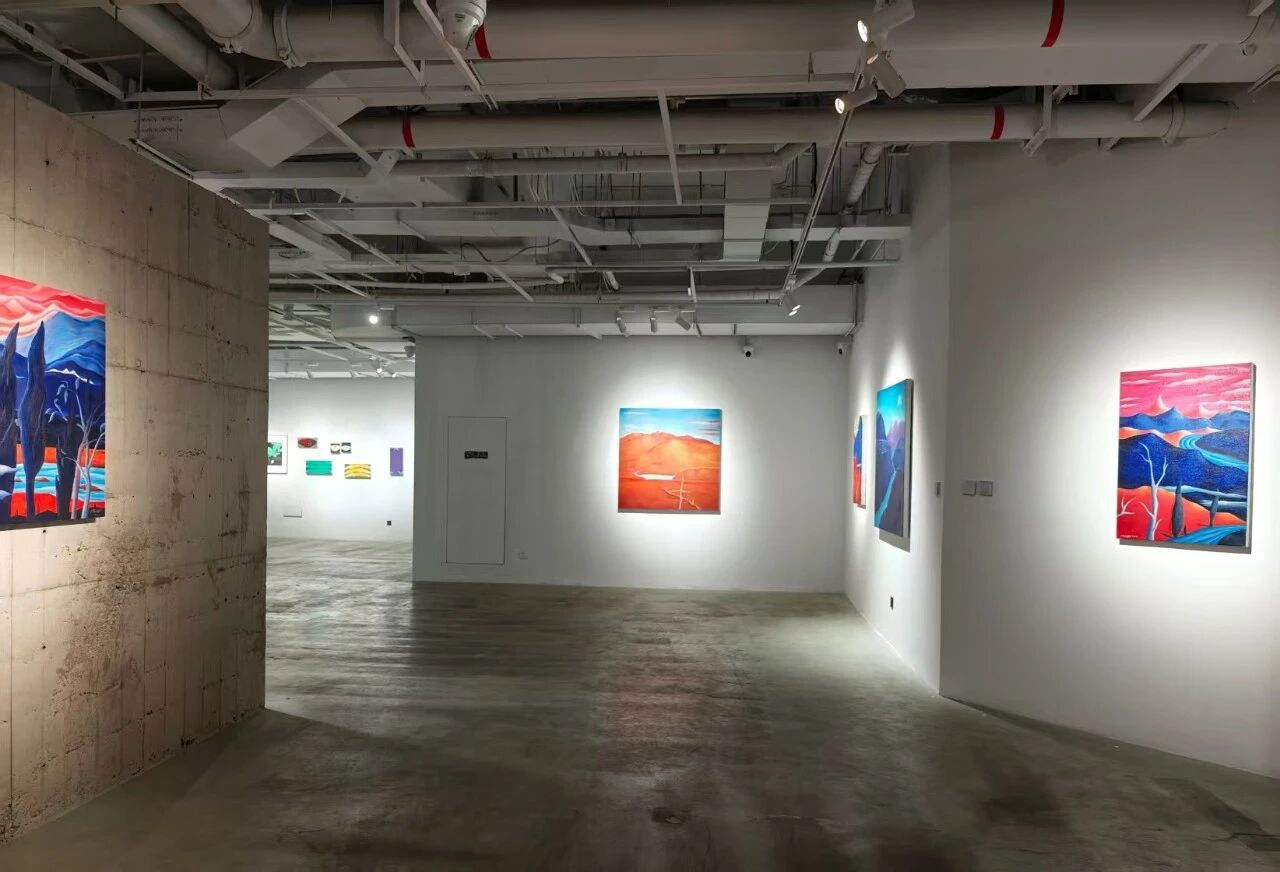
Art+
Your early works featured human figures, but they have gradually evolved into pure landscapes. Could you talk about the journey behind this change?
Chen Chunfei
In my early period (2000–2009), my paintings primarily explored surreal female figures. At that time, those figures seemed to express my adolescent self: I felt as if I had entered a fictional world and couldn’t find my way out. I experienced mild depression and often felt powerless.
In the winter of 2009, through a special opportunity, I encountered the shakuhachi. Through sustained sound practice, my energy and spirit gradually returned. Then, in the summer of 2018, a four-star hotel in Ganzi Prefecture invited artists for a residency. I happened to want to travel, so I applied and went. There, I was deeply struck by the sacred mountains and the azure sky. The clouds chasing the wind moved like musical rhythm, and the vast grasslands were purely green. My passion for painting was reignited by a mysterious yet radiant force. This profoundly shaped my understanding of painting and music—and set the direction for my later exploration.
After returning to my studio in Shanghai, I began stripping away a literal sense of place, reimagining the landscapes and deconstructing them onto the canvas. Gradually, this evolved into my current language.
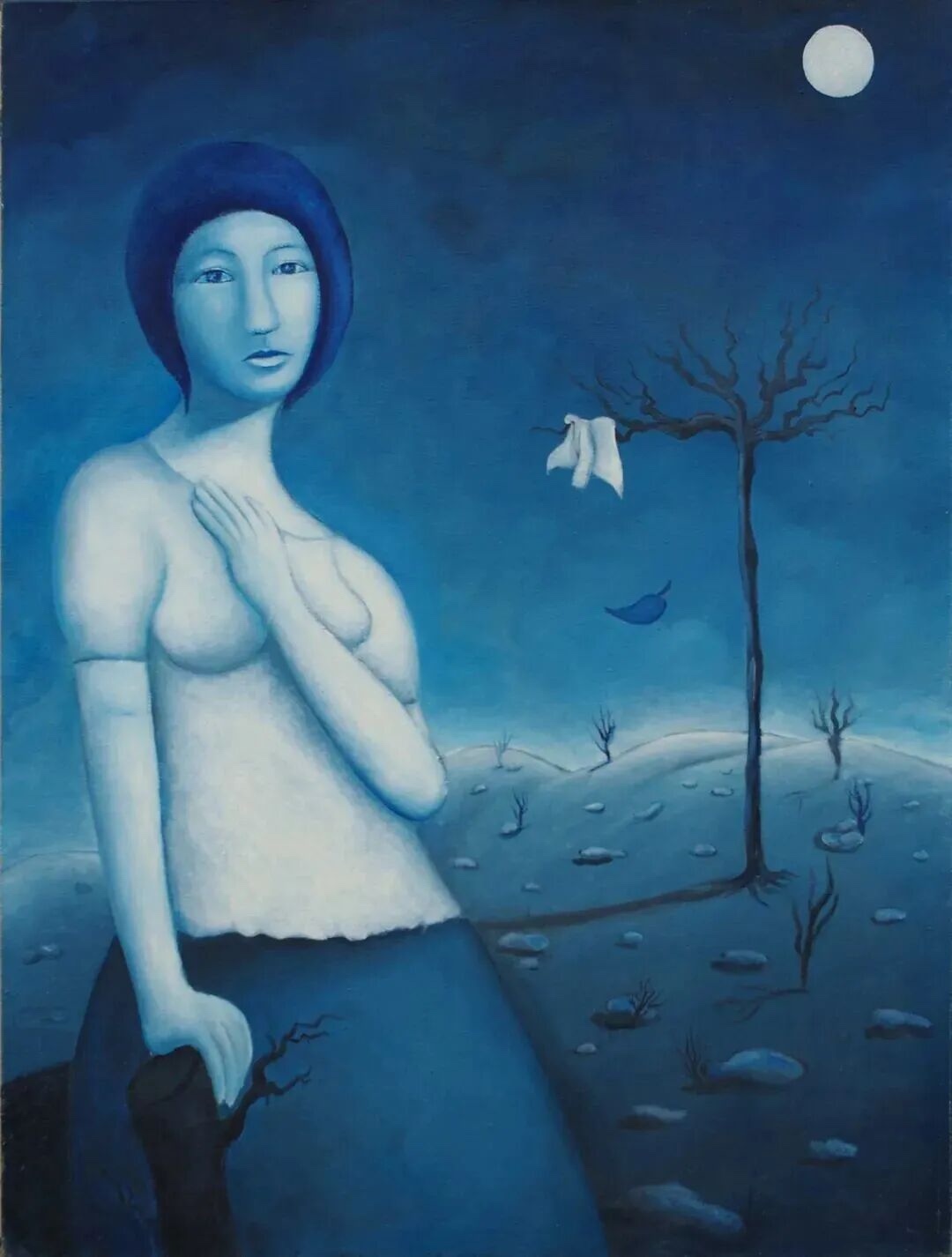
Moon Inside Heart
Oil on Canvas
90*100 cm
2009
 Moon Inside Heart
Oil on Canvas
90*100 cm
2009
Art+
You have said that Tibet is your spiritual homeland. How has it influenced you?
Chen Chunfei
What captivates me most on journeys through Tibet is the presence of pilgrims. Their pure faith often forces me to reflect on myself, and to re-evaluate ideas like “fast and slow” and “having and letting go.” The barren mountains, stripped of vegetation, reveal only geological textures, evoking an “outer-space” desolation. At such extreme altitude and light, you are forcibly stripped of your social labels, and a profound sense of insignificance arises.
The weather is unpredictable; “tomorrow” feels distant, and “this moment” becomes intensely real. Instinctively, you let go of anxiety about the future. You stand in awe of the cloud in front of you, the wind passing by, breaking free from everyday egocentrism and entering a state of mind that feels “rewarded” by nature. At times my body suffers, yet my spirit sharpens with startling clarity.
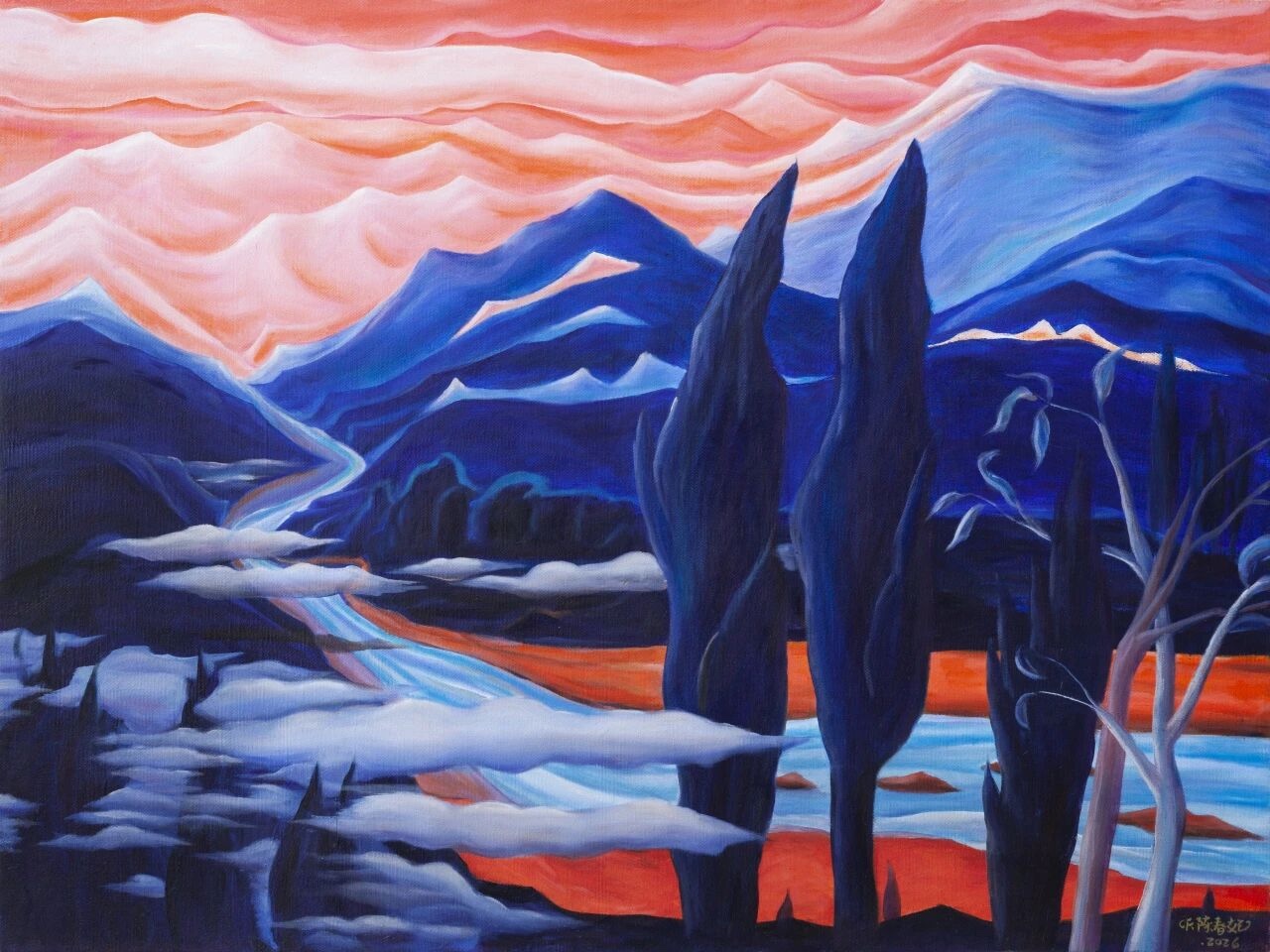
Homecoming Among the Shifting Greens
Oil on Canvas
90*120 cm
2026
Chen Chunfei
Music is the art of time; painting is the art of space, but at the deepest level, they are connected.
Music has melody, harmony, and rhythm; painting has dots, lines, planes, color, and composition. High notes can be likened to light colors; low notes to dark ones. Fast rhythms correspond to sharp, leaping lines, while slow rhythms resemble the movement of breath. Even “warm colors” carry a felt sense of temperature, like a warm, luminous musical movement. I draw on these correspondences when structuring a painting.
In my landscape explorations of recent years, I often summarize forms with large color blocks: one mountain might be a single color, one tree another, with clear boundaries between each block. My palette relates to the mood of the day, warm tones if I feel passionate inside, cool tones when I feel calm. Compositionally, I think in terms of the painting’s breathing rhythms: repetition, contrast, development, and variation.
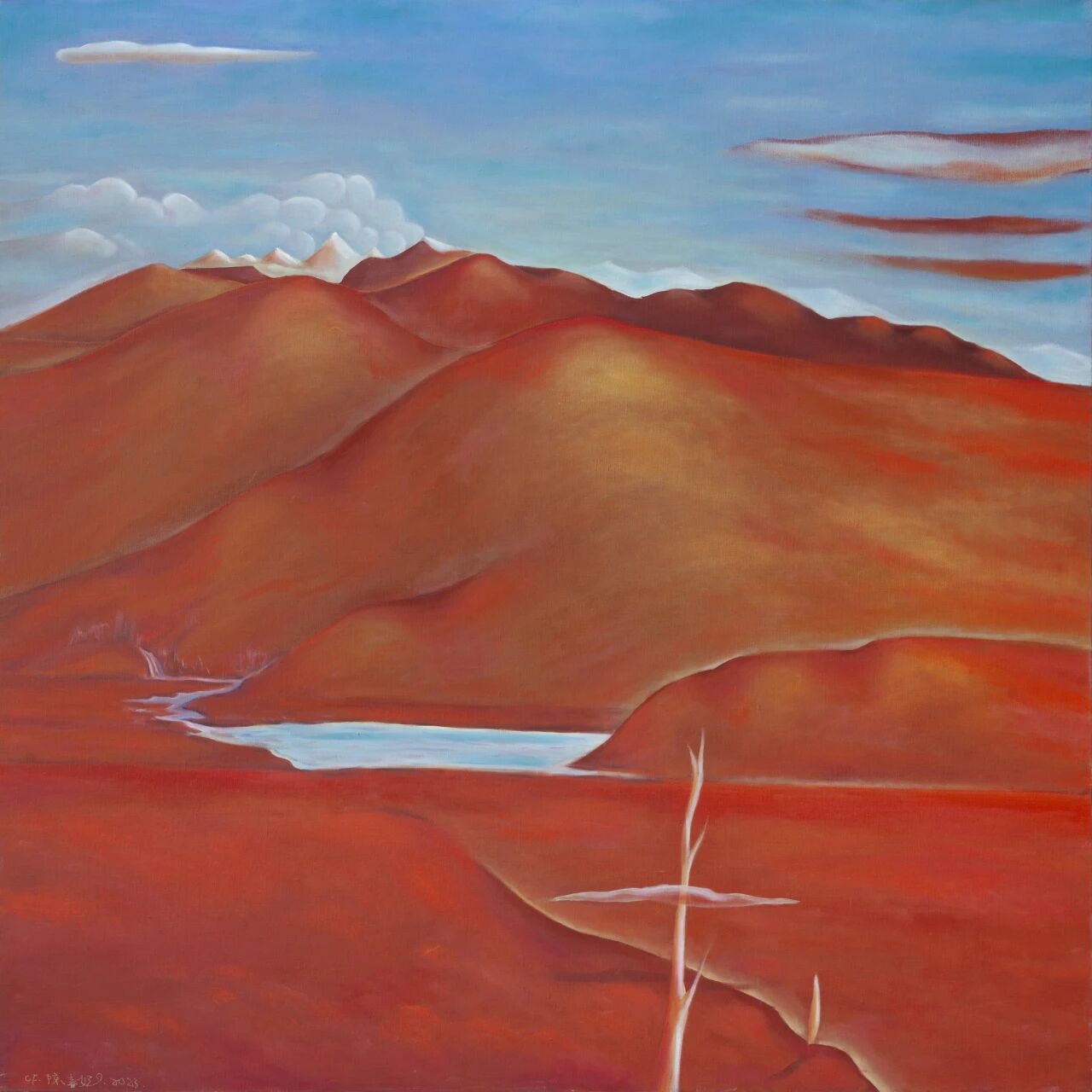
A Tander Breeze
Oil on Canvas
120*120 cm
2024
Art+
High-purity color seems central to your work. For example, Warm Breeze and When Tree Shadows Deepen, Night Grows Light form a distinct contrast between warm and cool. How do you balance the rhythms among colors?
Chen Chunfei
My works often merge figurative and abstract forms around spiritual themes, especially nature, the soul, and philosophical imagery. Through geometric composition and contrasts of light and shadow, I try to express a transcendent sense of ascent.
Take those two works. Warm Breeze expresses the golden energy of daylight diffusing in a calm, warm current of breath. When Tree Shadows Deepen, Night Grows Light suggests a gentle return to, and enjoyment of, inner light after the day ends. The two paintings feel like mirror images: one leaning toward sunlight, the other sinking into moonlight.
When it comes to high-purity color, I don’t so much “control” it as shape a sense of visual temperature and weight.
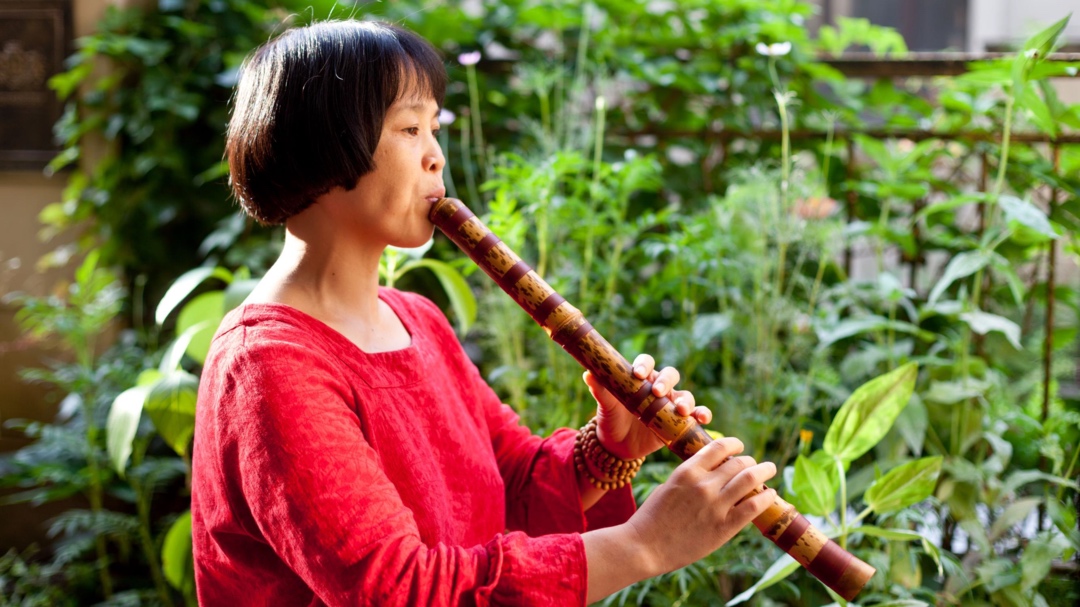
Because I train daily with the shakuhachi, a flute deeply rooted in Eastern aesthetics, breath and energy guide my compositional research. I often think: the main color sets the tone; contrast creates breathing; value determines rise and fall. I avoid equal distribution. I never let warm and cool colors face off fifty-fifty; instead, I establish an absolute sovereign color.
In Warm Breeze, orange-yellow occupies about seventy percent of the canvas, with cool colors appearing only as punctuating “energy points.” In When Tree Shadows Deepen, Night Grows Light, Prussian blue and ultramarine establish the base, while warm hues are condensed into the light source or the reflections on leaf tips. This dominance of purity across a large area ensures emotional clarity.
I also use gray and white as buffer zones. If high-purity colors collide too densely, they become restless. I often introduce “chaos colors” at the junctions of warm and cool, warm whites with cool-gray undertones, or diluted light blues. These neutral tones act like mountain mist: they give the warmth of Warm Breeze space to drift, and prevent the deep blues of Night Grows Light from becoming suffocating.
Rather than emphasizing warm–cool opposition, I value the scale of pinks, whites, and grays. Although Night Grows Light is cool, the heavy dark blocks at the base of the tree shadows and the brighter sky above create a pull between sinking and lightness. In Warm Breeze, the high-purity warm hues concentrate in the mid-tone range, avoiding excessive brightness, allowing the mountains to rise and fall with a breathing rhythm.
When I paint, I treat colors as temperatures of memory. My body and mind enter a state of ethereal clarity, and the rhythm flows naturally. The colors are not “balanced”, they are felt.
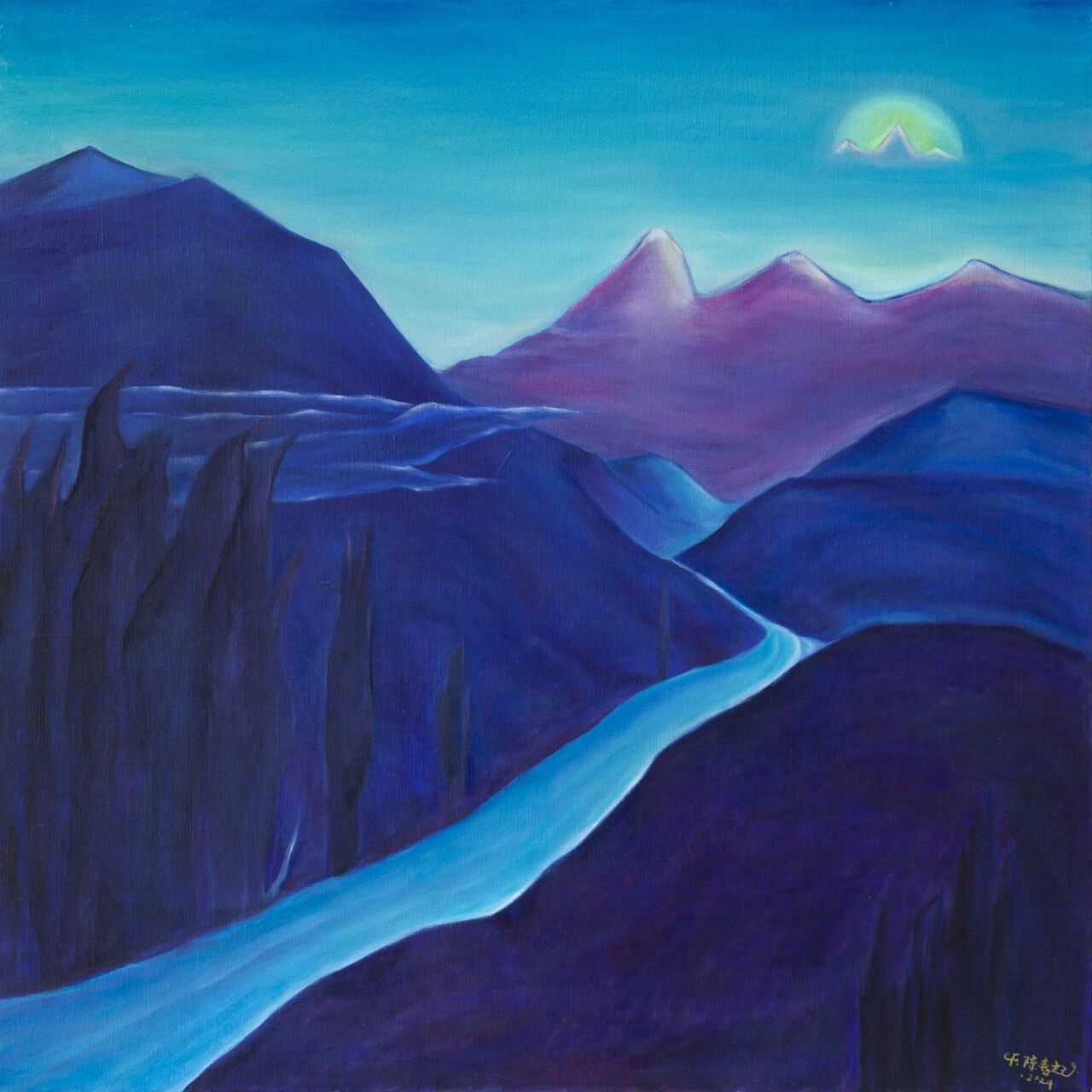
When the tree shadows deepen, the night grows light
Oil on Canvas
120*120 cm
2024
Art+
Your landscapes often feel healing. What do you hope viewers gain when standing before your paintings, escape, or an invitation inward?
Chen Chunfei
I hope viewers gain the freedom to look in their own way, without preset expectations. To feel the work’s energy, to embrace whatever emotions arise, and to hold themselves with compassion.
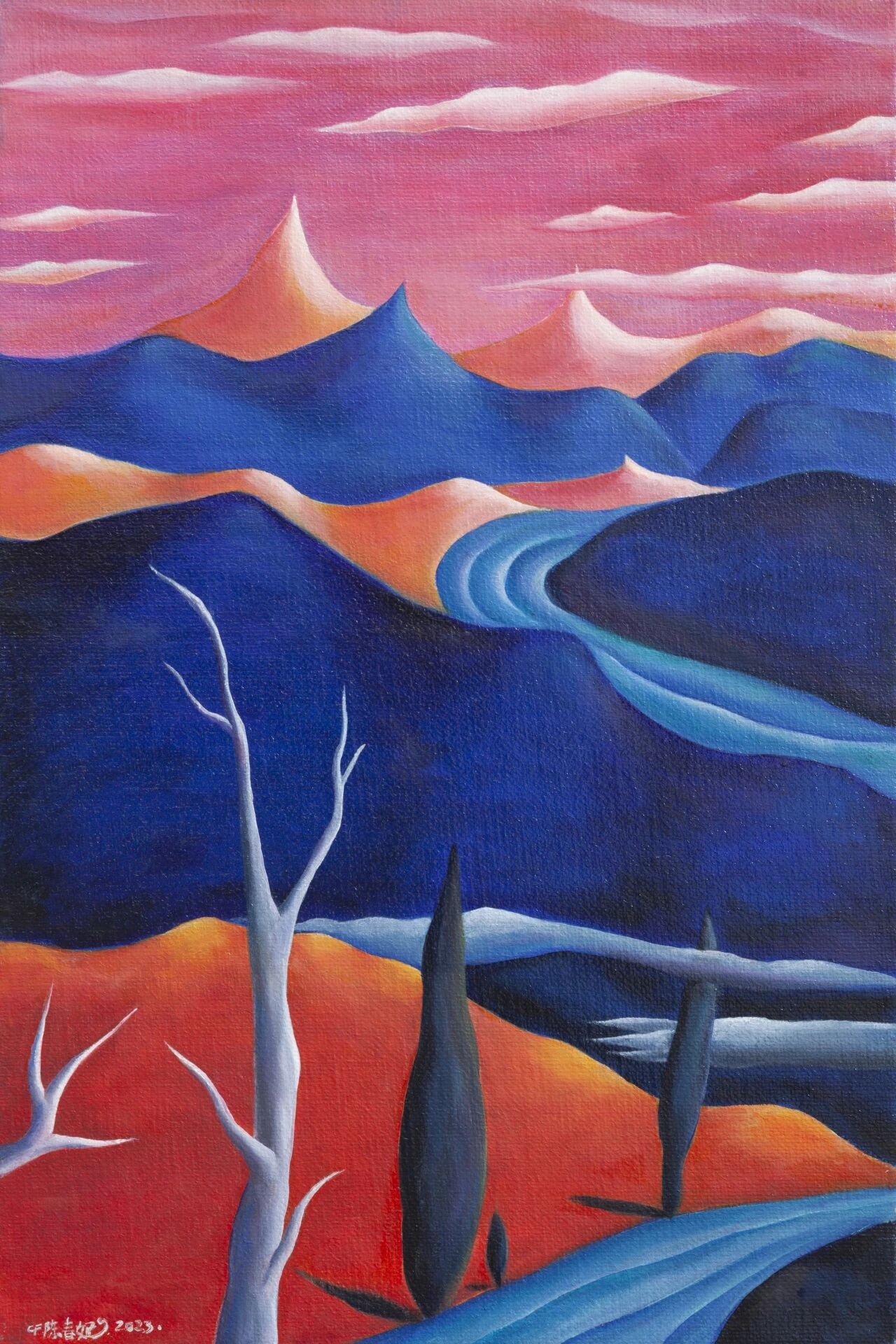
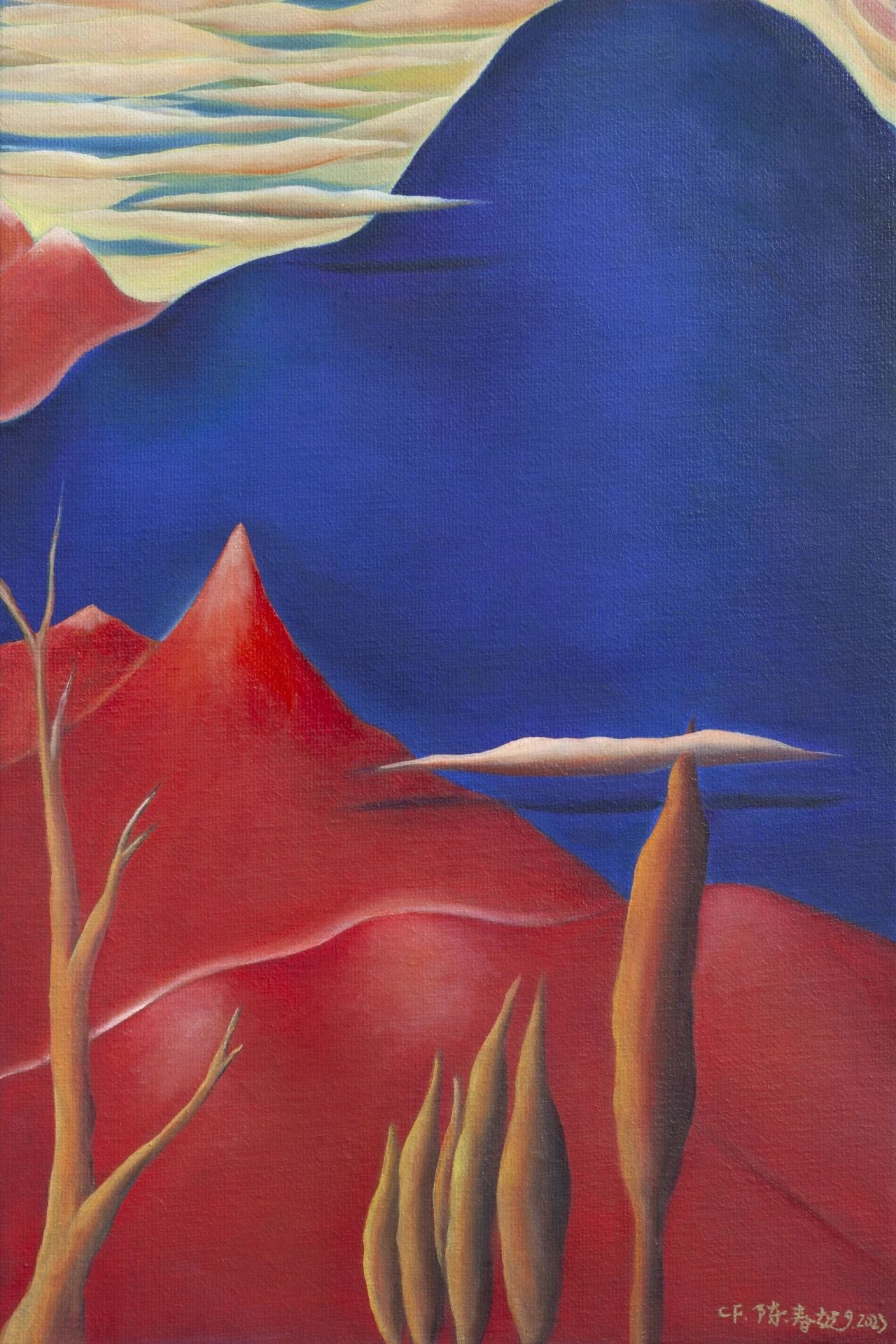 The Landscape with a Forgotten Name - 23
Oil on Canvas
90*60 cm
2023
Art+
What are your thoughts on what people now call “female power”? What do you think people are really talking about?
Chen Chunfei
To me, “female power” is not essentially about what women should become, but about women finally being able to be undefined.
It is not about being superior to men, nor about imitating masculine traits. It is about autonomy, resilience, diversity, and freedom from patriarchal constraints. It is about the power of choice and the redefinition of value.
In my work, I avoid prescribed tropes, no pandering, no presuppositions. For me, the best way to convey a female perspective is this: in every response, affirm that women are the subjects of their own stories, not objects under another’s gaze.
Art+
Use three adjectives to describe your paintings.
Chen Chunfei
Calm. Passionate. Pure.
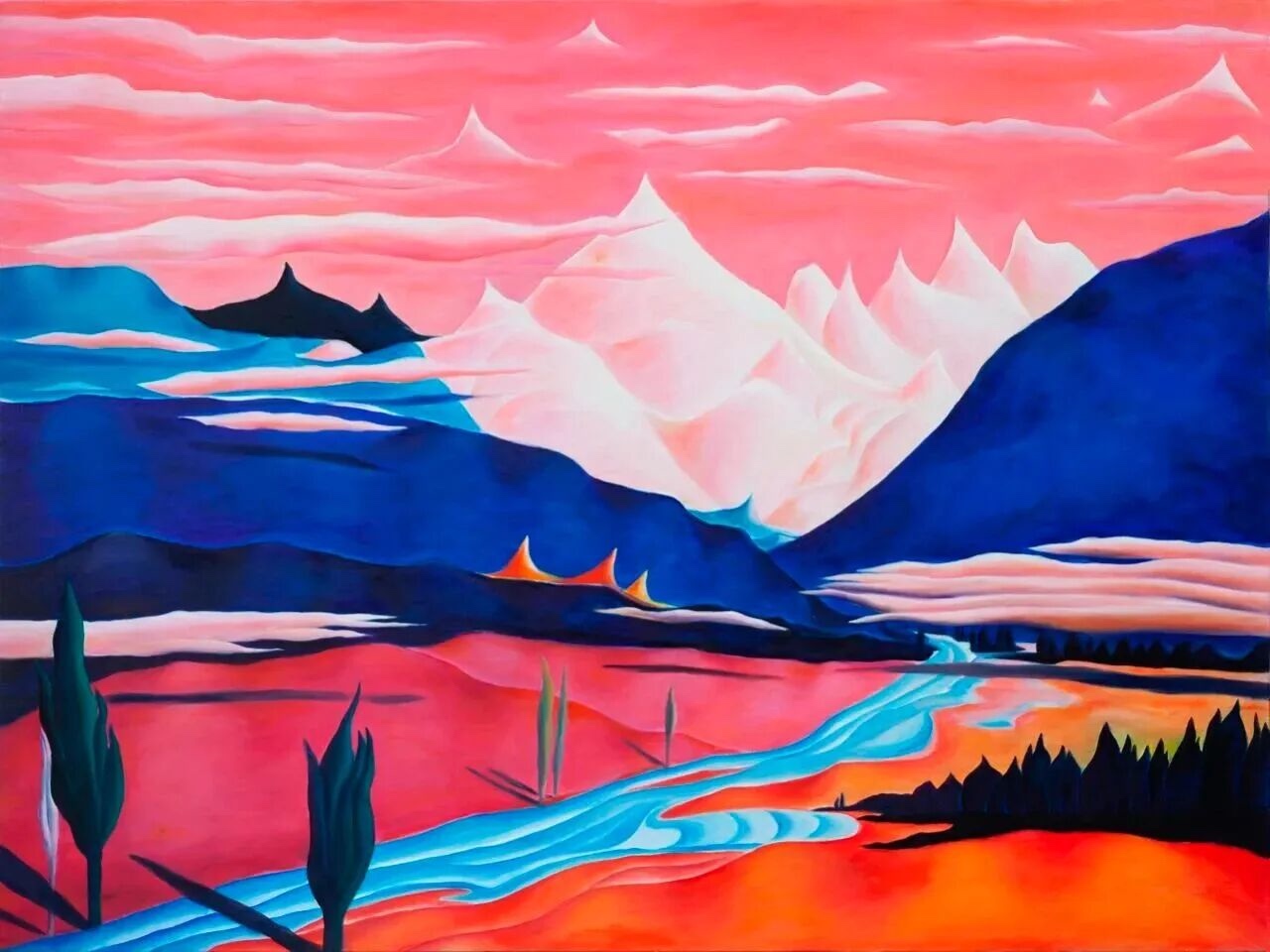
Cloud Serenity - 7
Oil on Canvas
120*160 cm
2023
About the Artist
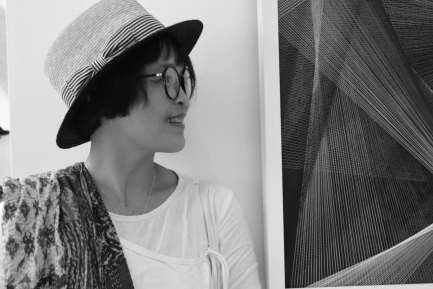
Chen Chunfei (b. Guangxi, China) is a painter based in Shanghai whose practice unfolds across an evocative vocabulary of dreams, clouds, nature, and music. Working primarily within the lineage of Shanghai-school abstraction, she translates inner states and lyrical impressions into atmospheric, sensorial compositions, a sensibility reflected in the titles of exhibitions such as Painting Dreams (2015), Song of the Nightingale (2018), and Searching for You Through That Cloud(2023).
Active since 2008, Chen has developed a sustained body of work shown widely across China and internationally. Her solo and duo exhibitions include Habitat (M50 NONE PROJECT, Shanghai, 2025), Searching for You Through That Cloud(West Bund Xingyang Center, Shanghai, 2023), Sensibility and Rationality with Gu Benchi (Jieming Gallery, Shanghai, 2022), and From One Cloud to Another (Jiaxing Dihara Art Museum, Zhejiang, 2021).
Her work has featured in numerous group exhibitions, including Everyone (Tokyo Art Museum, 2014) and a long-running engagement with women artists' platforms, among them presentations at the Cooper Art Museum, Huzhou Art Museum, and Shanghai Sifang Art Center. Recent group showings include Realm of Symbiosis and Symbiotic Narratives(Songyang, Zhejiang, 2025) and Reconstructing the Narrative of Life — Her One Square Meter (Cooper Art Museum, Shanghai, 2025).
