Scan our QR code to stay updated with the recent news and upcoming events.
Scan our QR code to stay updated with the recent news and upcoming events.

There is a quiet paradox at the heart of Chen Linggang's work. Each piece presents itself with an almost architectural regularity, small squares, precise grids, orderly surfaces, yet beneath this measured exterior lies a restless inquiry into everything we think we know about culture, history, and ourselves.
Born in 1978 in Jilin Province and now based in Beijing, Chen belongs to a generation that came of age alongside China's reform and opening up, a generation caught between inherited traditions and the accelerating pull of globalization. His art does not narrate this tension so much as embody it. The grid, his signature compositional device since 2008, functions less as a formal constraint than as a philosophical proposition: that the world is made of discrete, repeating units, each person, each day, each page of a book, that are at once autonomous and inseparable from the whole.
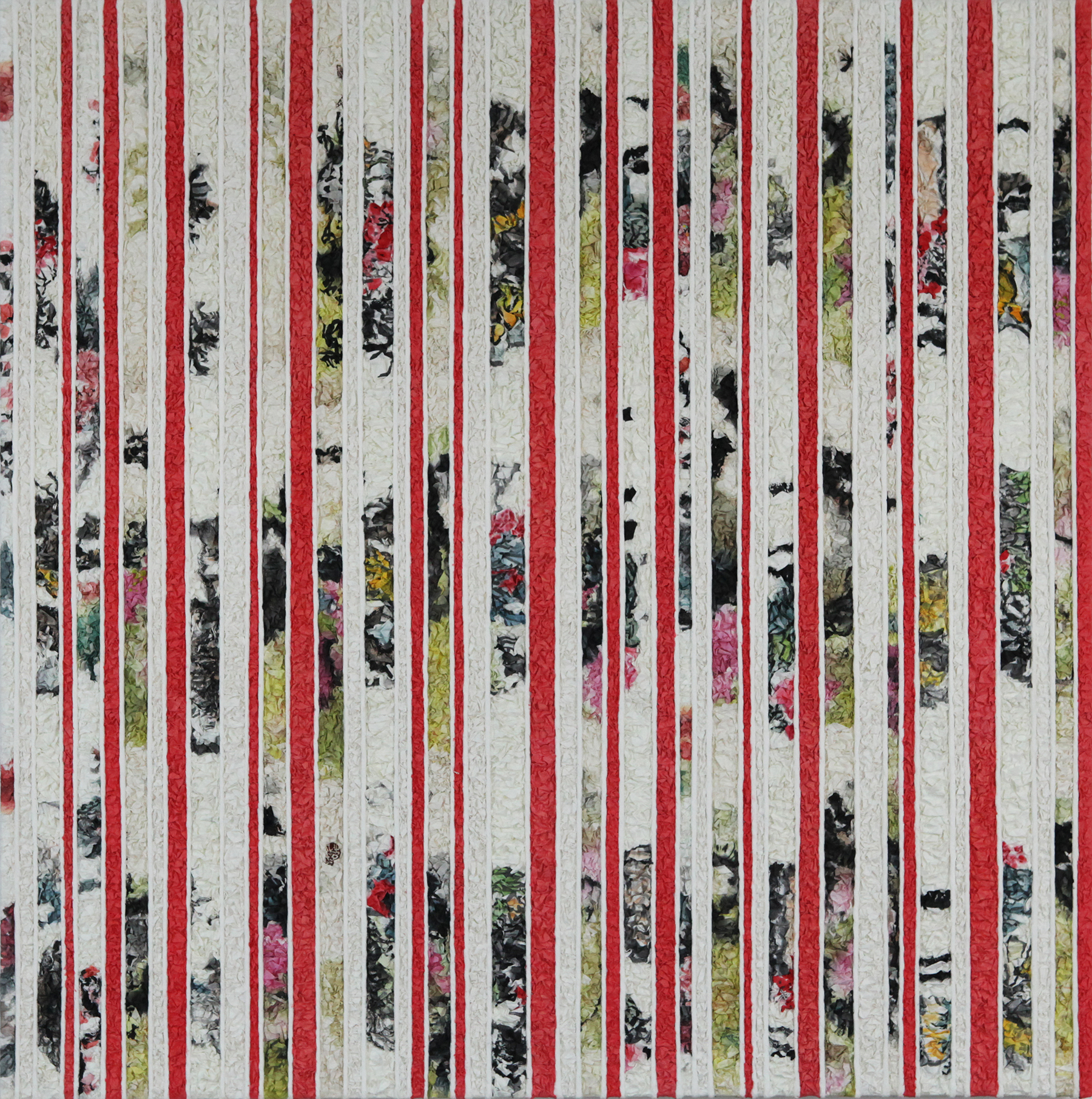
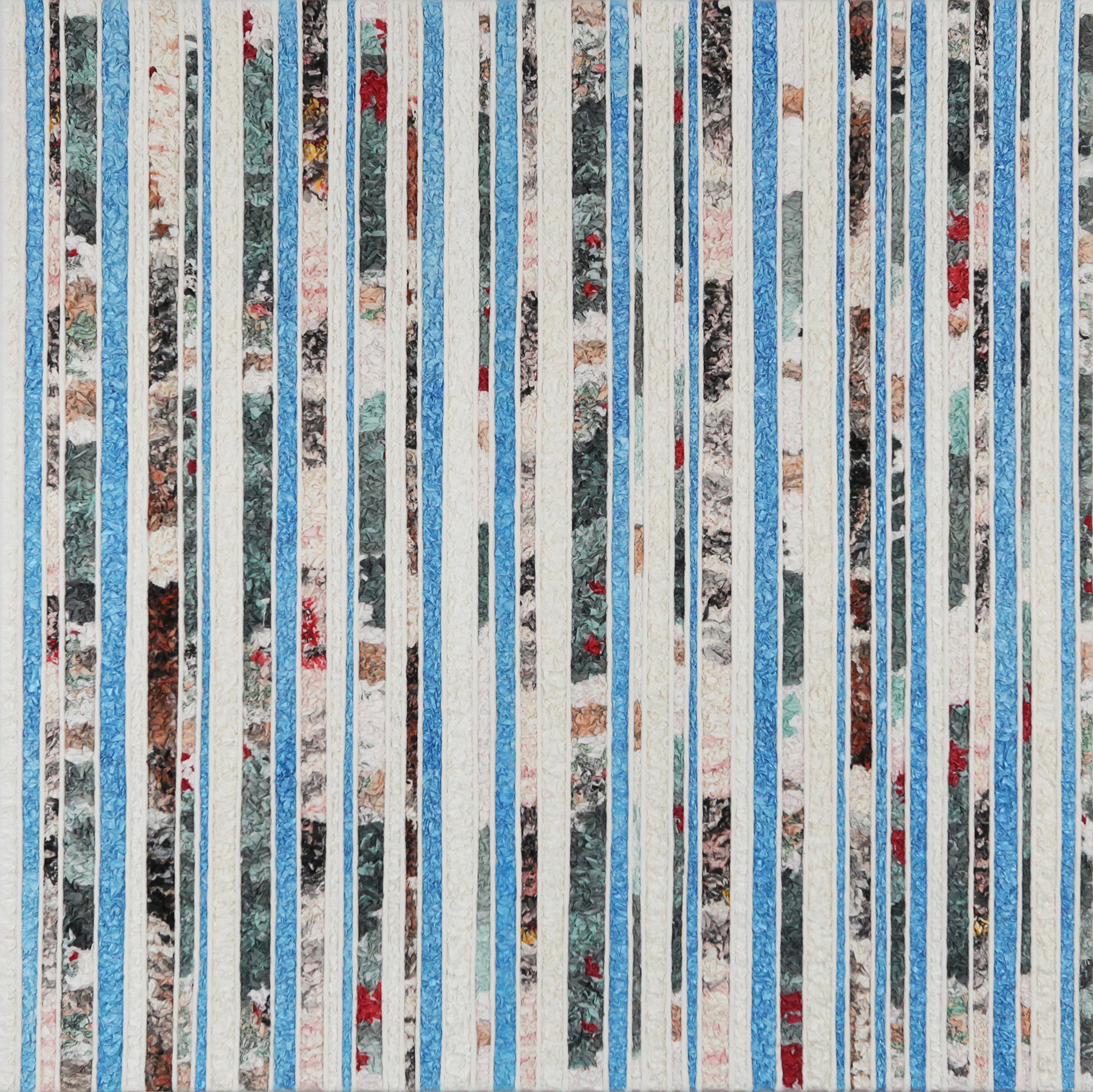
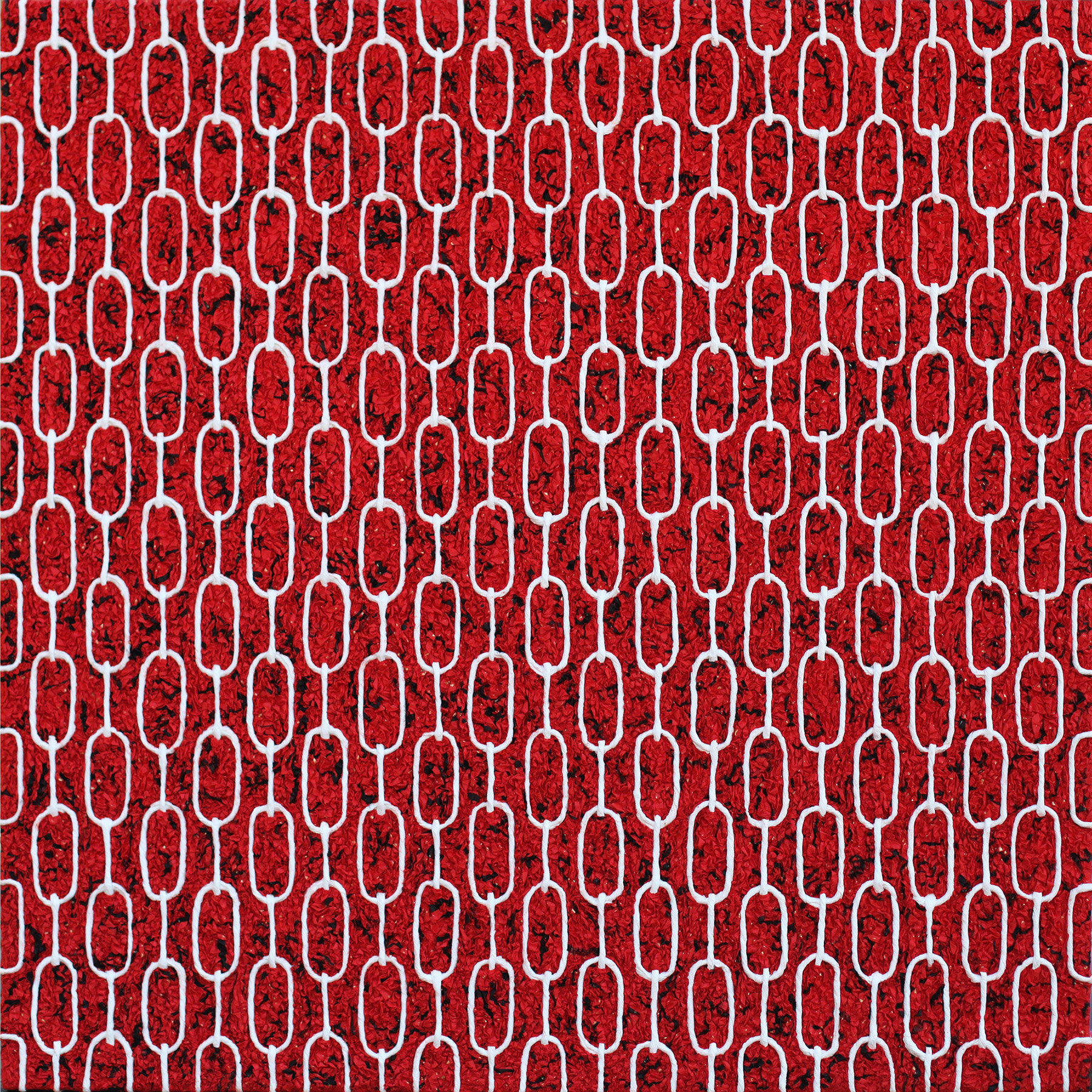
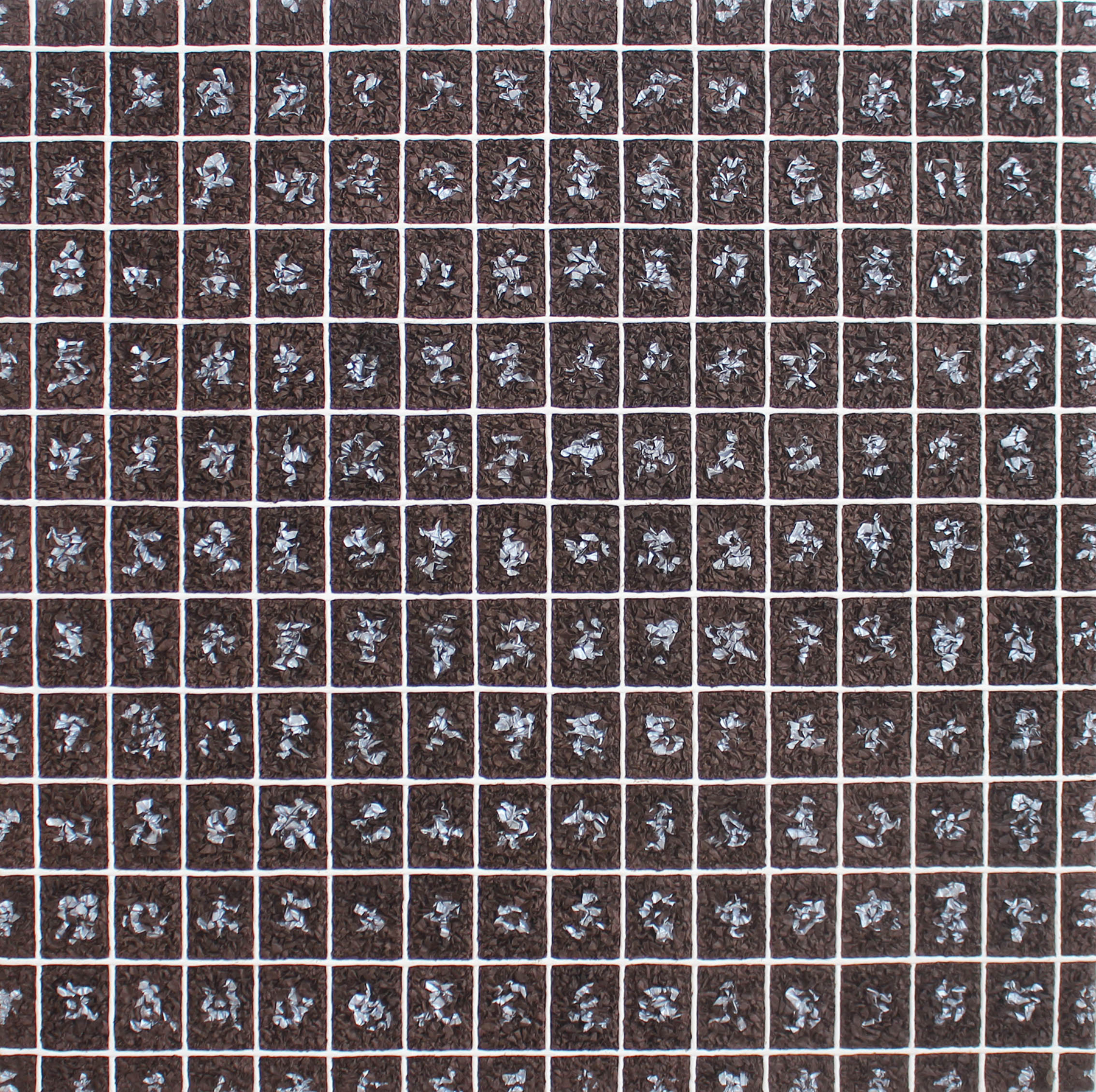
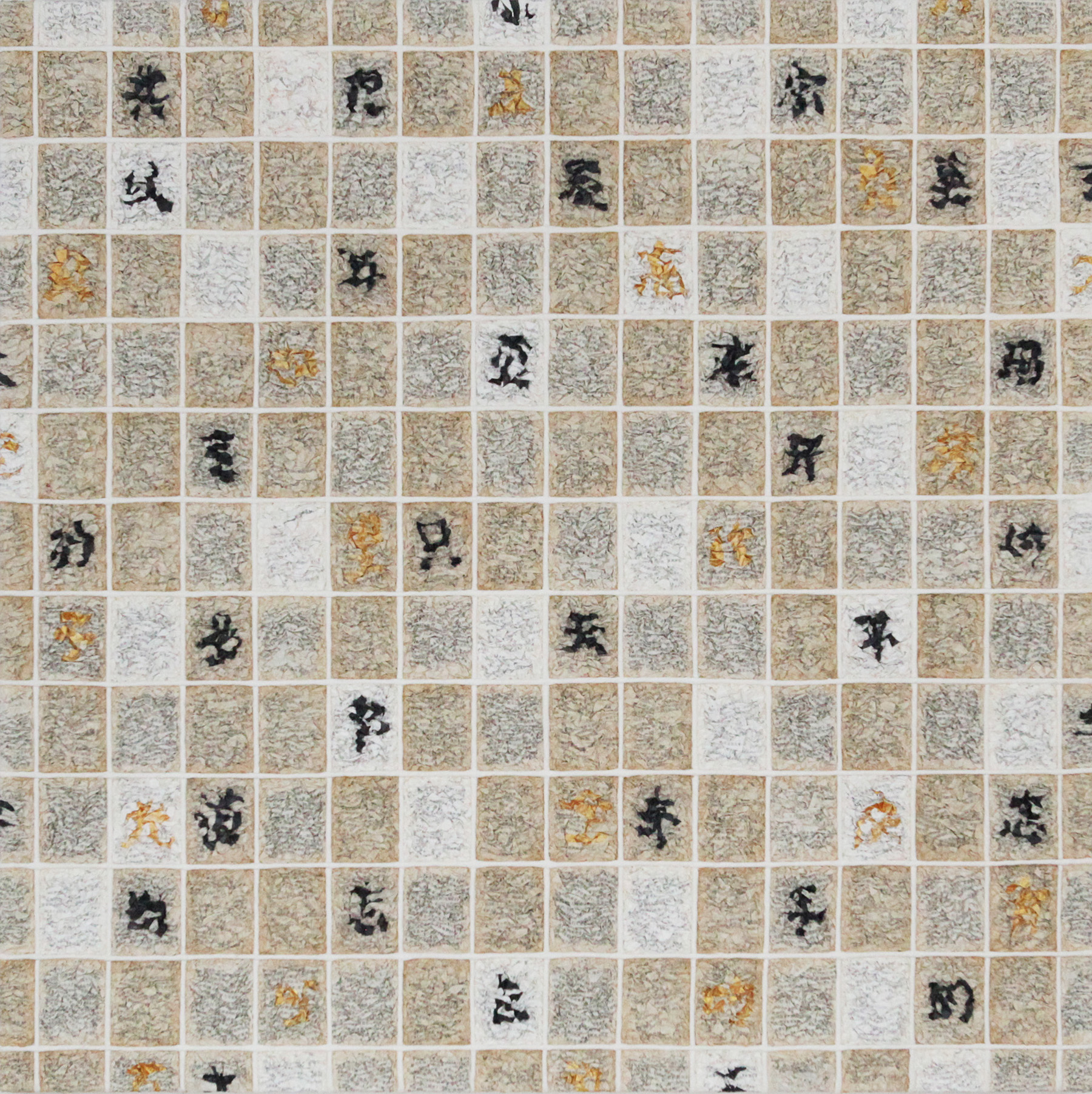
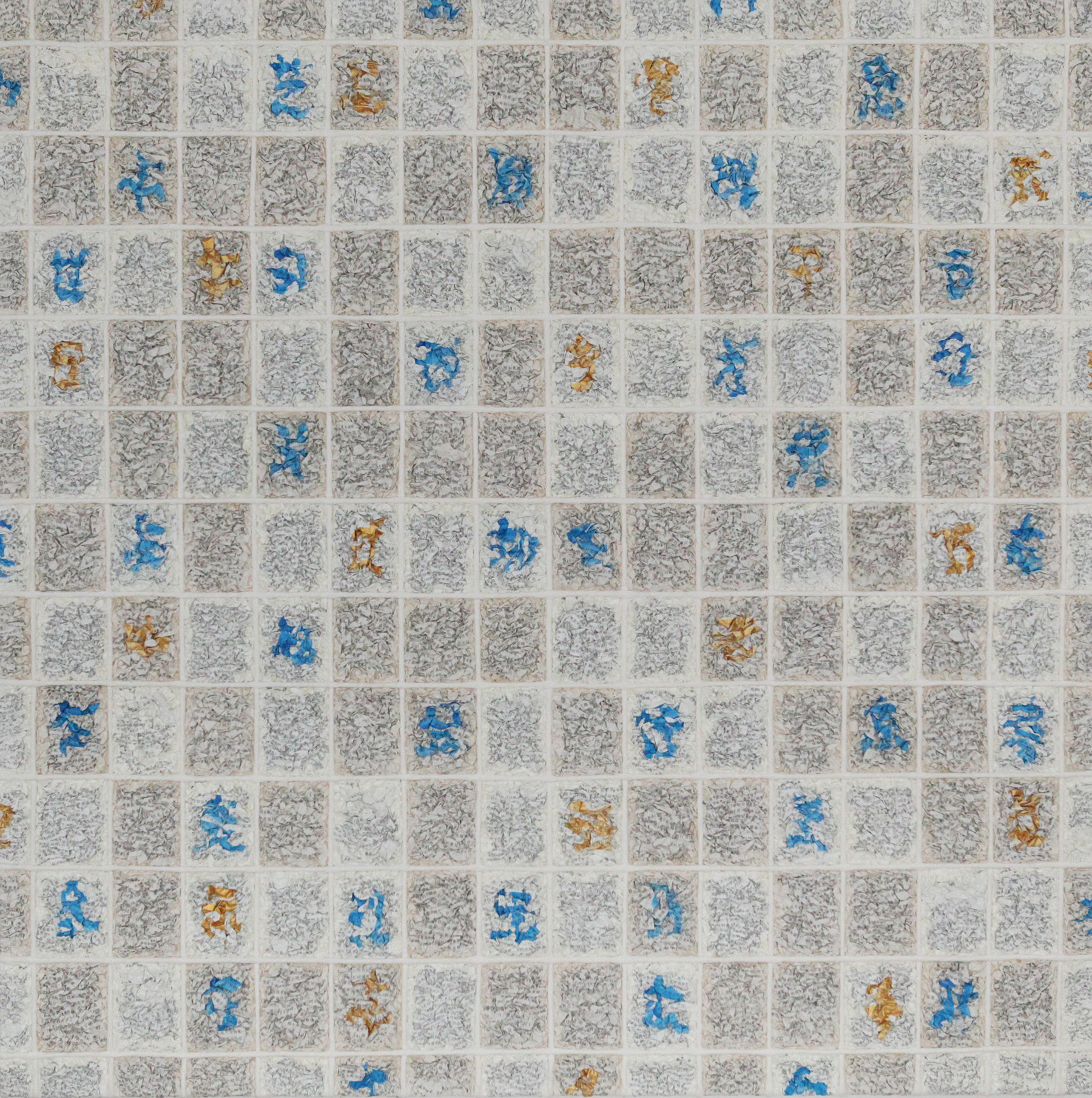
Chen's chosen materials are disarmingly simple: rice paper, old books, newspapers, magazines, ink. Yet in his hands, these everyday carriers of language and information undergo a profound transformation. Pages are wrinkled, folded, and adhered to canvas; text is rendered physically present but semantically illegible. The words are there, you can see them, sense their weight, but you cannot read them. This deliberate act of obscuring is not destruction but a form of questioning. As Chen himself puts it: "As text serves as a carrier or representative of culture, how much has actually been inherited by our generation? Is our understanding of culture clear or ambiguous?"
The gesture recalls Marcel Duchamp's challenge to art's conventions, an artist Chen cites as a formative influence. Like Duchamp, Chen transforms the readymade (a book, a newspaper, a bus ticket) into something that exceeds its original function, turning the ordinary into a site of contemplation. But where Duchamp's provocations were often coolly intellectual, Chen's work carries a warmth rooted in personal experience and cultural memory.
Chen's early series chart a journey from autobiography toward broader philosophical territory. The "Game Series" (c. 2007) began with childhood nostalgia, handmade toys, origami, the improvised pleasures of a generation with few store-bought diversions. The "Lost Series" (2008) emerged from the monotony and disorientation of urban commuting, assembling bus tickets, receipts, and cinema stubs into compositions that ask: where, exactly, are we going?
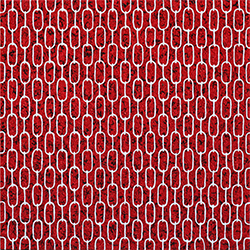
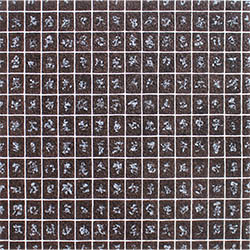
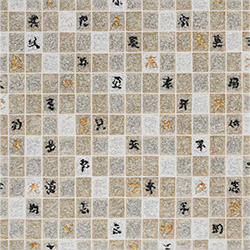
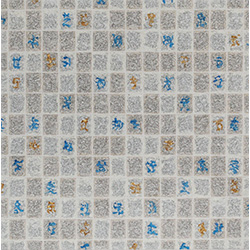
The pivotal shift came with the "Heritage Series" and the "Reading Series," both initiated after 2008. Here, Chen's grid became a vehicle for sustained meditation on cultural transmission. In the Heritage works, handwritten text on rice paper is crumpled and pasted until each character dissolves into texture. In the Reading works, entire books, novels, poetry, histories, are disassembled page by page and affixed to canvas. The result is a kind of archaeology in reverse: the artifact is preserved, but its content has been returned to silence. Viewers are left not with answers but with the space to form their own.
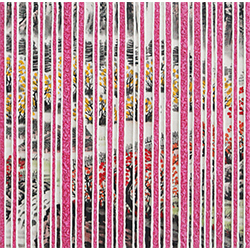
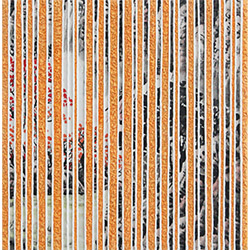
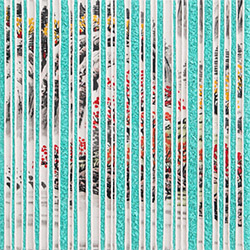
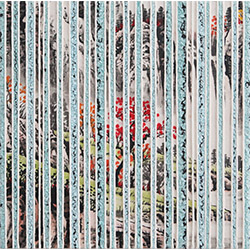
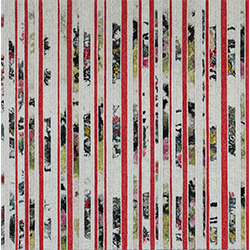
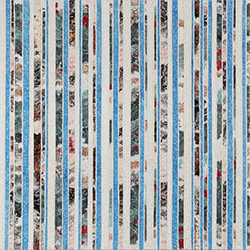
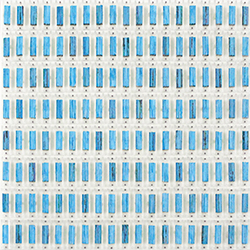
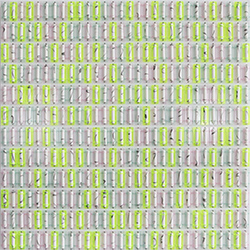
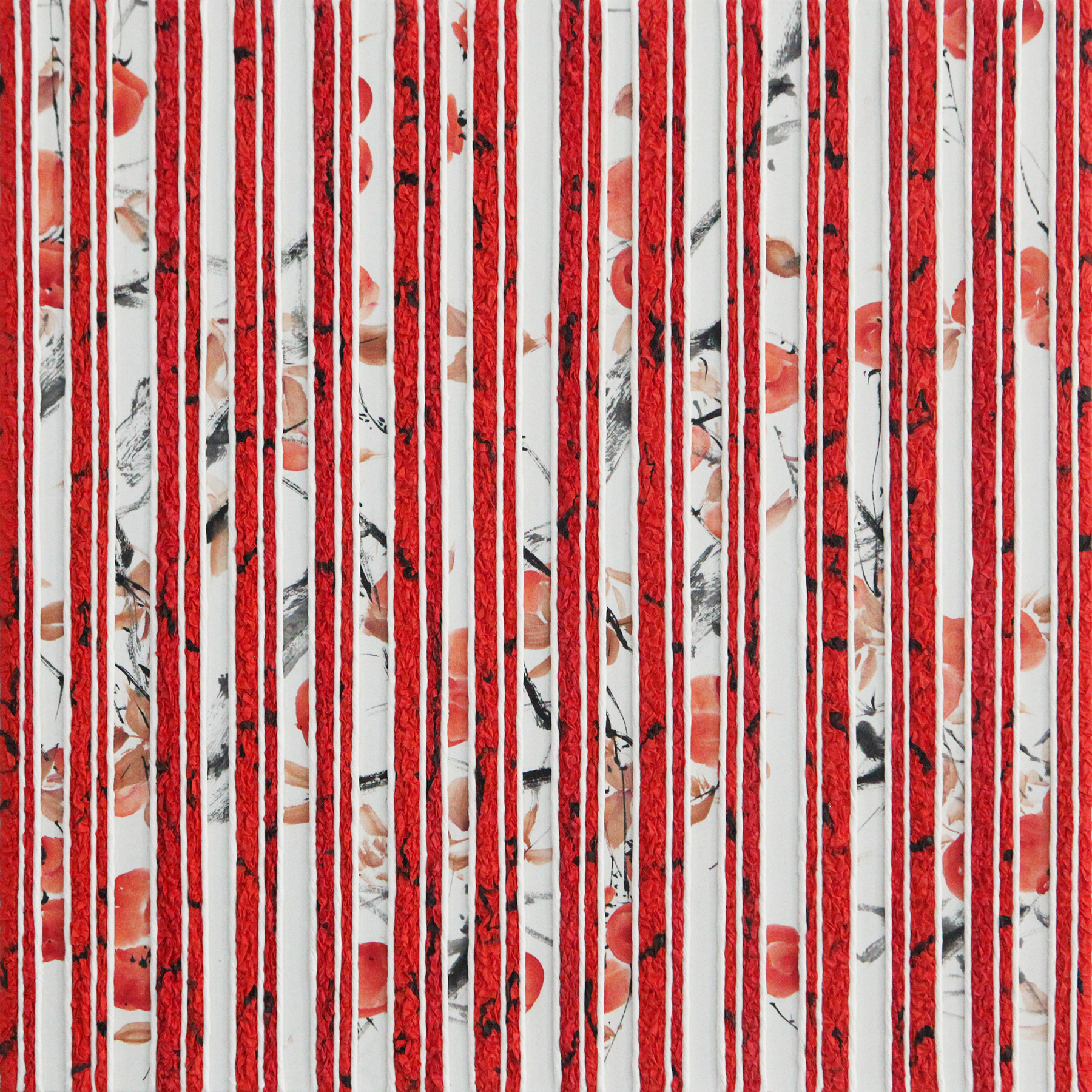
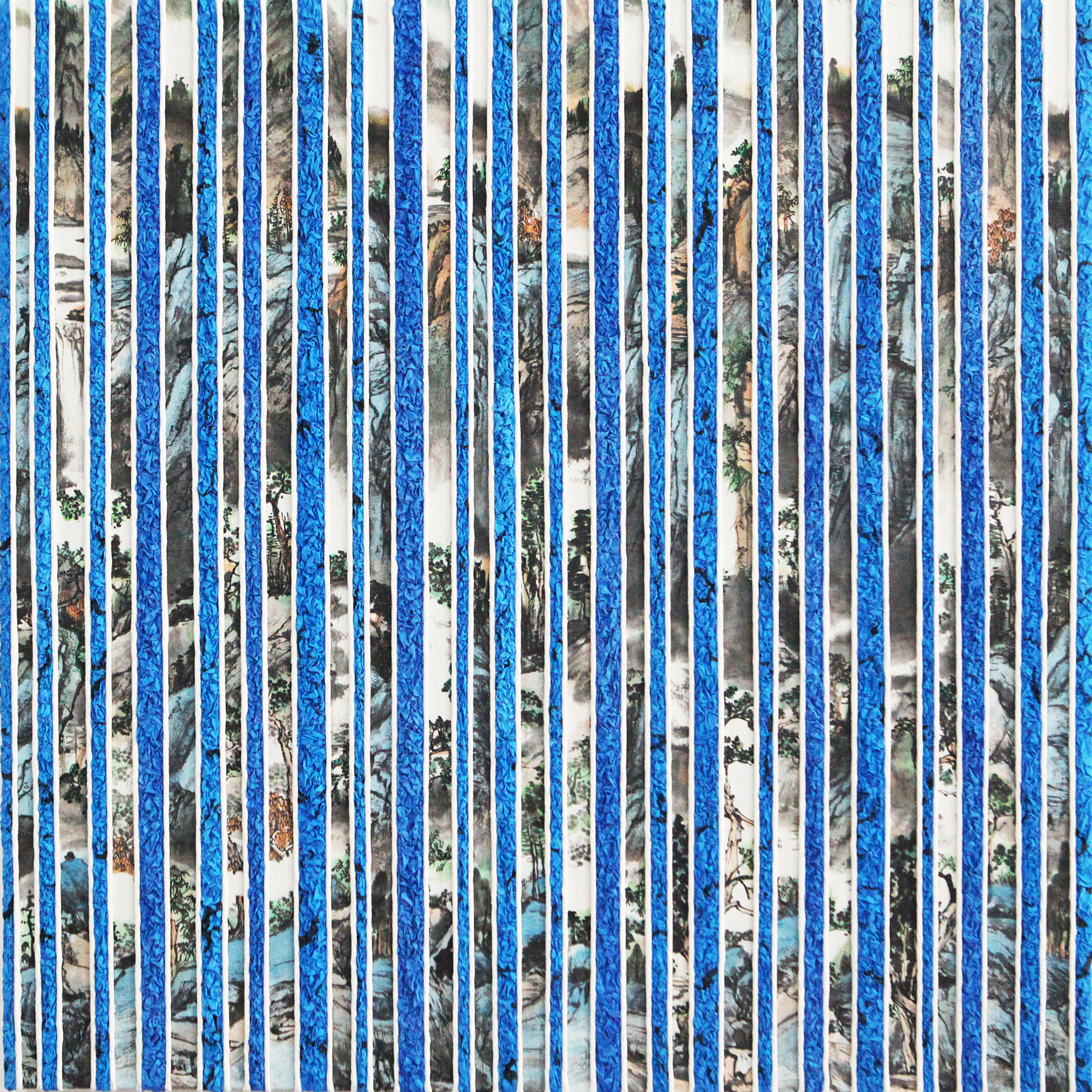
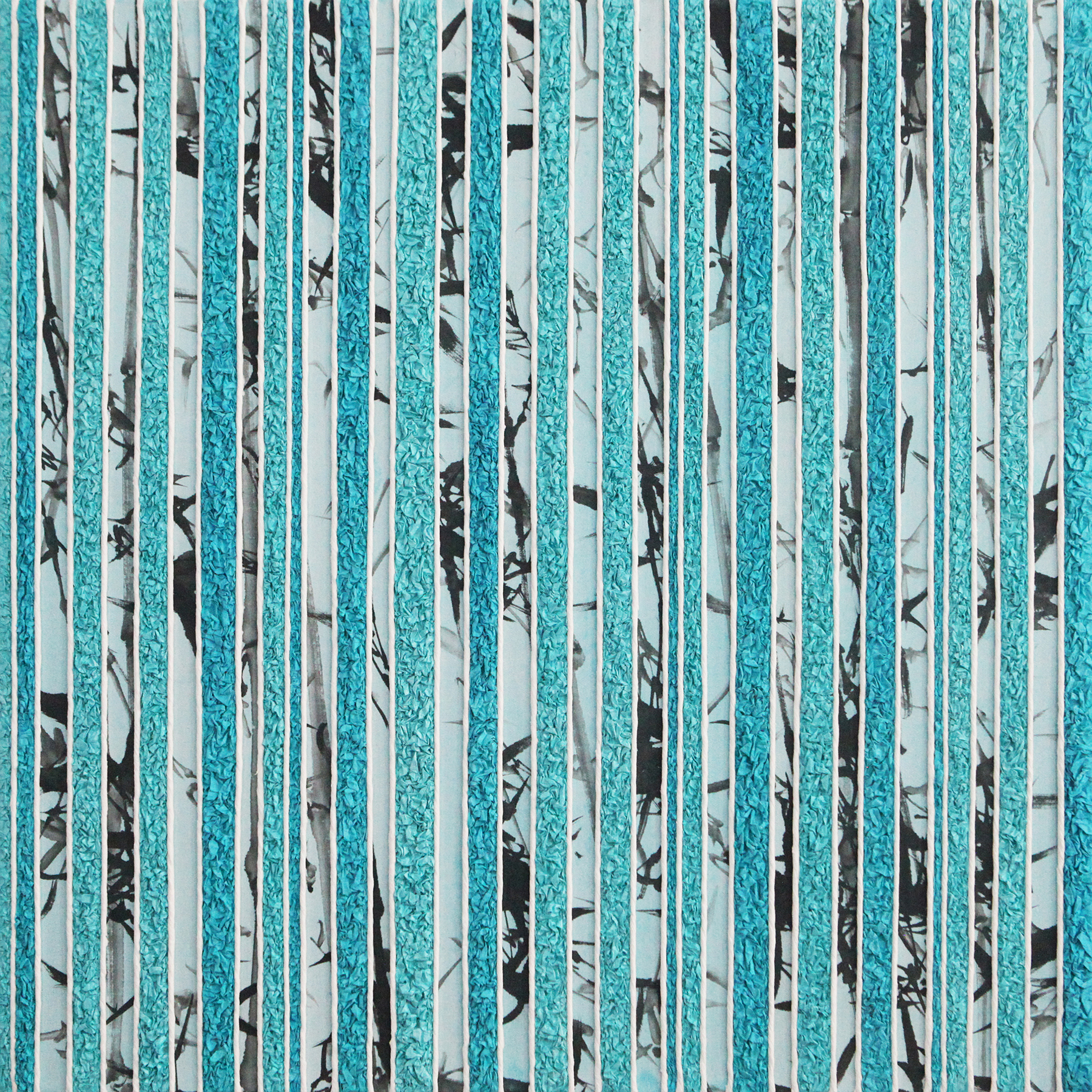
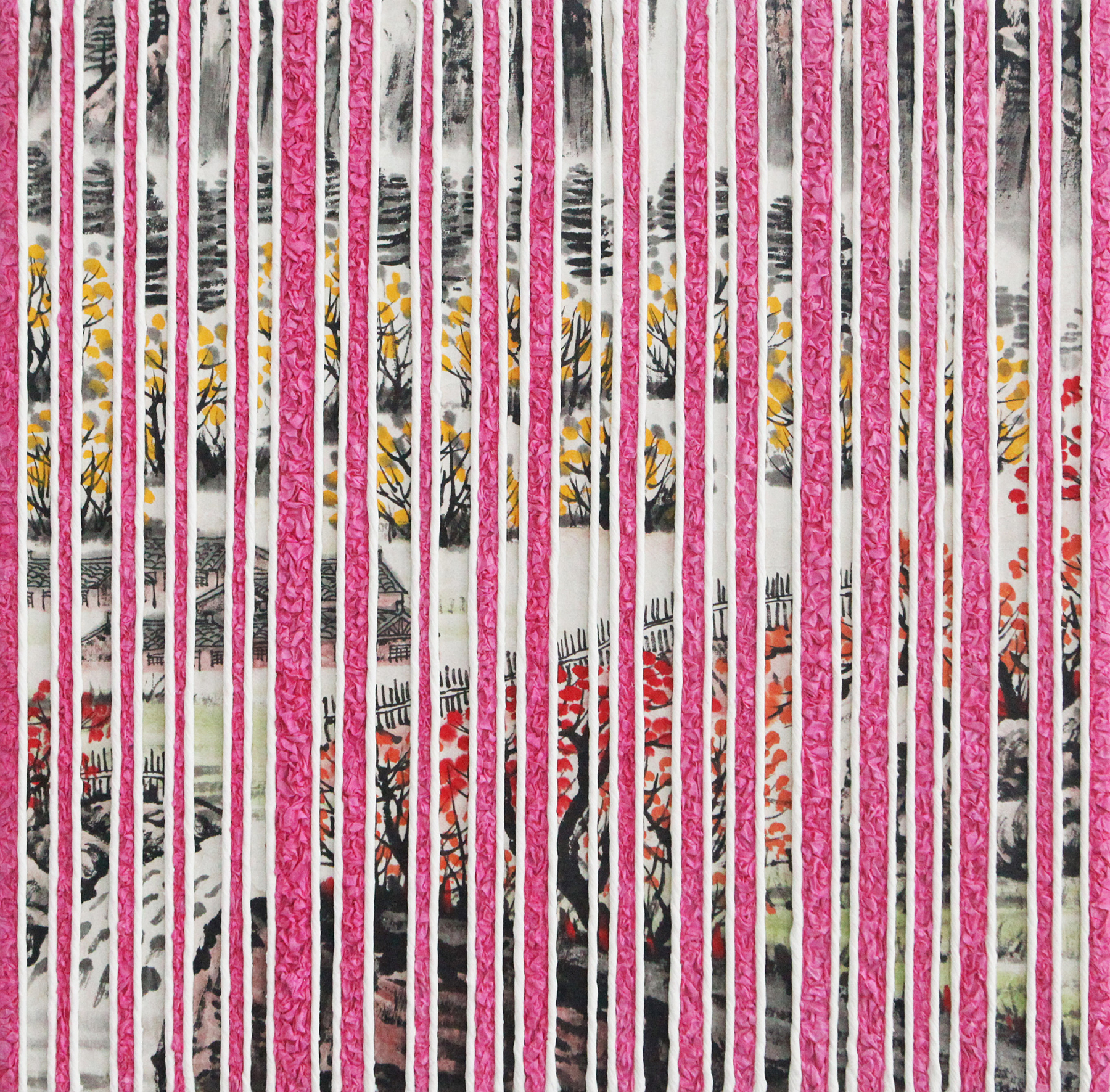
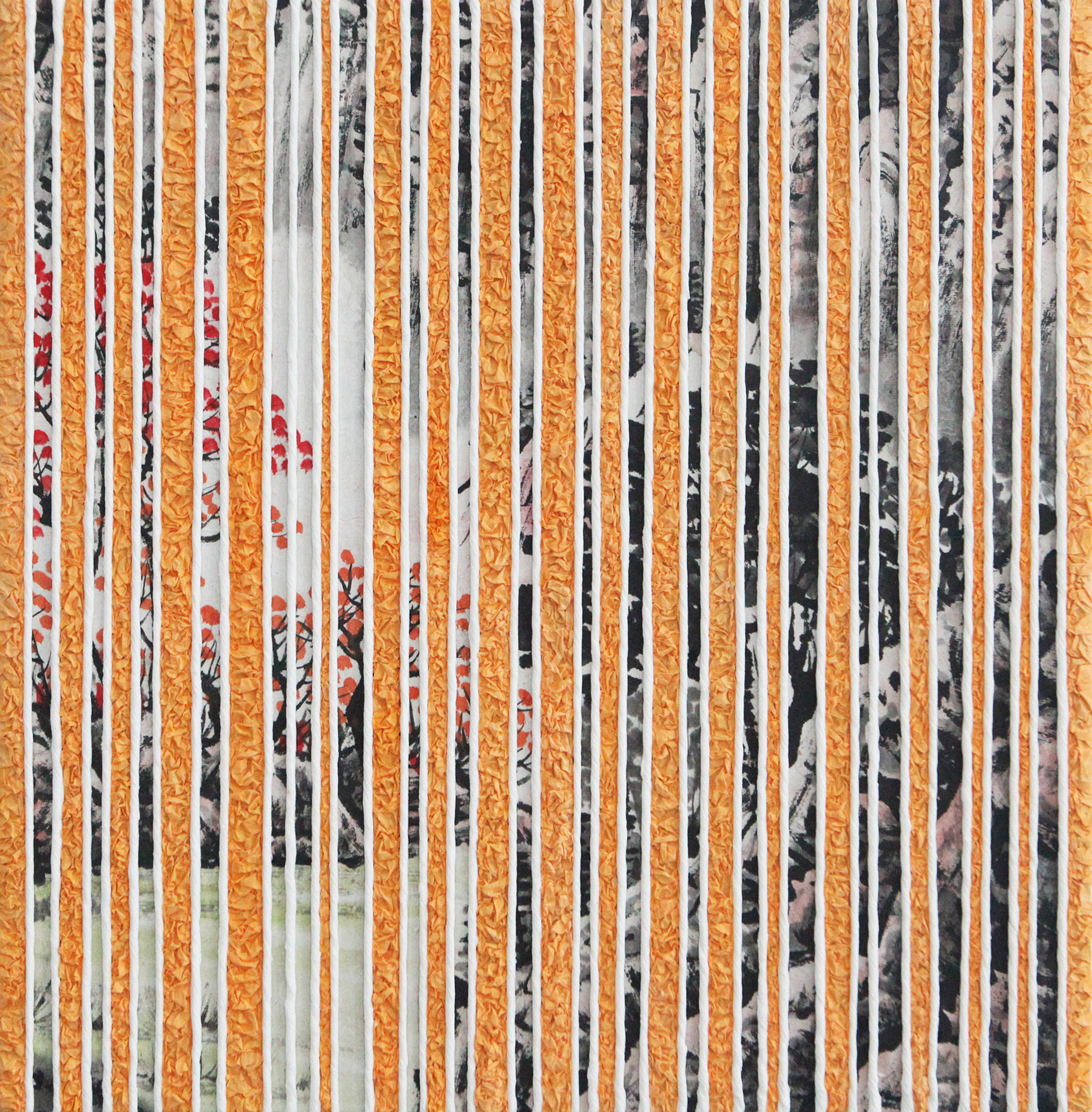
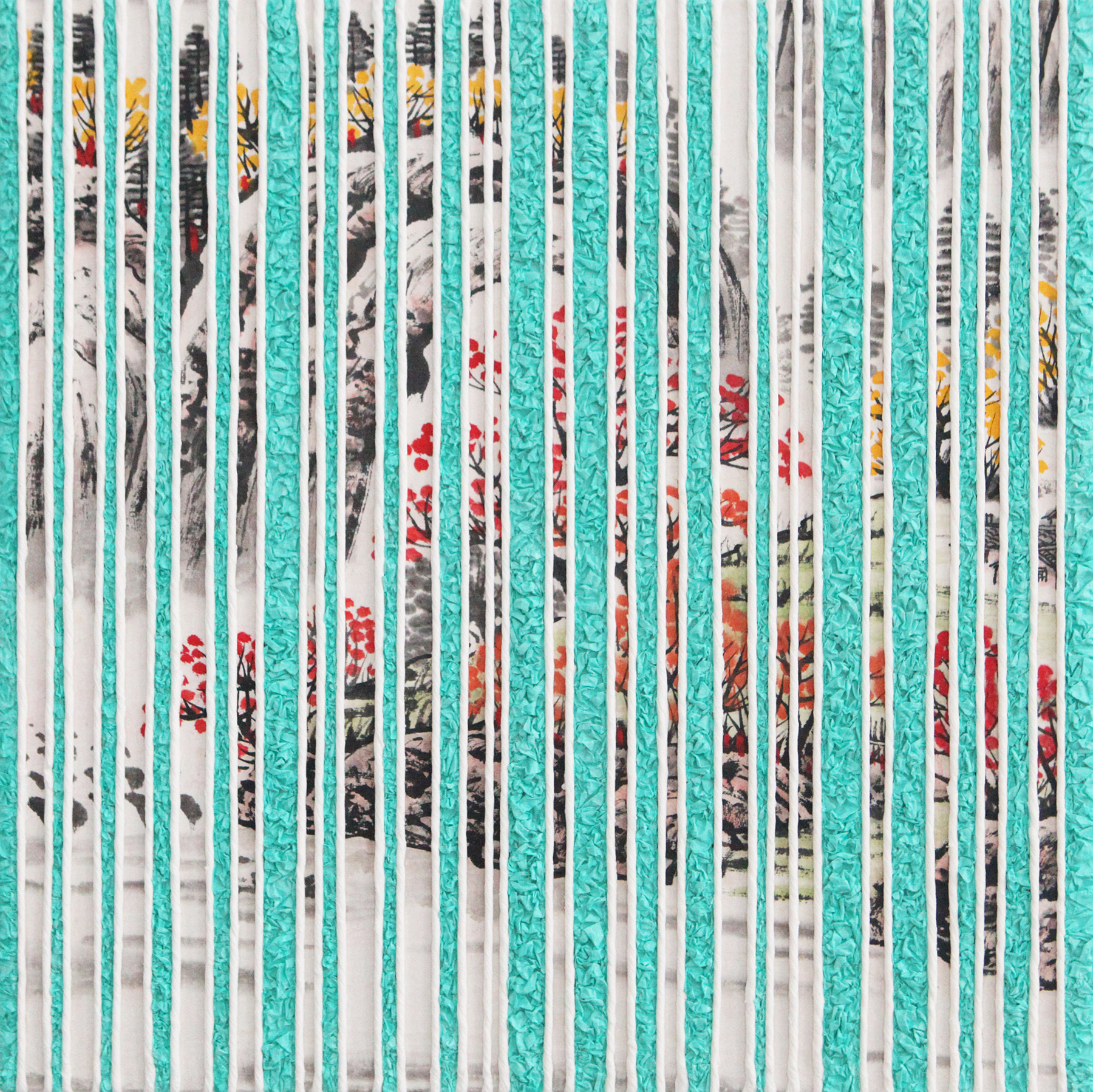
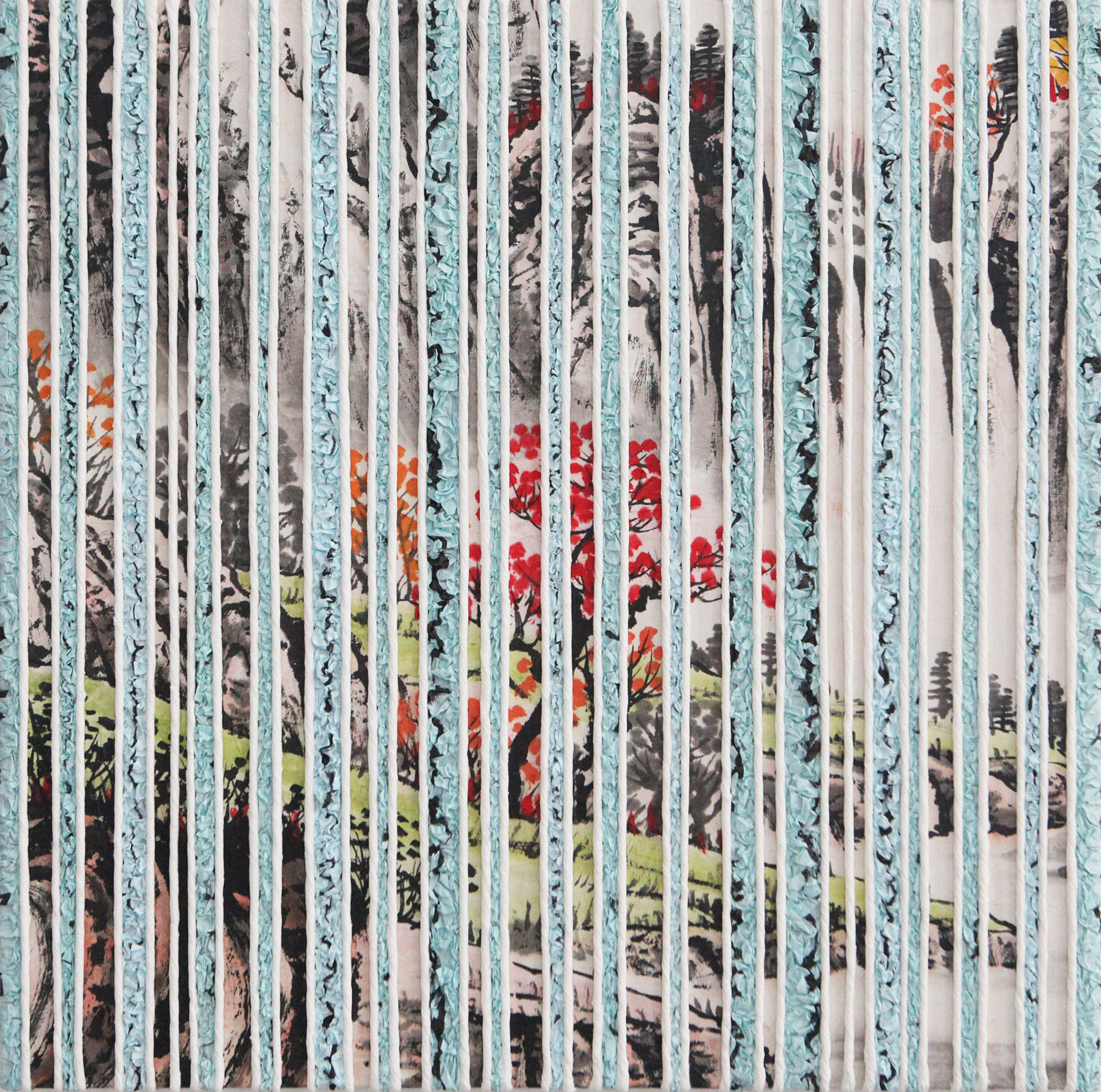
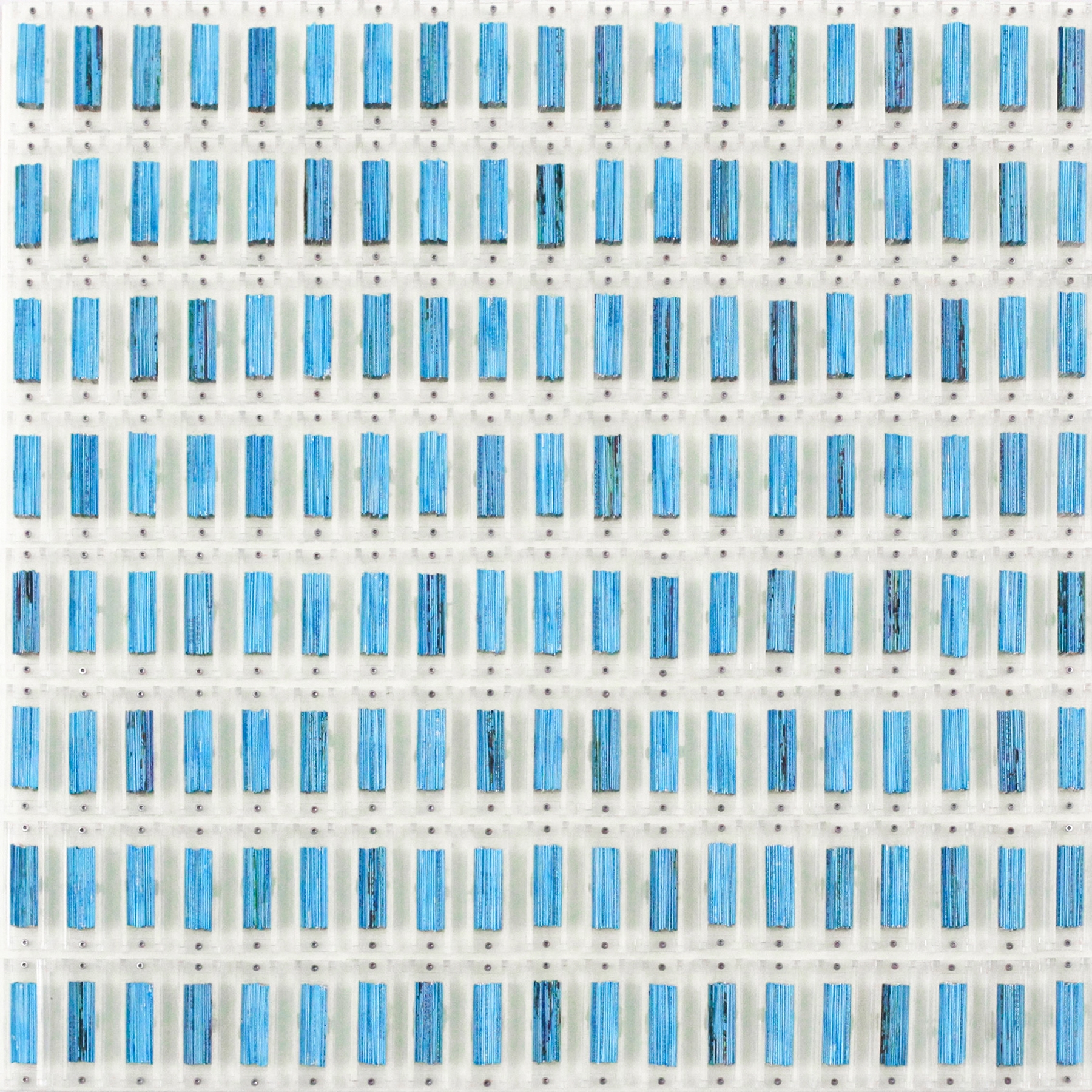
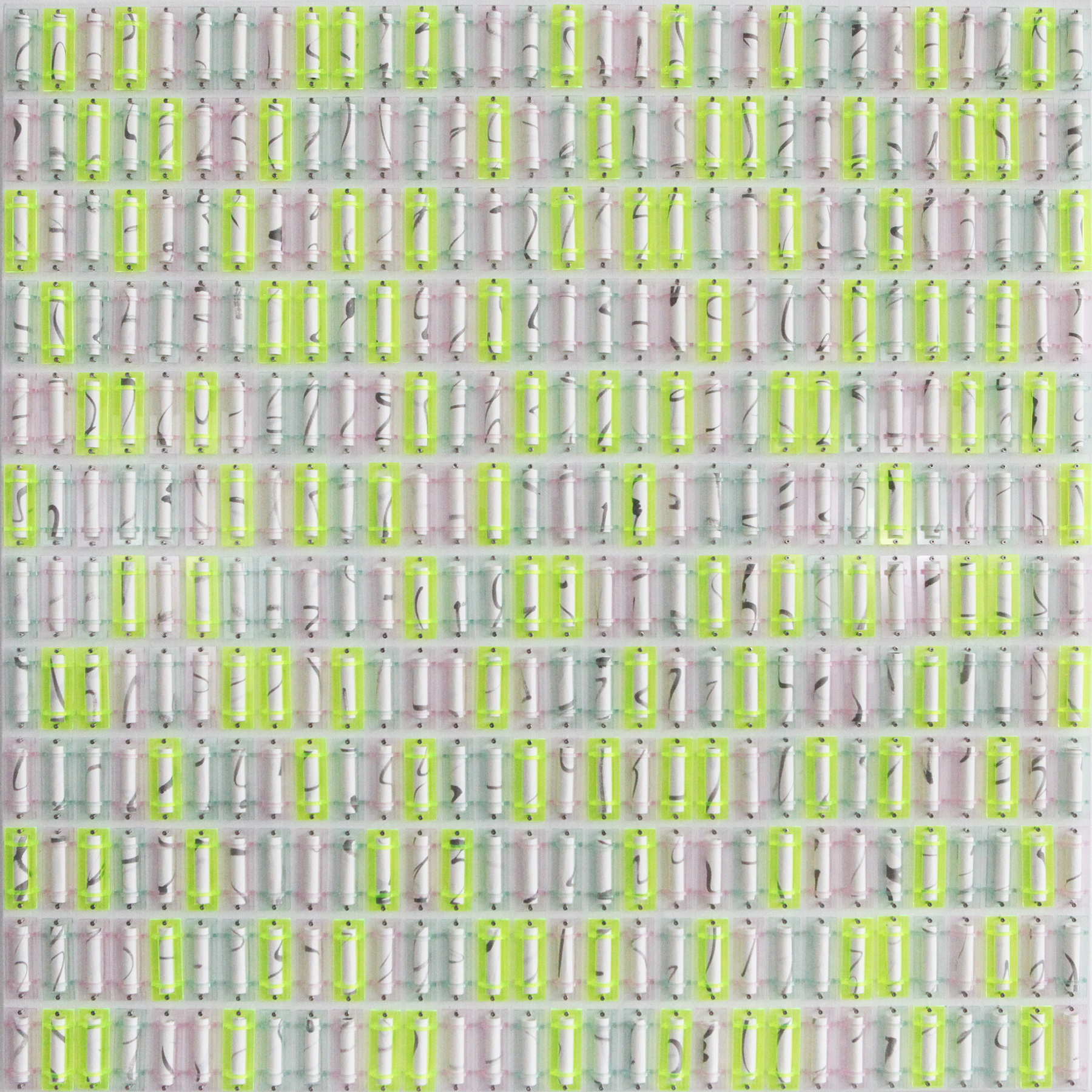
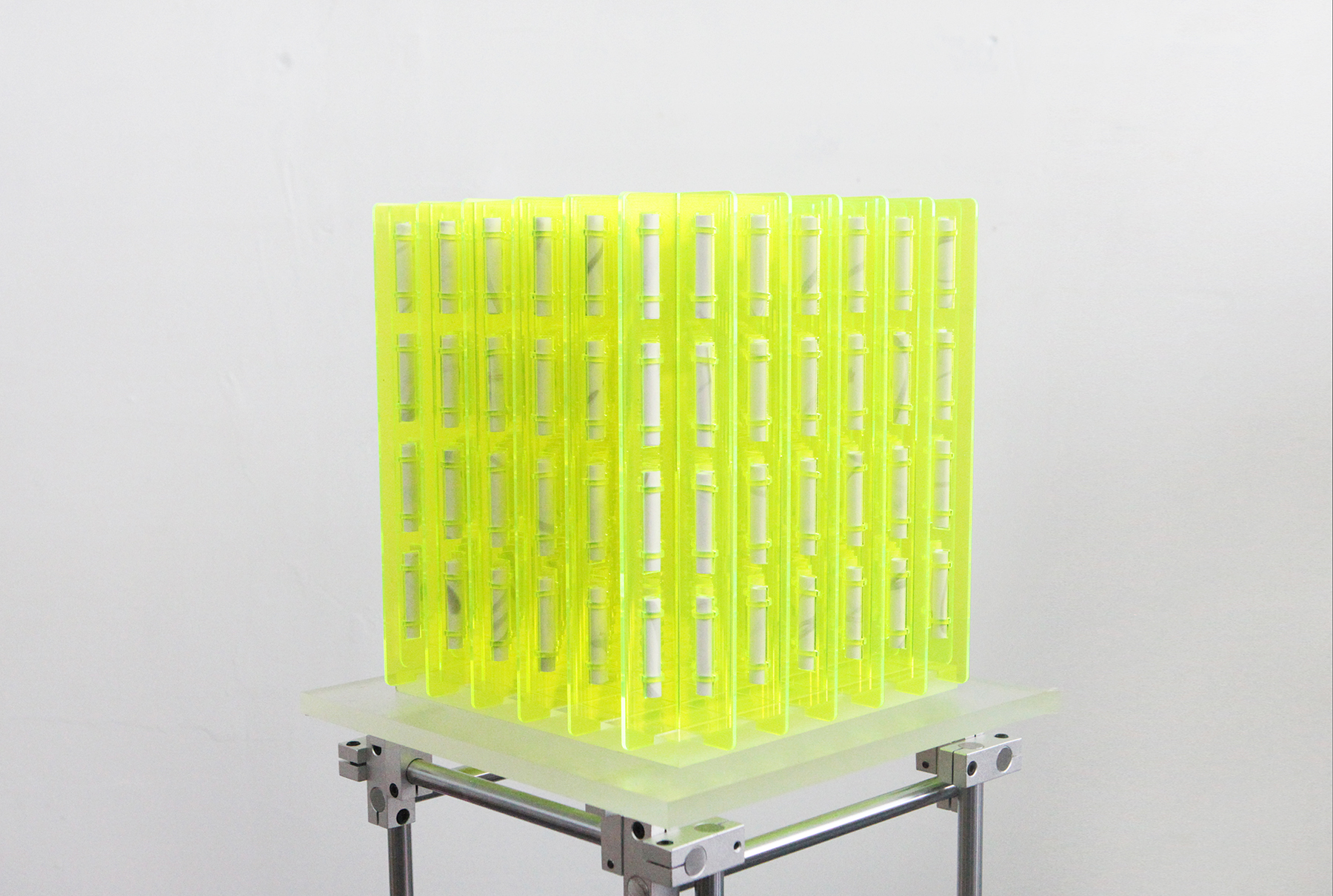
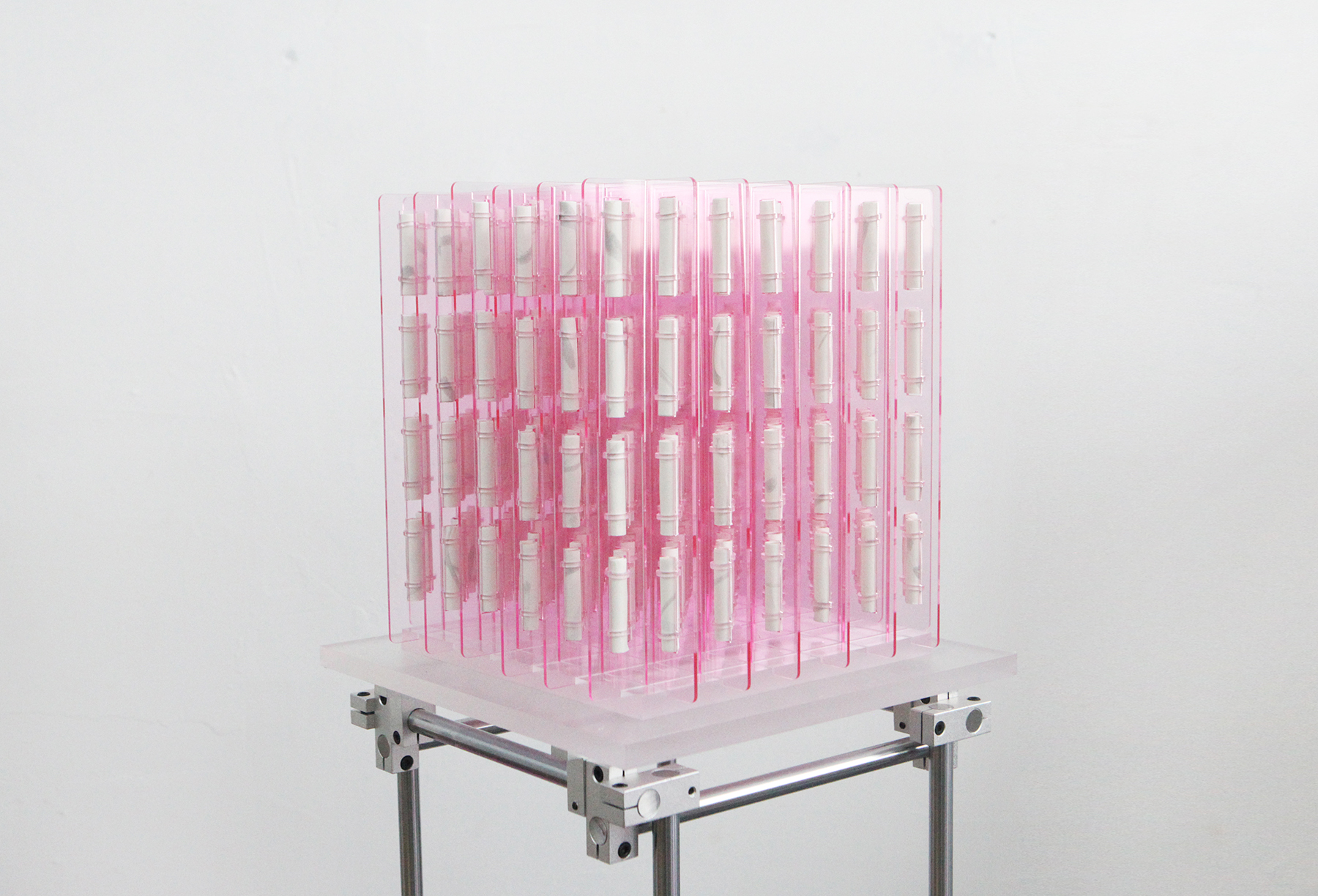
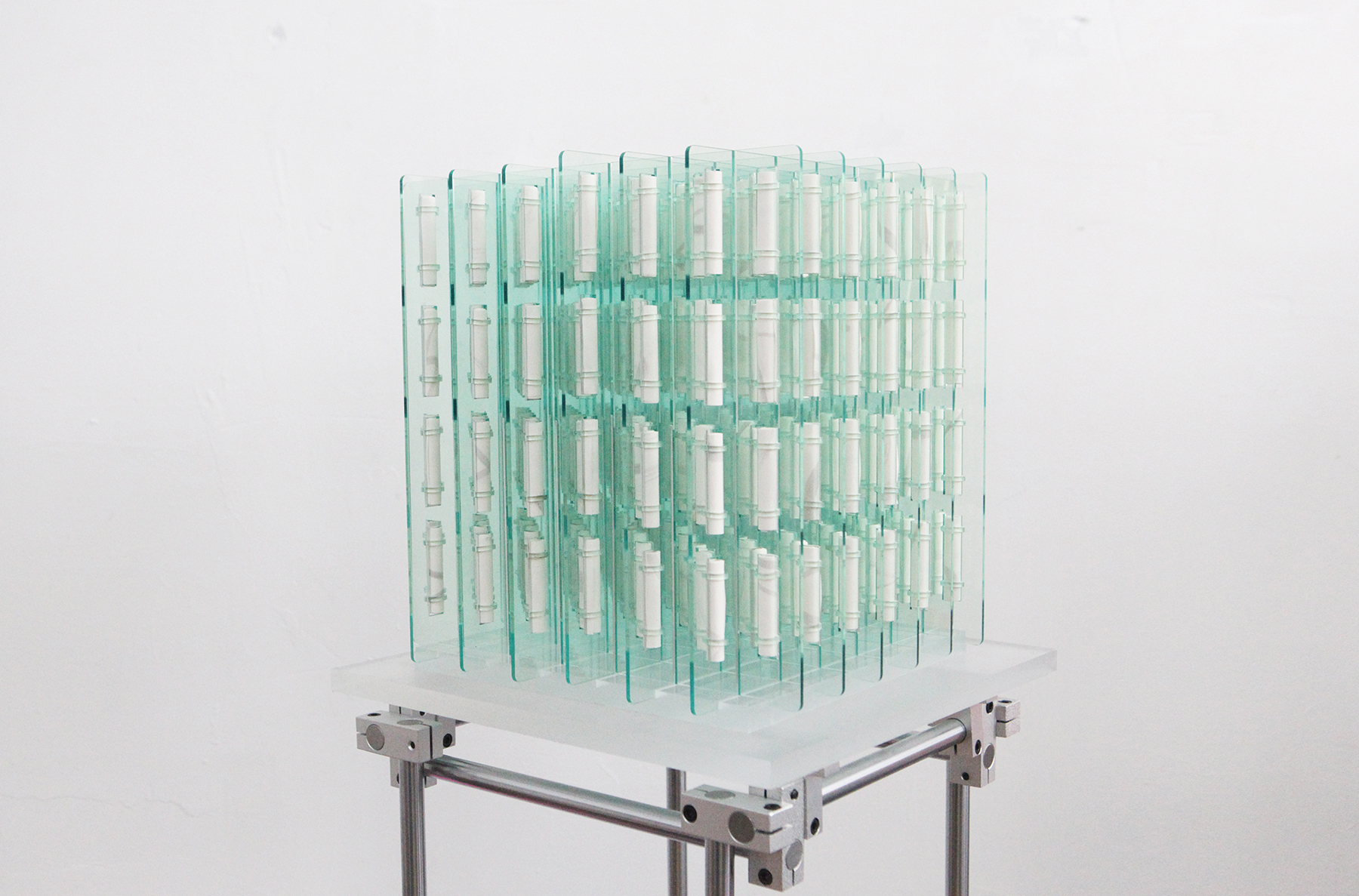
Chen's most recent body of work 2025-2026, marks a significant evolution. Employing paper and ink as fundamental mediums, these compositions foreground vertical lines, ink-wash patterns, and fragments of text as symbols of temporal passage and shifting memory. The series serves as a counterpart to the earlier Reading works, but with a crucial difference: it is, in Chen's words, more "information-oriented," inviting a multidimensional "reading" that reflects the realities of an era shaped by artificial intelligence and digital technology.
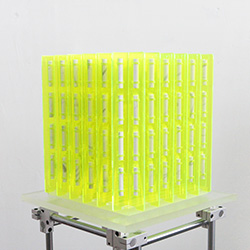
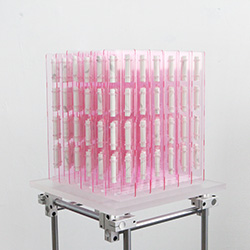
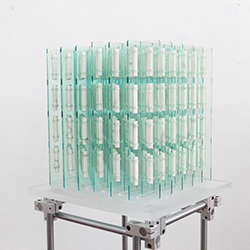
Where earlier works invited the viewer to look at a flattened page, the last series extends into space, allowing its elements to diffuse beyond the two-dimensional surface. The effect is both intimate and expansive, a recognition that in our contemporary moment, reading itself has become a spatial, layered, and profoundly uncertain act.
Across nearly two decades of practice, Chen Linggang has returned again and again to a deceptively simple question: what do we really see when we look? His grids offer the comfort of order, but their contents resist comprehension. His materials carry the traces of language and history, but refuse to deliver a fixed meaning. In this space between legibility and abstraction, between the personal and the collective, between the inherited and the emergent, Chen's work finds its power.
It does not ask us to read. It asks us to consider what reading means, and what remains when the words fall silent.
There is a quiet paradox at the heart of Chen Linggang's work. Each piece presents itself with an almost architectural regularity, small squares, precise grids, orderly surfaces, yet beneath this measured exterior lies a restless inquiry into everything we think we know about culture, history, and ourselves.
Born in 1978 in Jilin Province and now based in Beijing, Chen belongs to a generation that came of age alongside China's reform and opening up, a generation caught between inherited traditions and the accelerating pull of globalization. His art does not narrate this tension so much as embody it. The grid, his signature compositional device since 2008, functions less as a formal constraint than as a philosophical proposition: that the world is made of discrete, repeating units, each person, each day, each page of a book, that are at once autonomous and inseparable from the whole.
Chen's chosen materials are disarmingly simple: rice paper, old books, newspapers, magazines, ink. Yet in his hands, these everyday carriers of language and information undergo a profound transformation. Pages are wrinkled, folded, and adhered to canvas; text is rendered physically present but semantically illegible. The words are there, you can see them, sense their weight, but you cannot read them. This deliberate act of obscuring is not destruction but a form of questioning. As Chen himself puts it: "As text serves as a carrier or representative of culture, how much has actually been inherited by our generation? Is our understanding of culture clear or ambiguous?"
The gesture recalls Marcel Duchamp's challenge to art's conventions, an artist Chen cites as a formative influence. Like Duchamp, Chen transforms the readymade (a book, a newspaper, a bus ticket) into something that exceeds its original function, turning the ordinary into a site of contemplation. But where Duchamp's provocations were often coolly intellectual, Chen's work carries a warmth rooted in personal experience and cultural memory.
Chen's early series chart a journey from autobiography toward broader philosophical territory. The "Game Series" (c. 2007) began with childhood nostalgia, handmade toys, origami, the improvised pleasures of a generation with few store-bought diversions. The "Lost Series" (2008) emerged from the monotony and disorientation of urban commuting, assembling bus tickets, receipts, and cinema stubs into compositions that ask: where, exactly, are we going?
The pivotal shift came with the "Heritage Series" and the "Reading Series," both initiated after 2008. Here, Chen's grid became a vehicle for sustained meditation on cultural transmission. In the Heritage works, handwritten text on rice paper is crumpled and pasted until each character dissolves into texture. In the Reading works, entire books, novels, poetry, histories, are disassembled page by page and affixed to canvas. The result is a kind of archaeology in reverse: the artifact is preserved, but its content has been returned to silence. Viewers are left not with answers but with the space to form their own.
Chen's most recent body of work 2025-2026, marks a significant evolution. Employing paper and ink as fundamental mediums, these compositions foreground vertical lines, ink-wash patterns, and fragments of text as symbols of temporal passage and shifting memory. The series serves as a counterpart to the earlier Reading works, but with a crucial difference: it is, in Chen's words, more "information-oriented," inviting a multidimensional "reading" that reflects the realities of an era shaped by artificial intelligence and digital technology.
Where earlier works invited the viewer to look at a flattened page, the last series extends into space, allowing its elements to diffuse beyond the two-dimensional surface. The effect is both intimate and expansive, a recognition that in our contemporary moment, reading itself has become a spatial, layered, and profoundly uncertain act.
Across nearly two decades of practice, Chen Linggang has returned again and again to a deceptively simple question: what do we really see when we look? His grids offer the comfort of order, but their contents resist comprehension. His materials carry the traces of language and history, but refuse to deliver a fixed meaning. In this space between legibility and abstraction, between the personal and the collective, between the inherited and the emergent, Chen's work finds its power.
It does not ask us to read. It asks us to consider what reading means, and what remains when the words fall silent.

1978 Born in Jilin Province, China
2000 Graduated from the Environmental Art Department, Jilin Forestry University
Selected Solo Exhibitions
2025 "Reading Without Boundaries" Chen Linggang Artwork Exhibition, Rong Art Space, Beijing
2025 Reading, Chen Linggang Easel Installation Exhibition, Bright Spot Cultural and Creative Park, Beijing
2016 Chen Linggang on Reading and Writing, Red Gate Gallery, Beijing
2016 Resonance of History: Dual Exhibition by Chen Linggang and Pang Yun, Art+ Shanghai Gallery, Singapore
2014 Between the Lines, Reading Chen Linggang and Liang Weiyuan, Art + Shanghai Gallery, Shanghai
2013 "On the Paper" Chen Linggang's Solo Exhibition, SiTouAiRanSe Gallery, Beijing
2011 Heritage, Chen Linggang's Solo Exhibition, StudioRouge Gallery of Contemporary Art, Shanghai
2009 History on the Paper, Chen Linggang 2009, 798 Jindu Art Center, Beijing
Selected Group Exhibitions
2026 "
2025 "The Highest Good is Like Water" Shanghai International Paper Art Biennale, Shanghai Fenxian Museum, Shanghai
2025 "Divergent Sources Converging Echoes" Invitational Exhibition of Chinese and Foreign Artists, Dagao Art Museum, Beijing
2025 The 3rd New Chinese Trendy Art Exhibition, Sunshine International Art Museum, Beijing
2025 "International Contemporary Youth Art Exhibition", Xinghe Art Museum, Beijing
2025 "Post-Organ Era", Xinghe Art Museum, Beijing
2024 Word by Word "The Great Word", Wa Art Museum, Beijing
2024 Paper Weights, Art+ Shanghai Gallery, Shanghai
2023 Art Shenzhen, Shenzhen
2023 Tabula Rasa Planet, Thinker's Visual Storm, Shanhu Gallery, Haikou
2023 Parallel Worlds Taipei New Art Expo, Taipei
2023 Art Vision Future Contemporary and Trend Art Exhibition, Shenzhen
2023 Dramatic Childhood Contemporary Art Exhibition, Xin Art Museum, Haikou
2023 Art Guangdong Future Artists Contemporary and Trend Art Special Exhibition, Guangdong
2022 Unknown and Possible, Futurism and Neo-Futurism, CITIC Bookstore, Beijing
2022 Future Artists Shenzhen Contemporary Art Invitation Exhibition, Shenzhen
2022 4-3-2-1 Countdown Series Joint Exhibition, Red Gate Gallery, Beijing
2022 Space@Space, Chao Art Space, Beijing
2022 Life Diary, Hezhi Art Museum, Quanzhou
2022 Future, Red Gate Gallery, Beijing
2021 Matrix, Frontier, Songzhuang Contemporary Art Documentation Center, Beijing
2021 Shanghai International Paper Art Biennale, Shanghai
2021 Supreme on Paper, Pinghe Cultural Art Museum, Beijing
2021 International Vision, Globalized Contemporary Art Boutique Exhibition, Yongle Auction, Beijing
2021 I am Trend VOL 2, Contemporary Art Documentation Center, Beijing
2021 Qingdao International Young Artists Invitation Exhibition, 1902 Contemporary Art Museum, Qingdao
2020 One Hundred Days of Solitude, Art+ Shanghai Gallery, Shanghai
2020 "30days/30years", 798 Red Gate Gallery, Beijing
2020 "Marching Forward", 798 Red Gate Gallery, Beijing
2019 The Splendid Languages of Paper, Zhejiang Art Museum, Hangzhou
2019 The Third Independent Exhibition, Dahewan Art Museum, Beijing
2019 "Deeper Strata of Meaning", Art+ Shanghai Gallery, Shanghai
2018 China Contemporary Young Artist Nomination Exhibition, Guangzhou
2017 Multi Dimension II Second Contemporary Art Invitation Exhibition, Riverside Art Museum, Beijing
2017 Thunderbot! Surge Art Summer POP-UP, Red Gate Gallery, Beijing
2016 Whiplash! Surge Art Celebrating Ten Years of Emerging Art, Red Gate Gallery, Beijing
2015 Out of the Box! Surge Art Group Exhibition, Red Gate Gallery, Beijing
2015 Formosa Art Show 2015, Rhythm Gallery, Taipei
2015 The 3rd V, Age Contemporary Art of Youth, Tree Museum, Beijing
2015 Poly Ten Anniversary of Contemporary Art Fair, Beijing
2014 "Youth. A Passion To Be Homage" The Young Artist Exhibition, Beijing
2013 "Art Across the City", Guanxiang Art Gallery, Taipei
2013 "Red Hot", Red Gate Gallery, Beijing
2013 "On Paper, Supreme", Jiuceng Art Museum, Beijing
2013 "Beijing Mini Art", Jiuceng Art Museum, Beijing
2013 SURGE Art Fair, Beijing
2012 China Art Industry Expo, Beijing
2012 Kingroad Gallery, London
2011 Spicy Asian Art Exhibition, HF Contemporary Art, Berlin
2011 Affordable Art Beijing 2011, Beijing
2011 100 Young Artist of Excellence, Xiaopu Art Museum, Beijing
2011 Langham Gallery, Beijing
2010 Maria Pestana Art Gallery, Madrid, Spain
2010 Artinnno Galleria, Singapore
2010 Spirit-retaining & Orient, 1st Exhibition of Overseas Chinese Painters' Abstract Works, Huangjueping Contemporary Art Gallery, Chongqing
2009 Let's Play Together, Soul Collection Art, Beijing
2009 The Fifth Cultural & Arts Festival of Songzhuang China, Wansheng Art Center, Beijing
2009 Span, Chinese Abstract Art Invitational Exhibition, 798 Jindu Art Center, Beijing
2009 Galerie am Kreuzplatz, Erschwil, Switzerland
2009 ART GALLERY, Geneva, Switzerland
2009 Contemporary Abstract Art Exhibition, Duoshang Gallery, Beijing
2008 Footprint, First Art Exhibition of National Defence Art Zone, Beijing
2008 I·Love·Songzhuang, Roundness Art Community, Beijing
2008 The Second China·Songzhuang Contemporary Artists Exhibitions, Beijing
2008 Survival Scene, Sunshine International Museum, Beijing