Scan our QR code to stay updated with the recent news and upcoming events.
Scan our QR code to stay updated with the recent news and upcoming events.

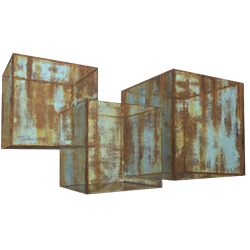
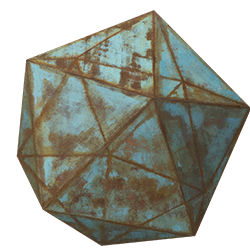
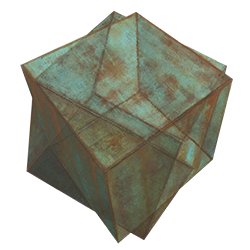
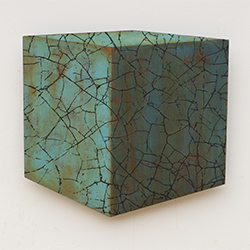
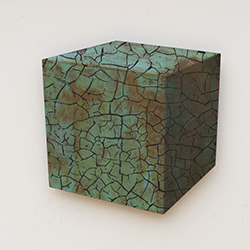
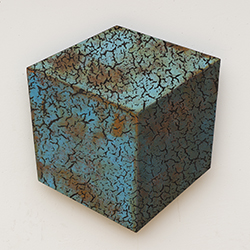
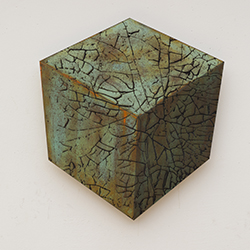
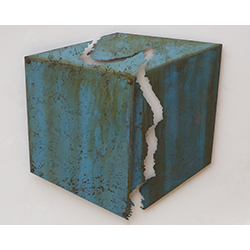
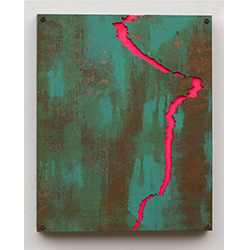
For over a decade, Fu has occupied a distinctive position within Chinese contemporary art through his signature technique of transforming paper, one of the most humble and fragile substrates, into meticulously crafted simulacra of oxidized and corroded metal. His earlier works demonstrated perfect mastery of material deception, deploying traditional construction and meticulous textural rendering to create what appeared to be decomposing industrial surfaces bearing the temporal inscription of rust, wear, and obsolescence. In this new body of work, however, Fu abandons representation entirely in favor of a radical methodology that positions Light itself as both generative medium and conceptual subject of the practice.
Fu Shuai posits that in our contemporary hyperreal condition, where the virtual has not simply infiltrated but exhaustively colonized and rewritten the material world, the role of the artist is no longer to represent illusion through mimetic skill but to document the ontological collapse between the dimensional and the flat, the physically present and the photographically recorded, the materially existing and the purely optical.
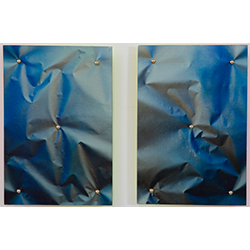
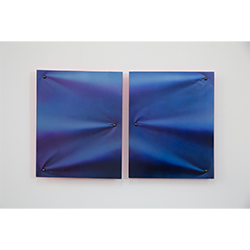
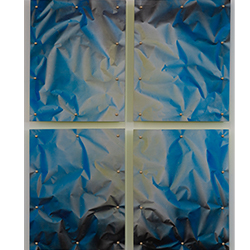
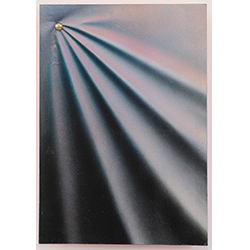
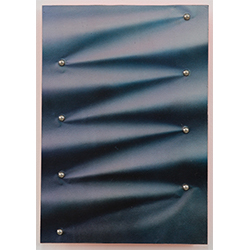
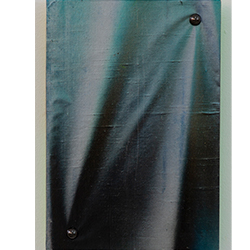
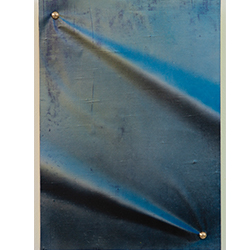
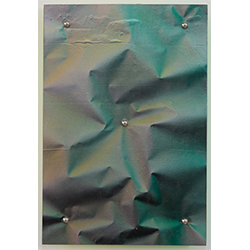
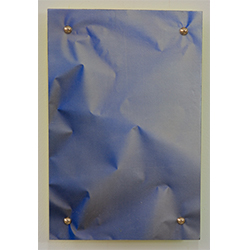
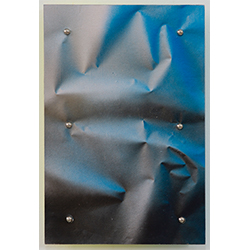
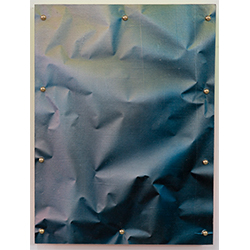
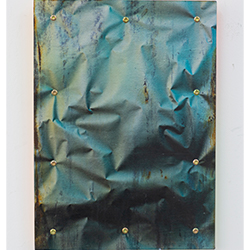
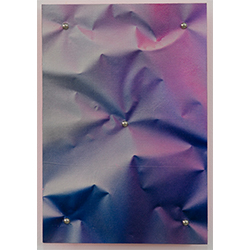
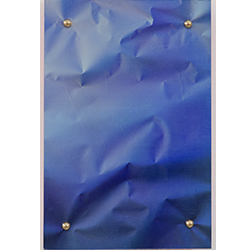
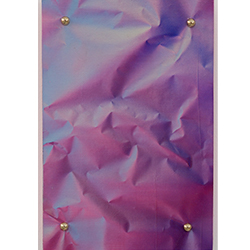
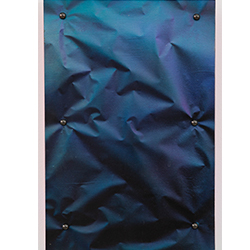
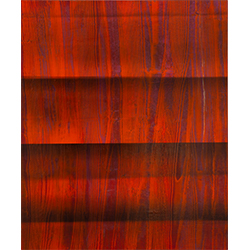
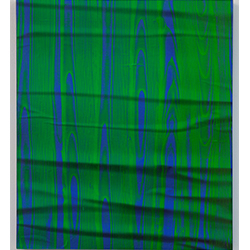
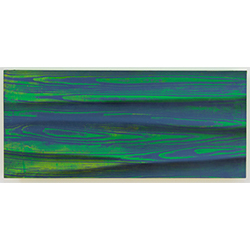
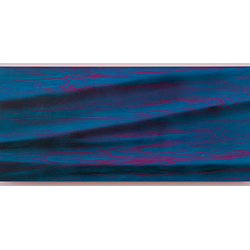
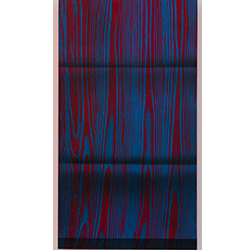
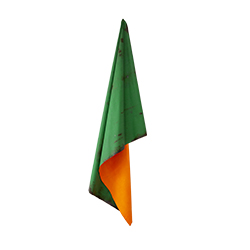
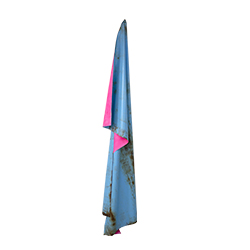
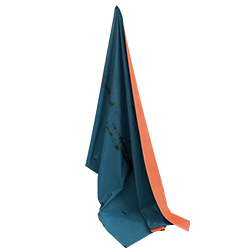
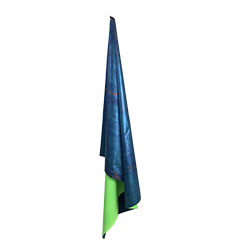
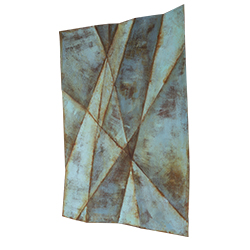
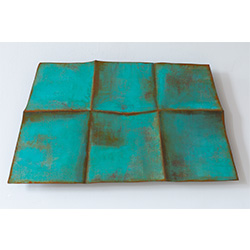
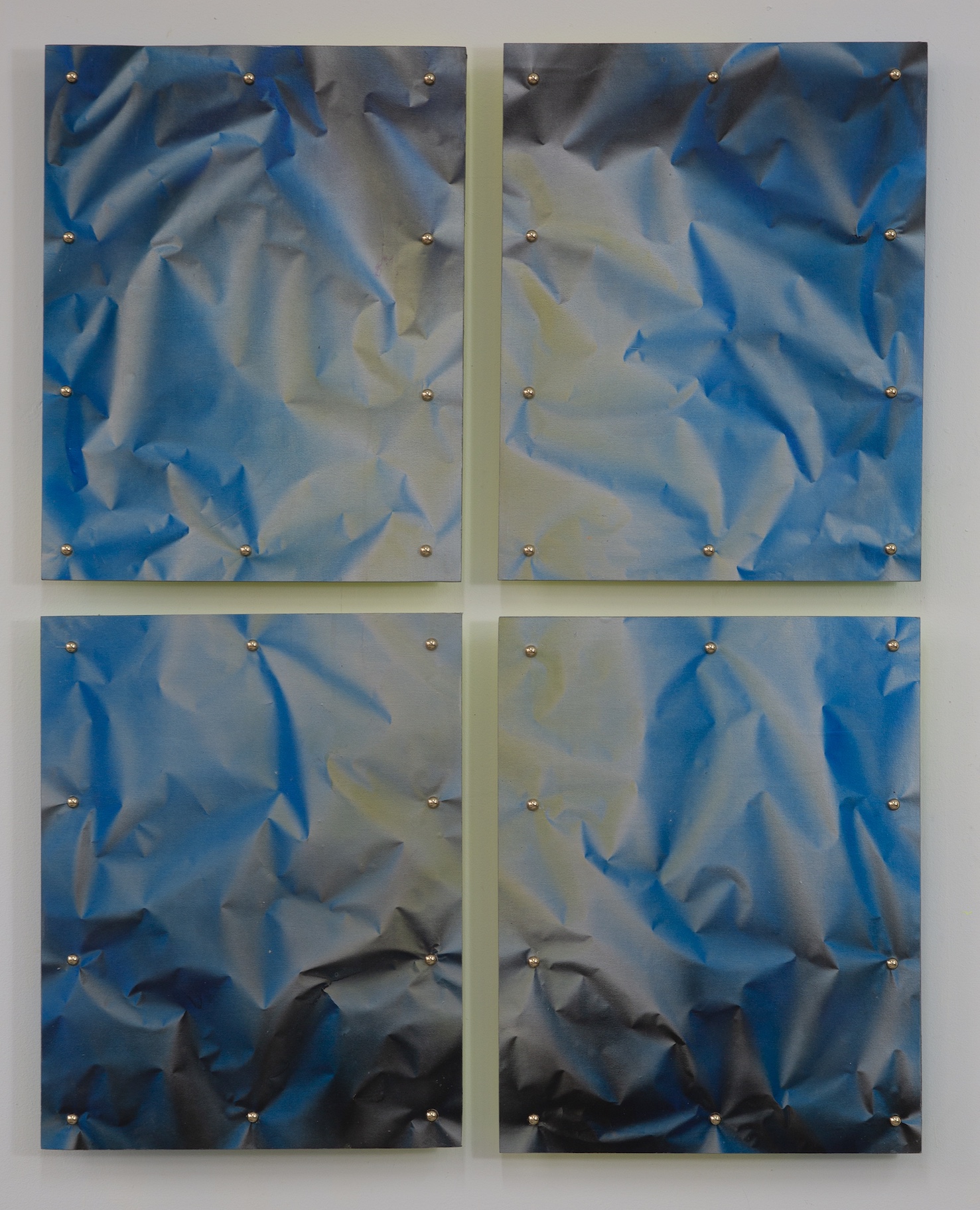
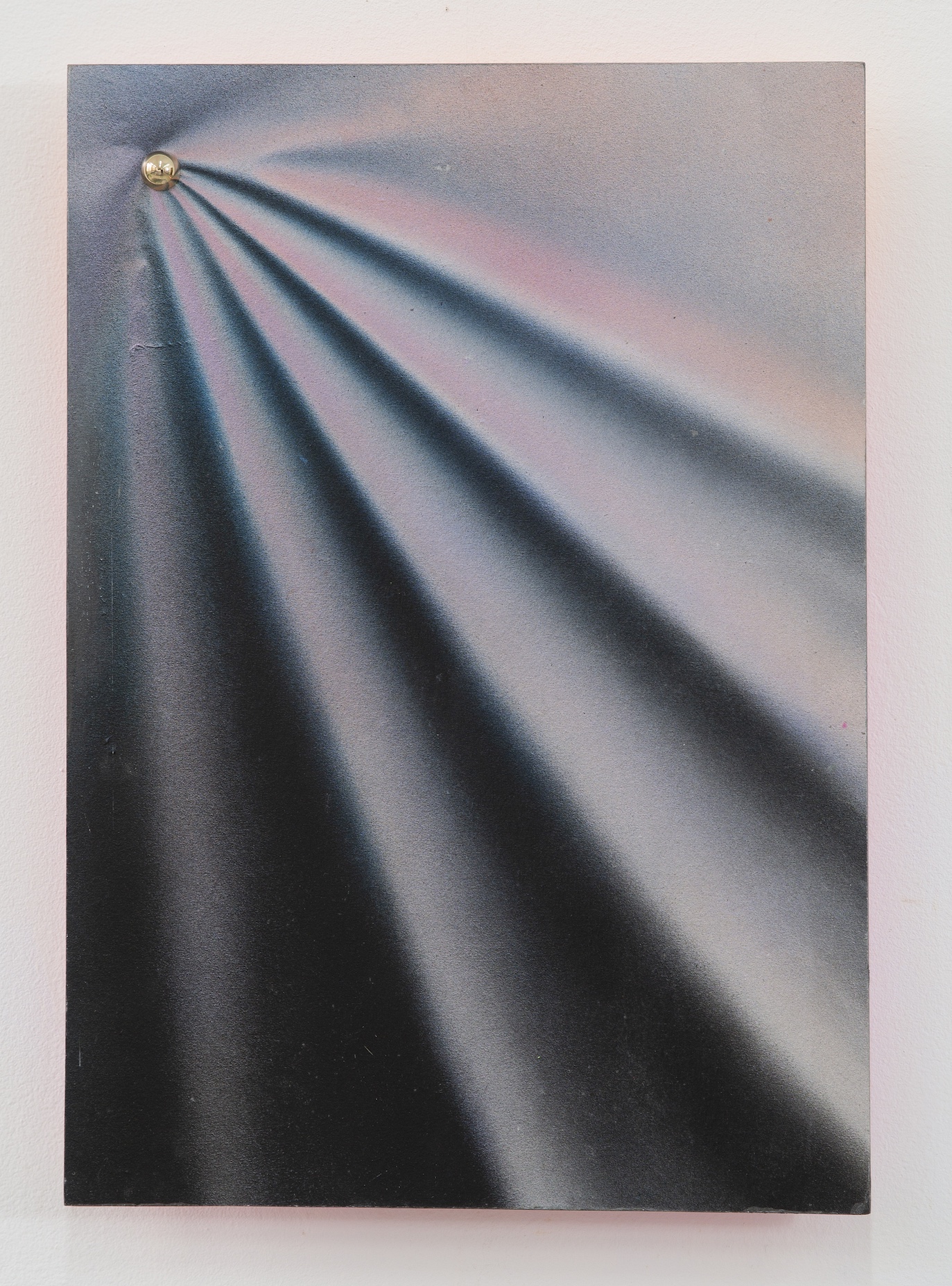
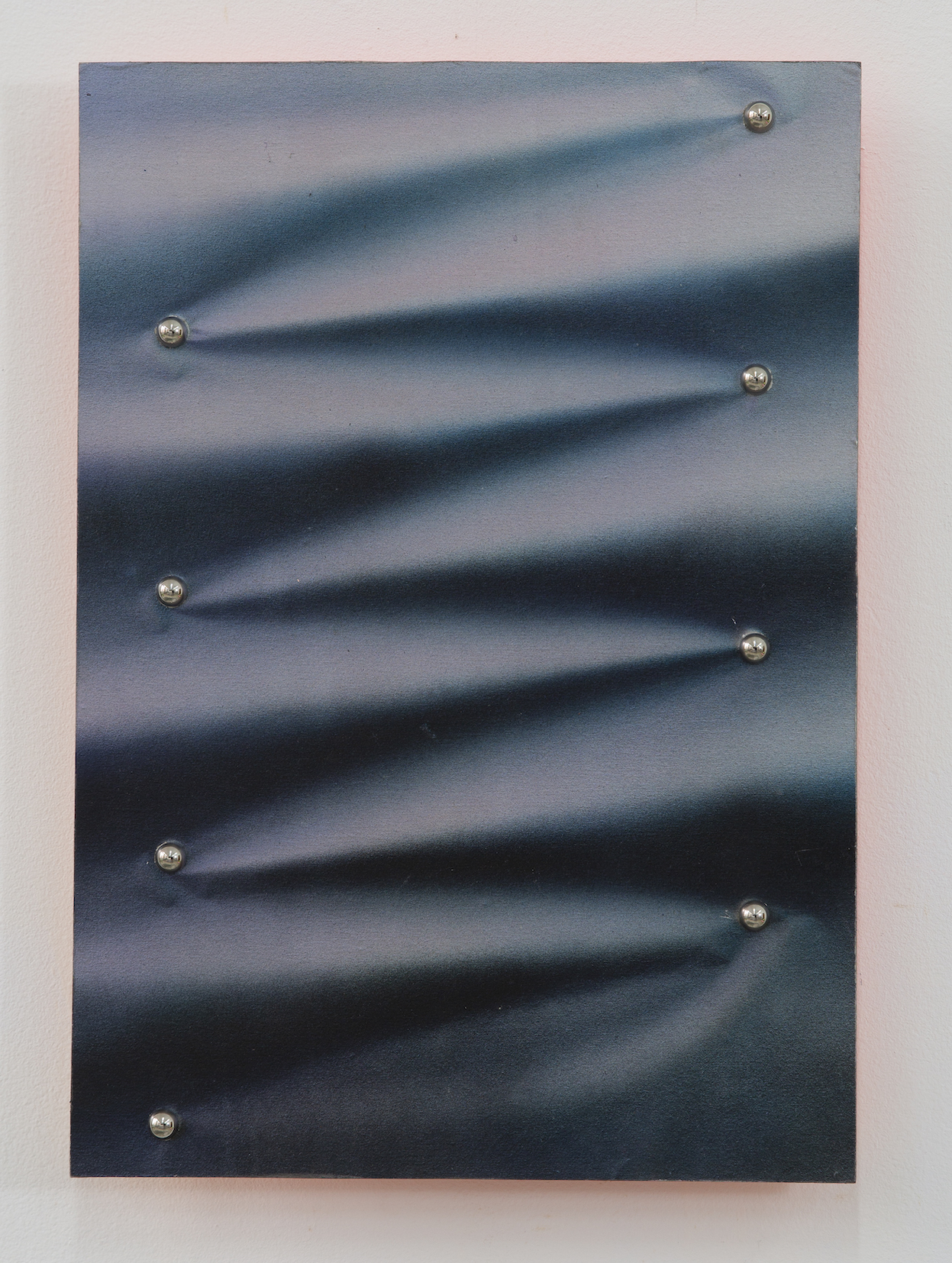
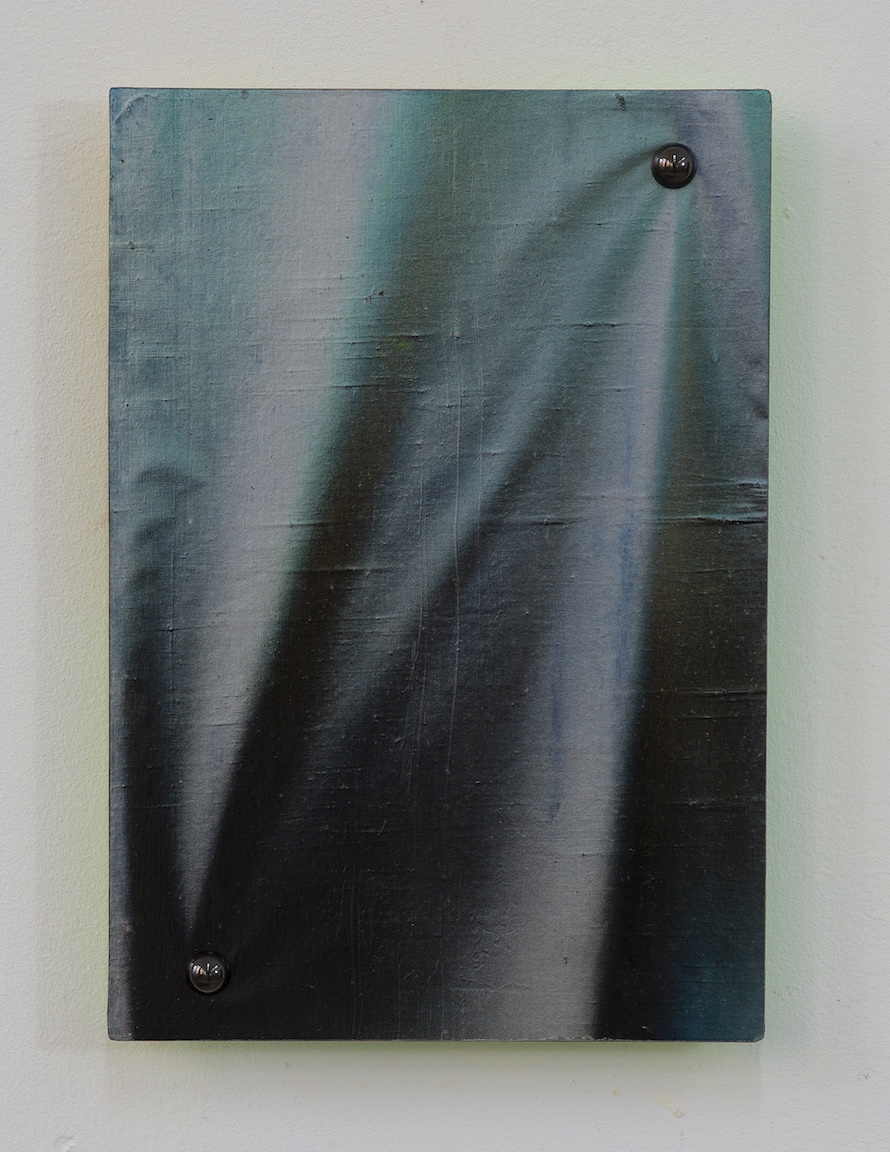
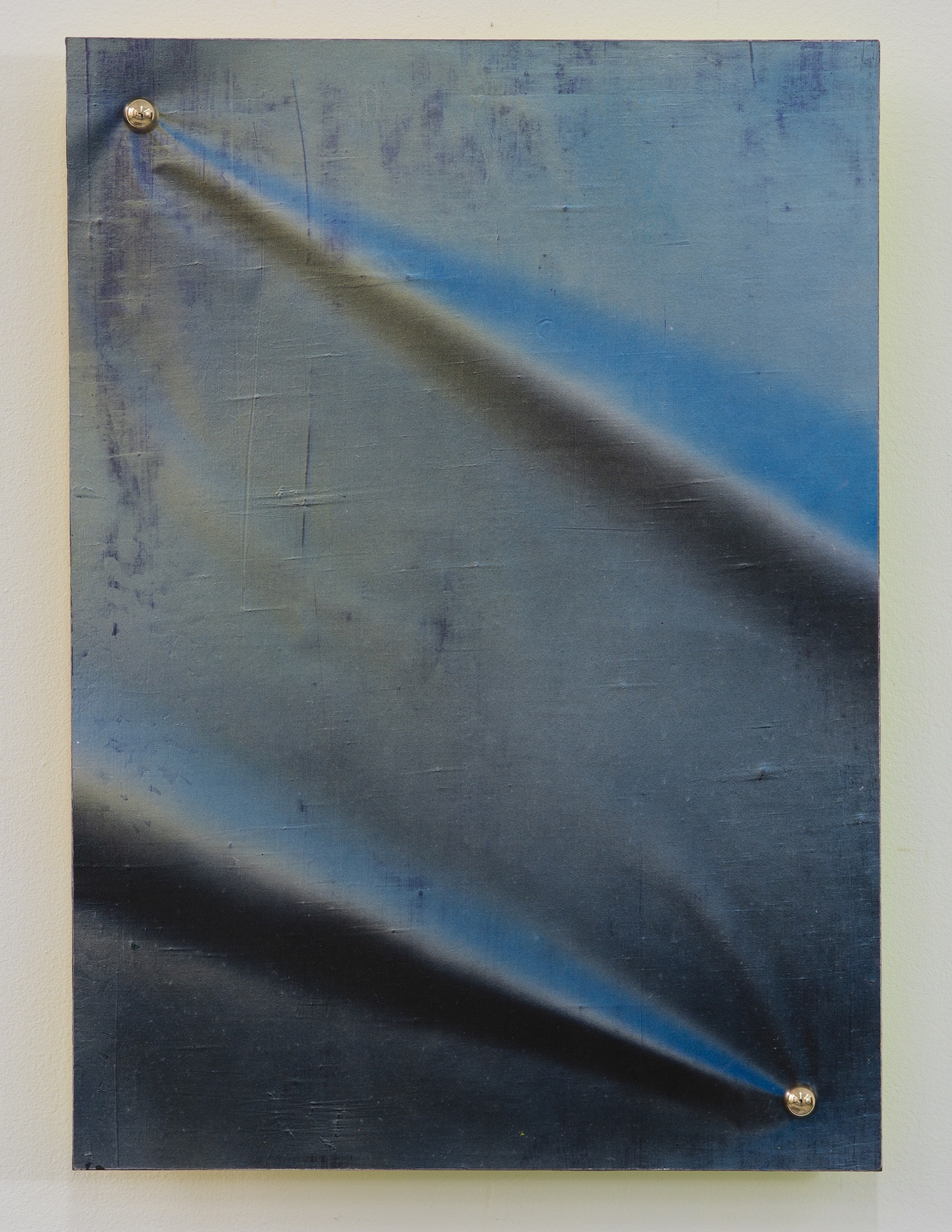
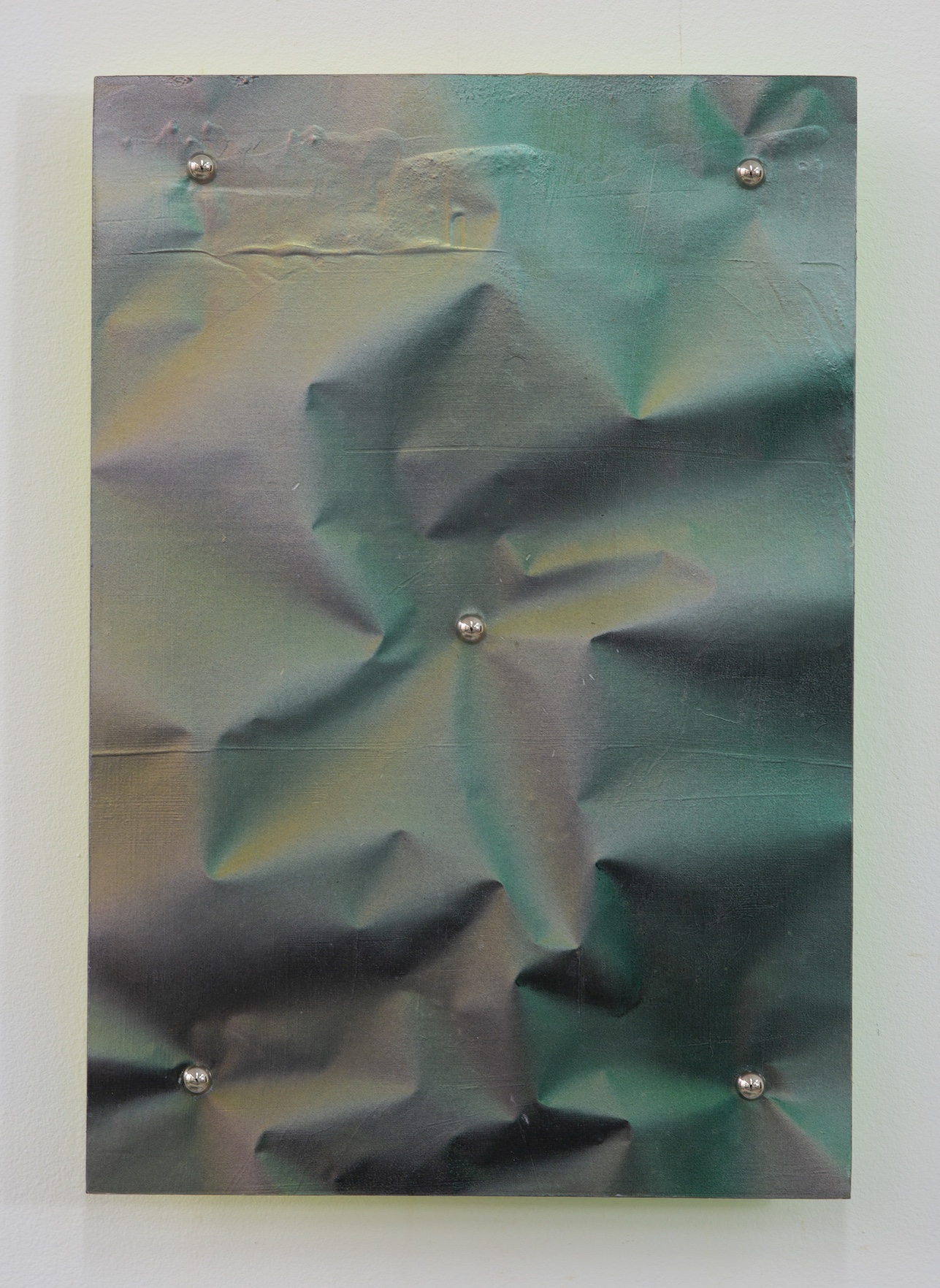
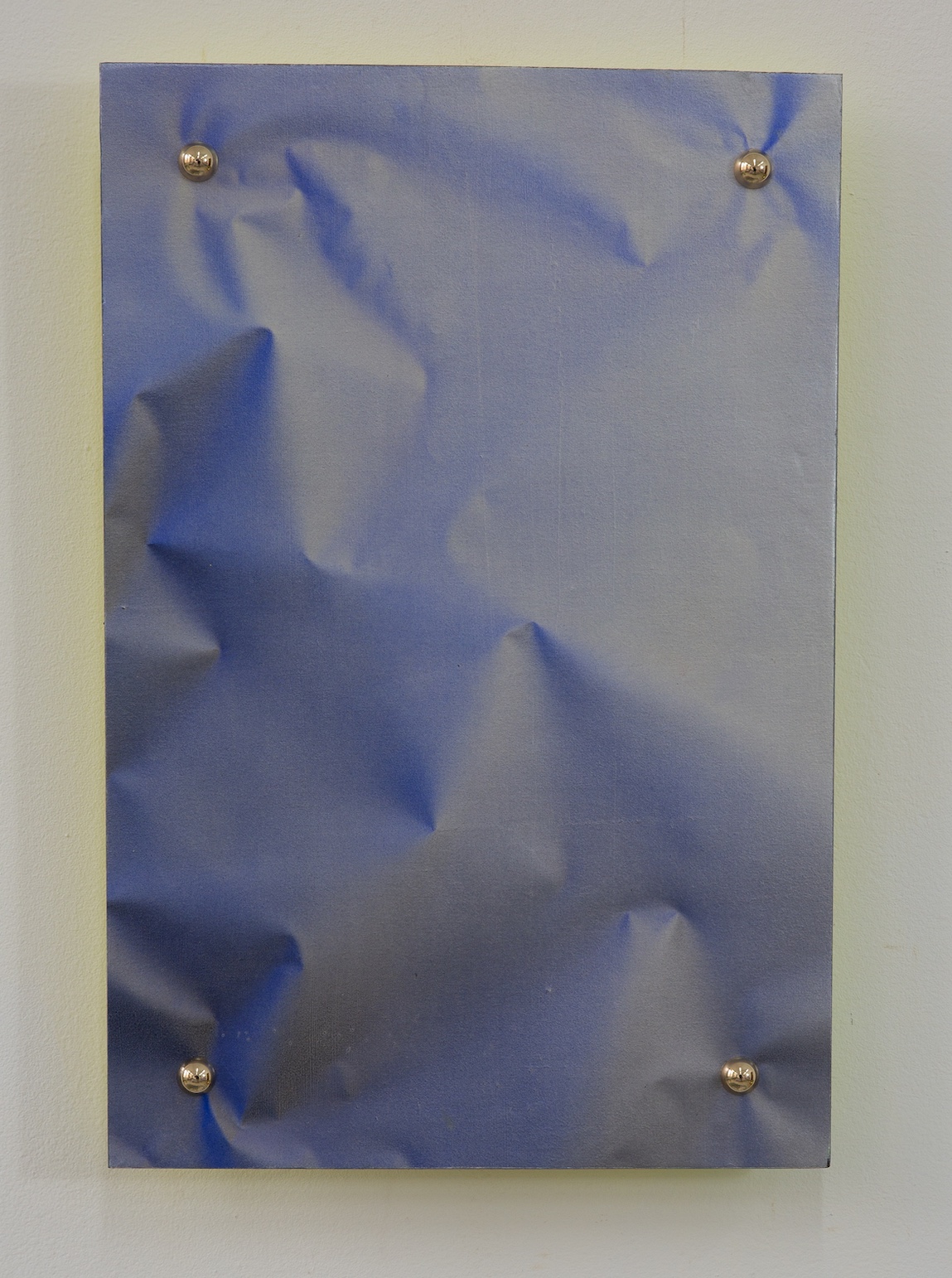
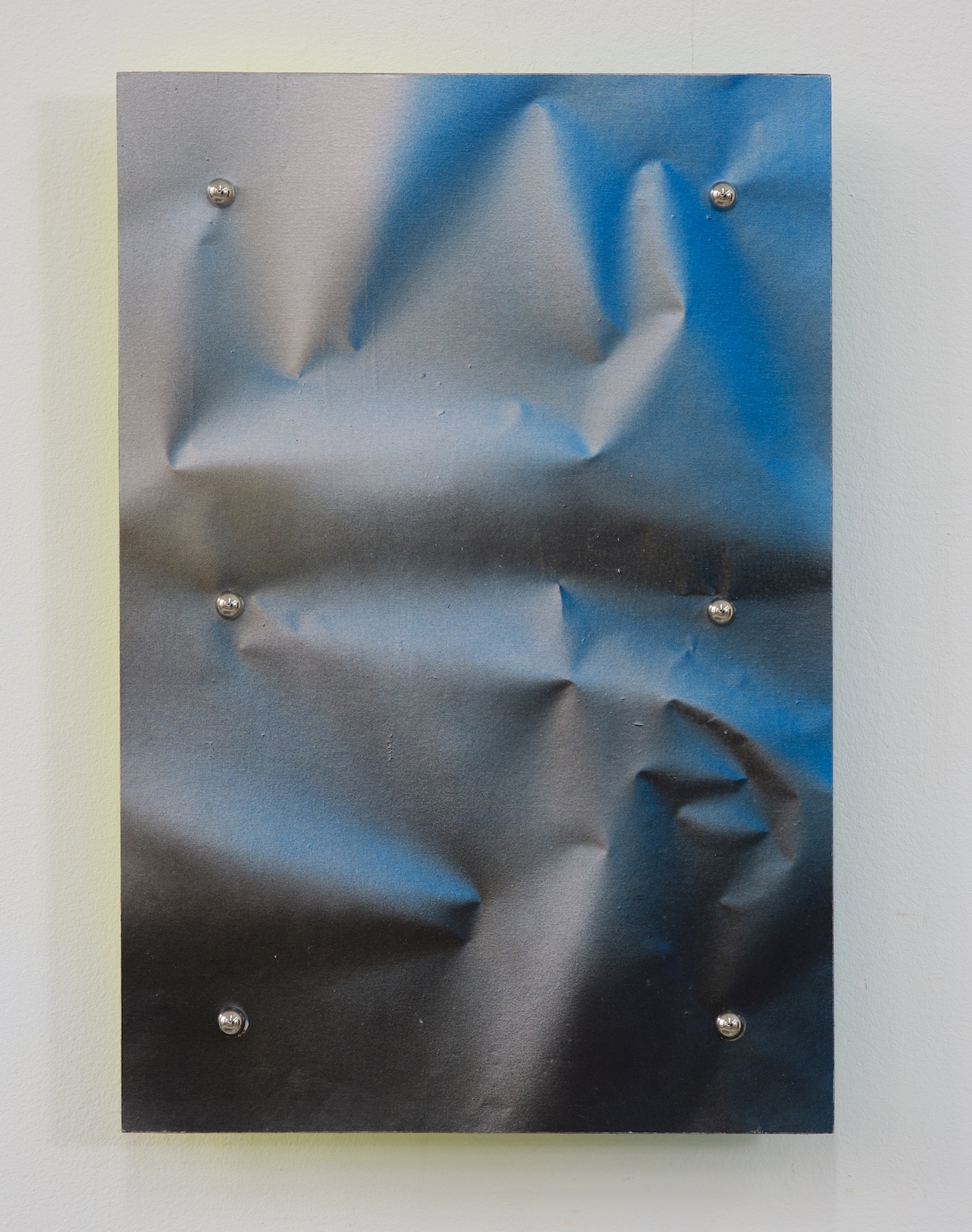
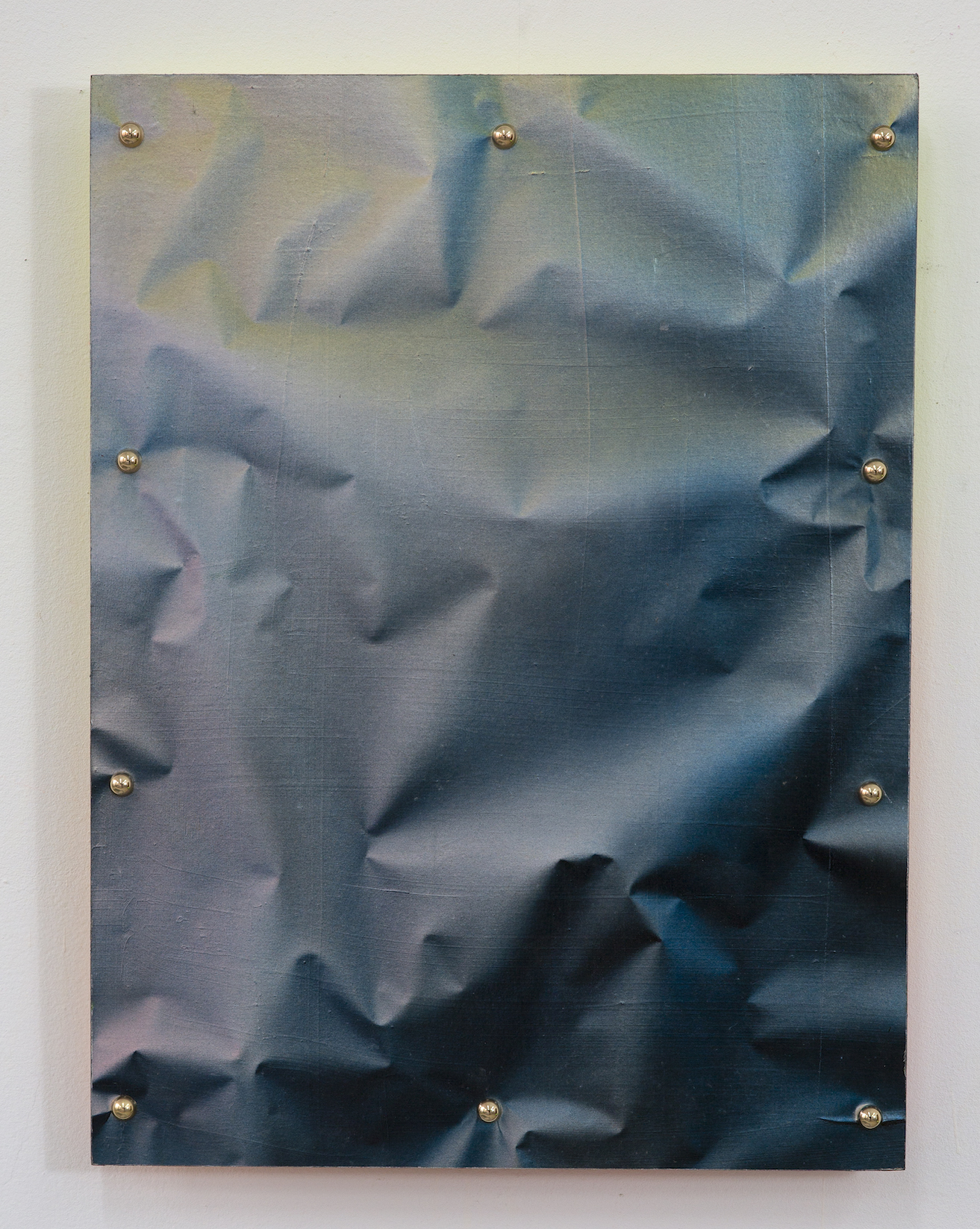
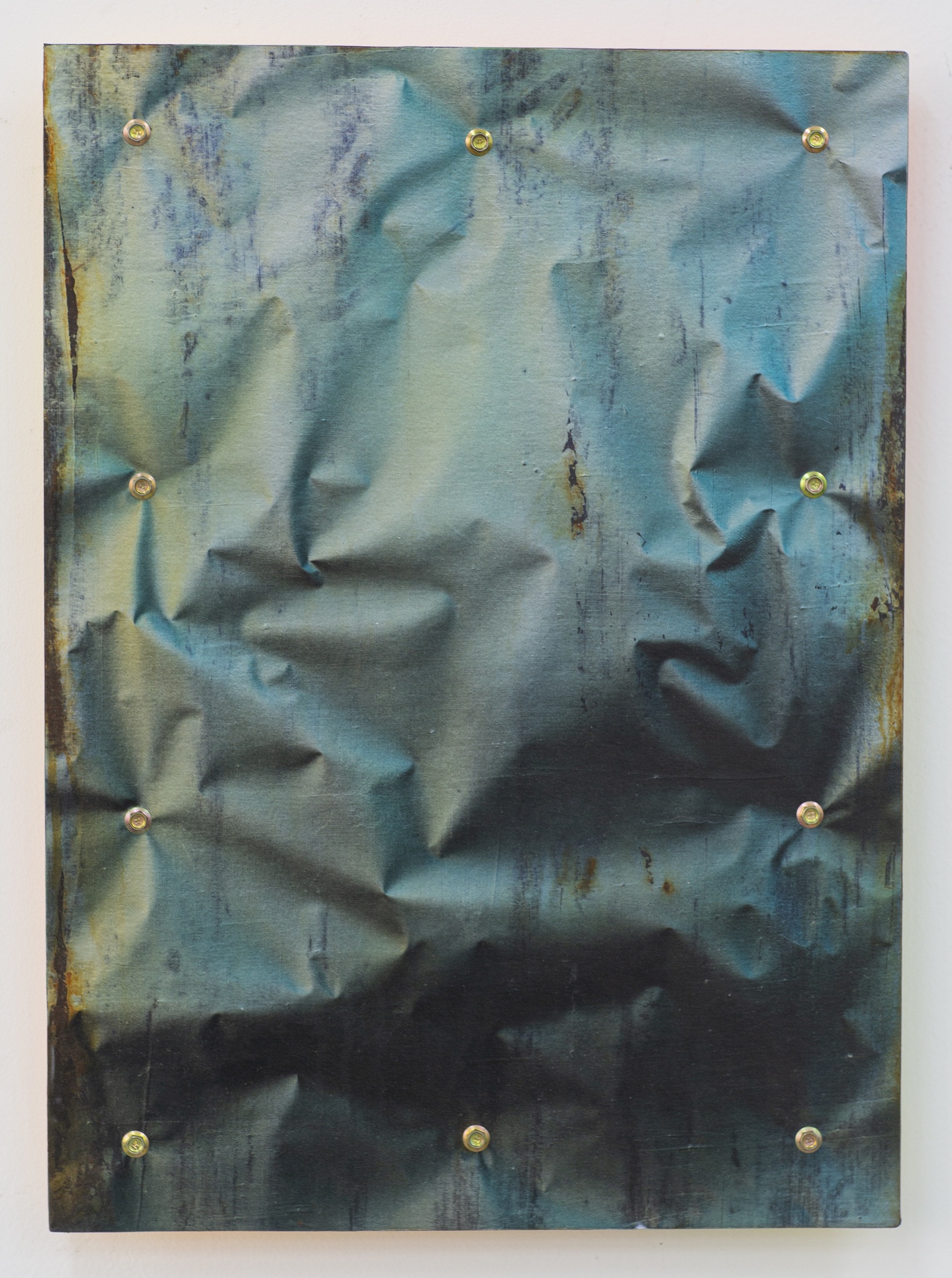
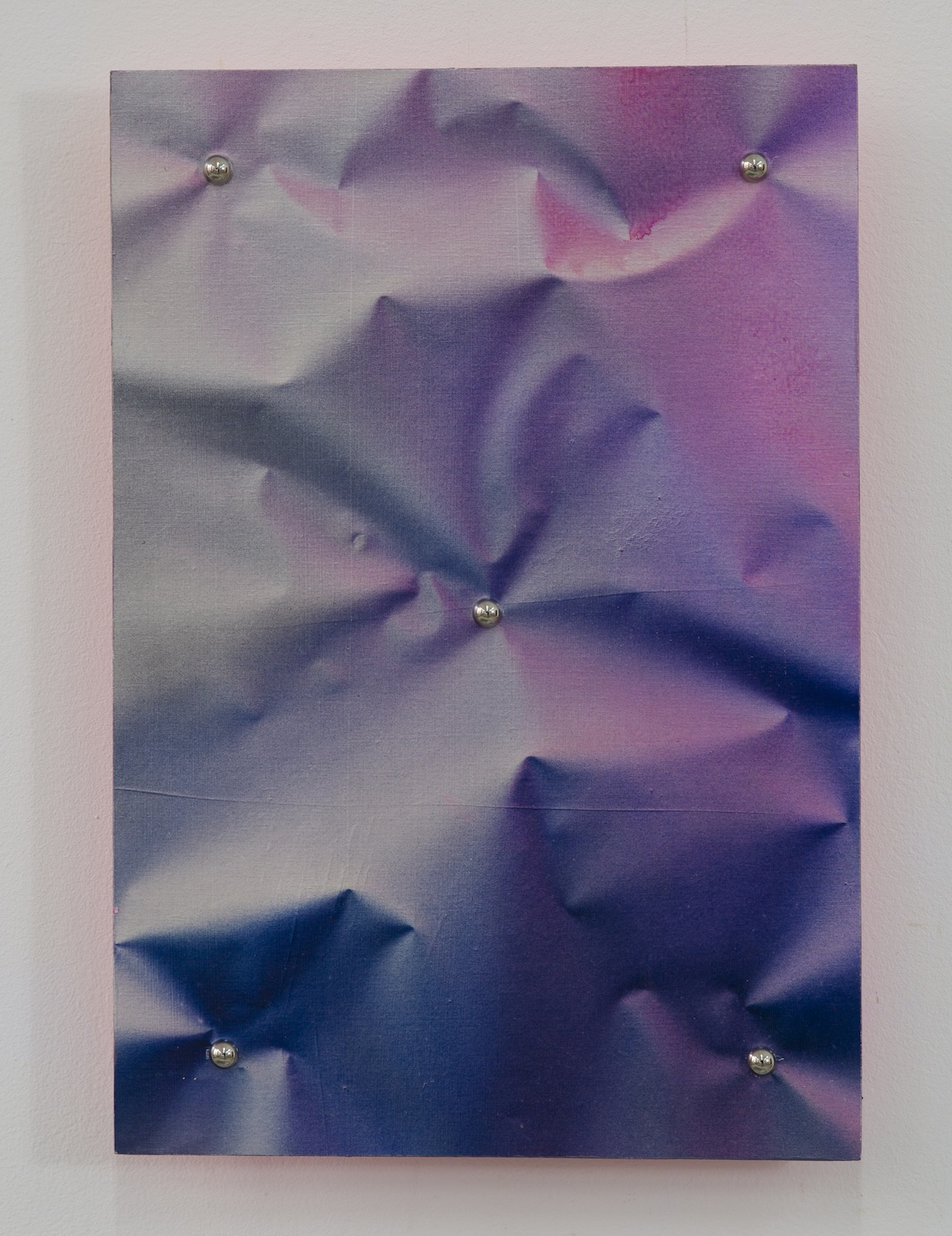
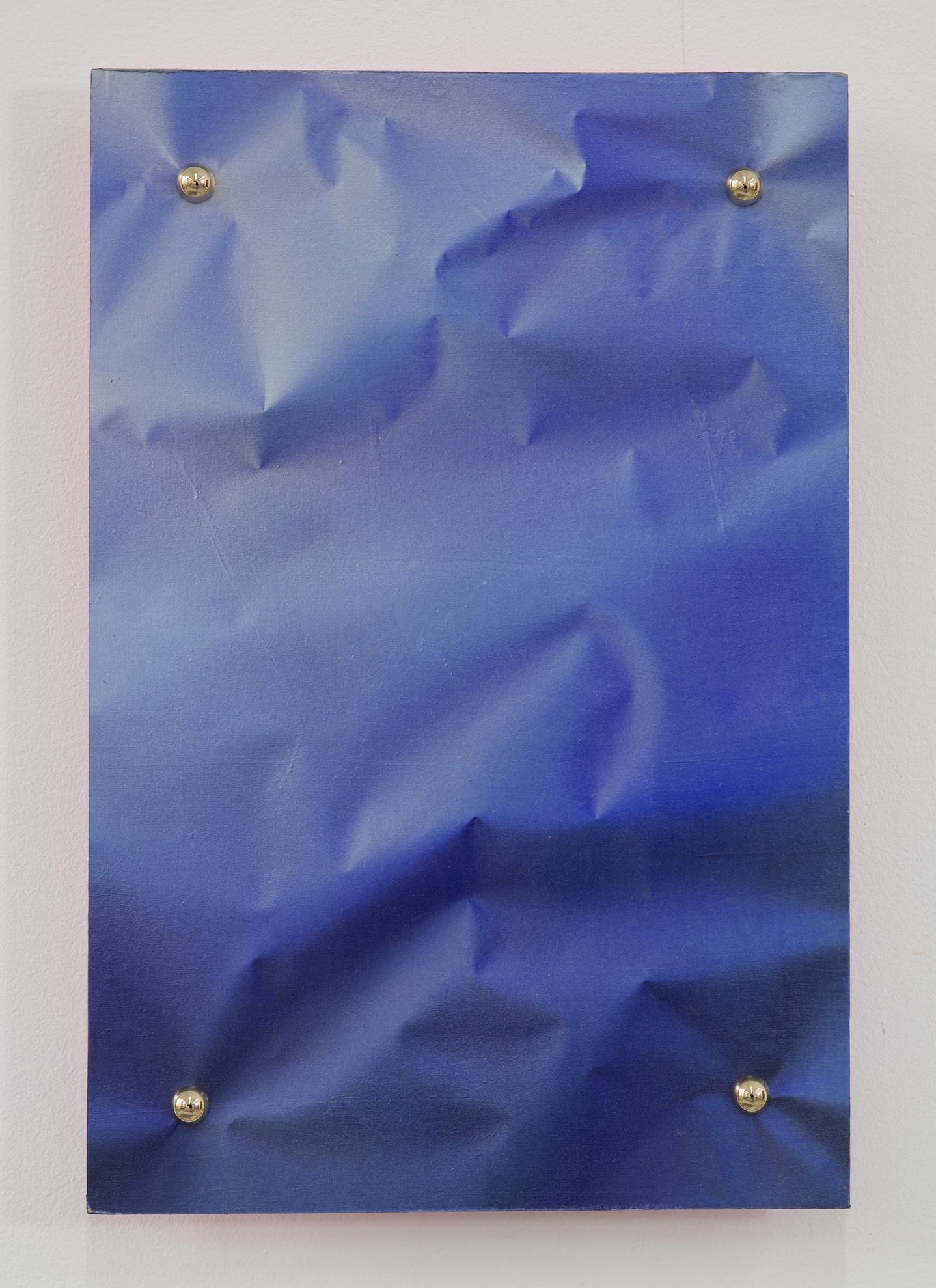
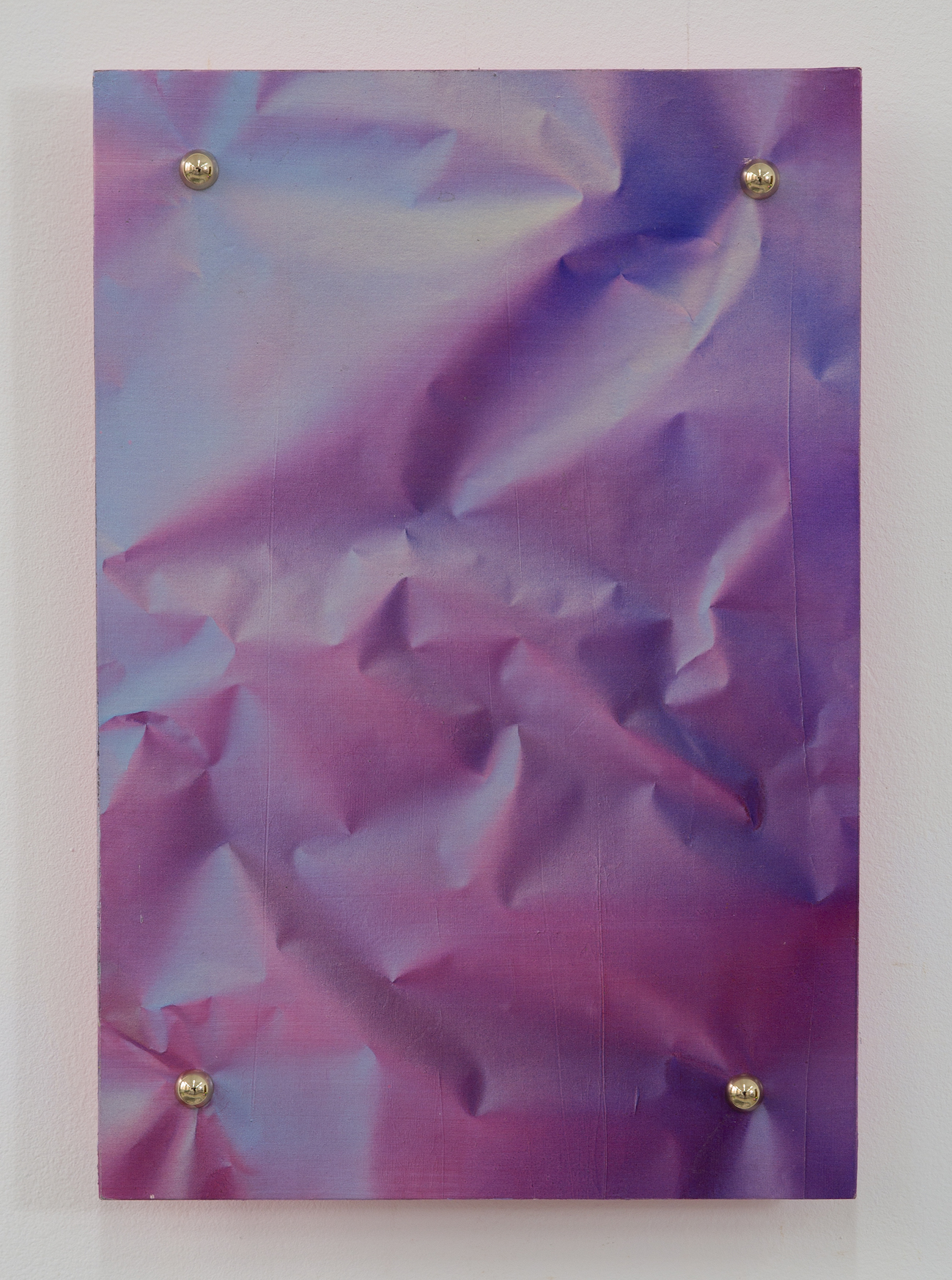
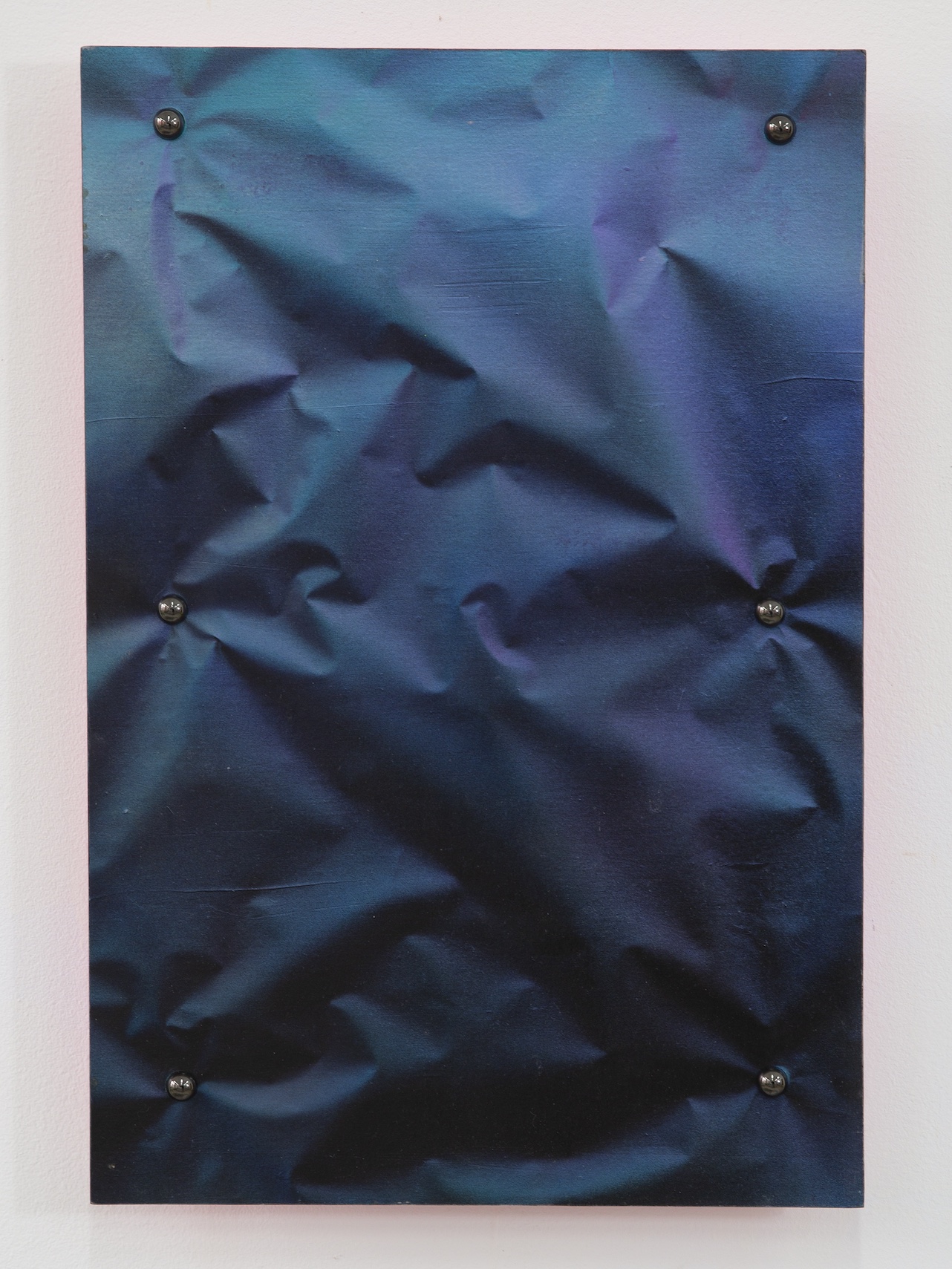
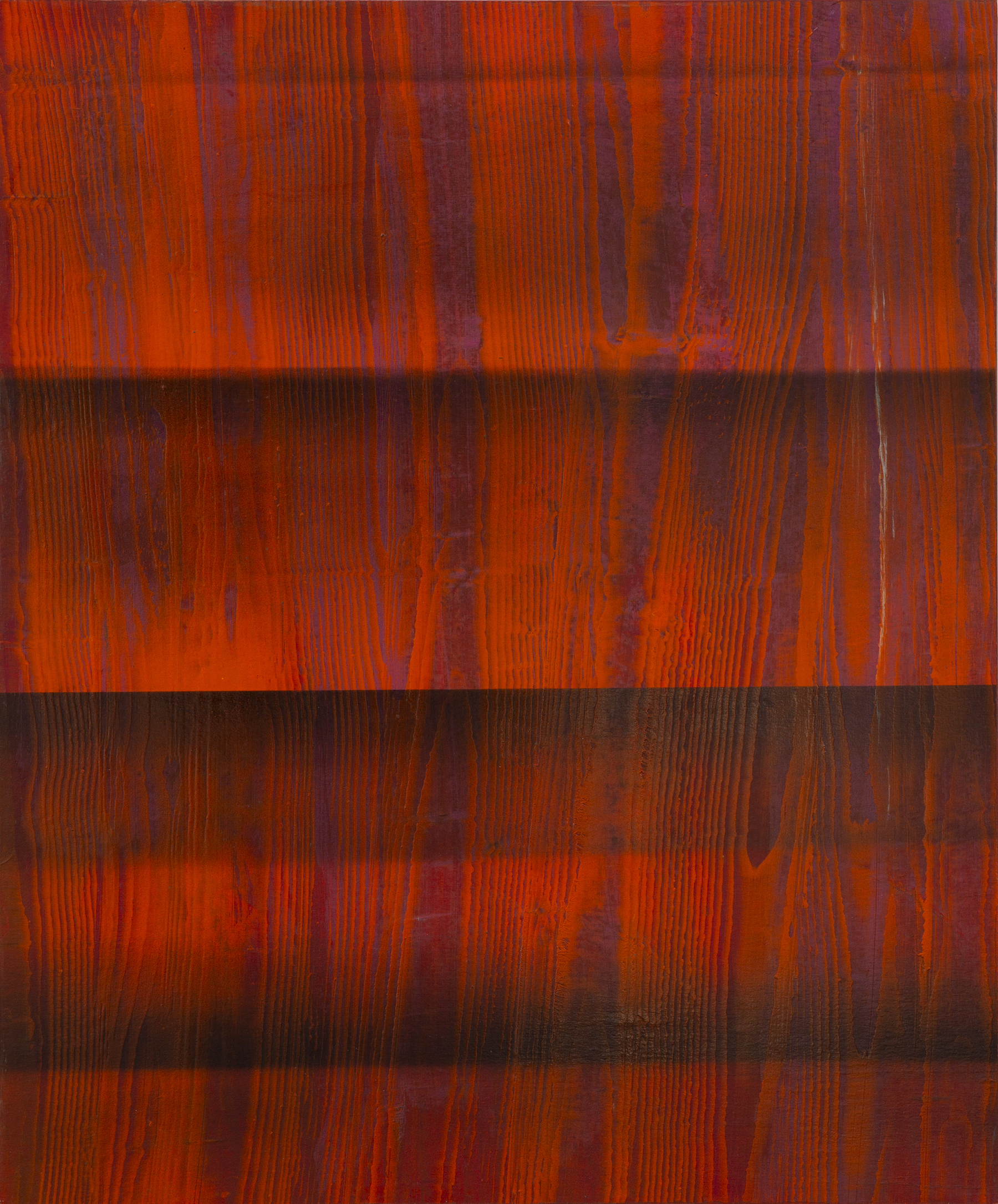
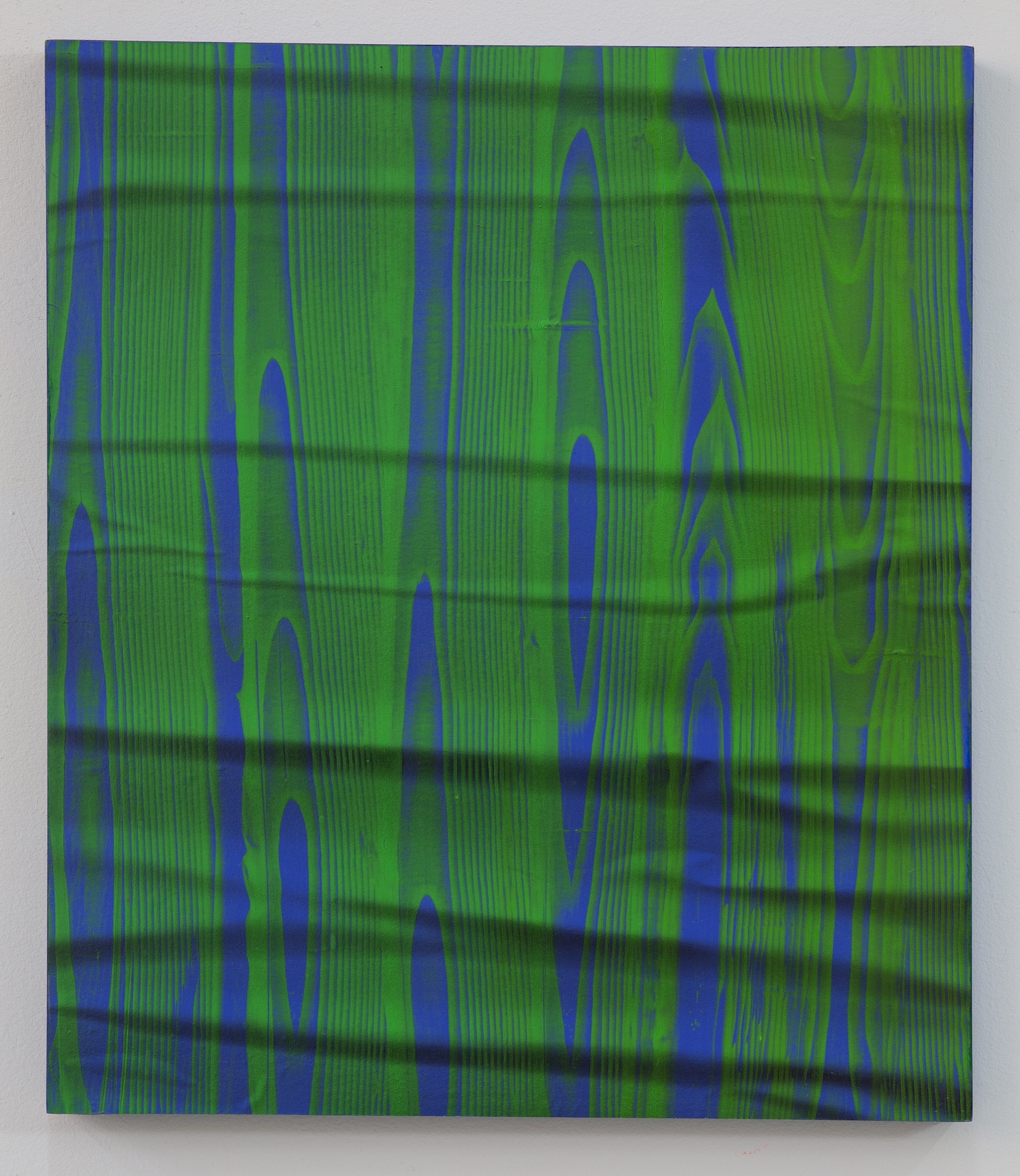
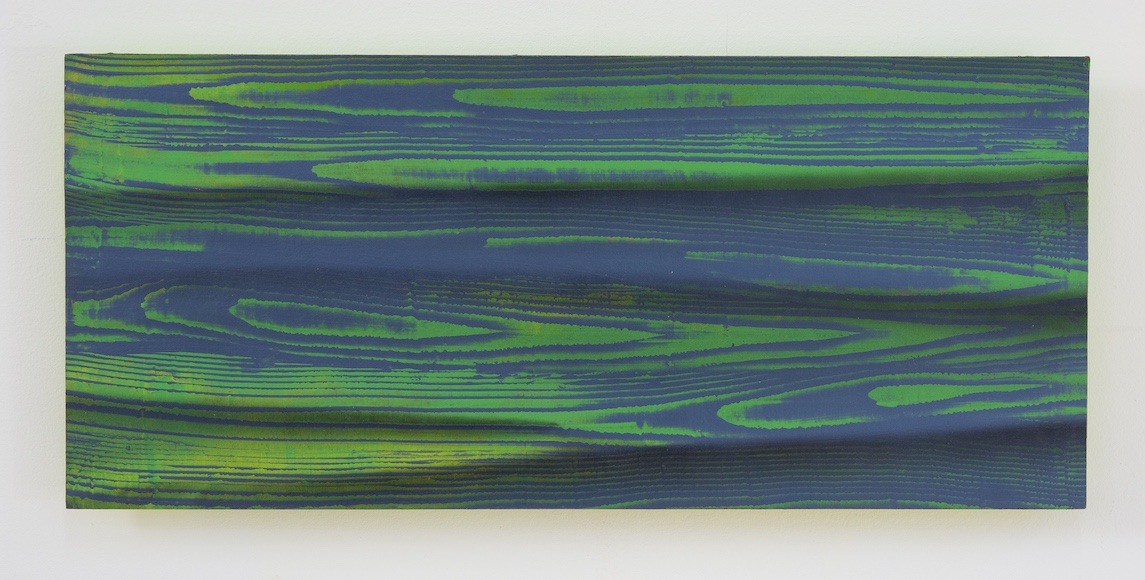
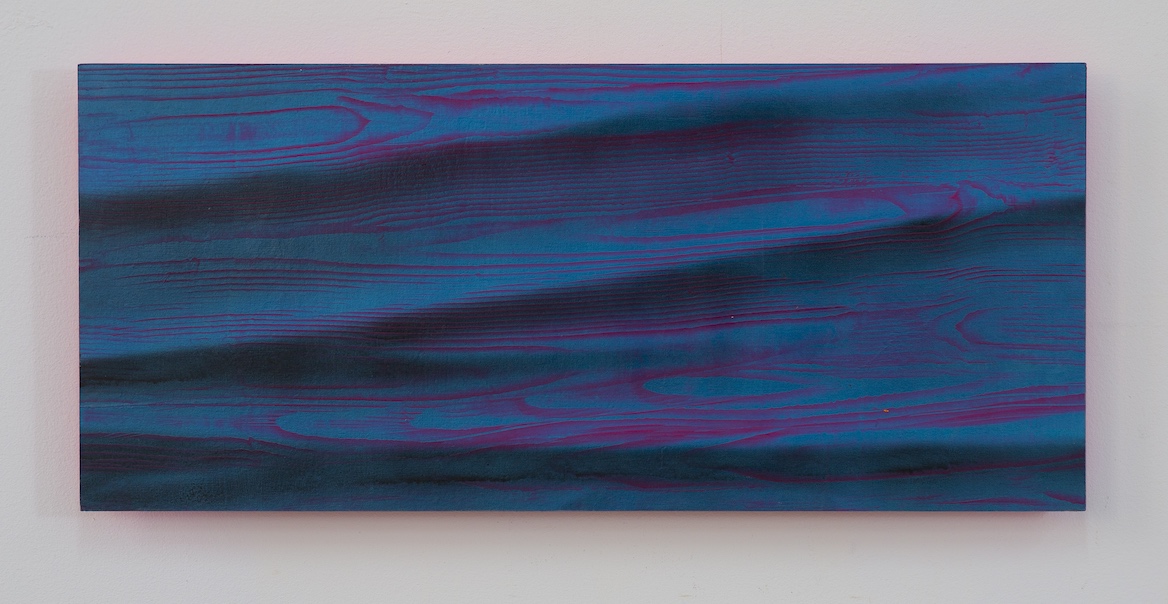
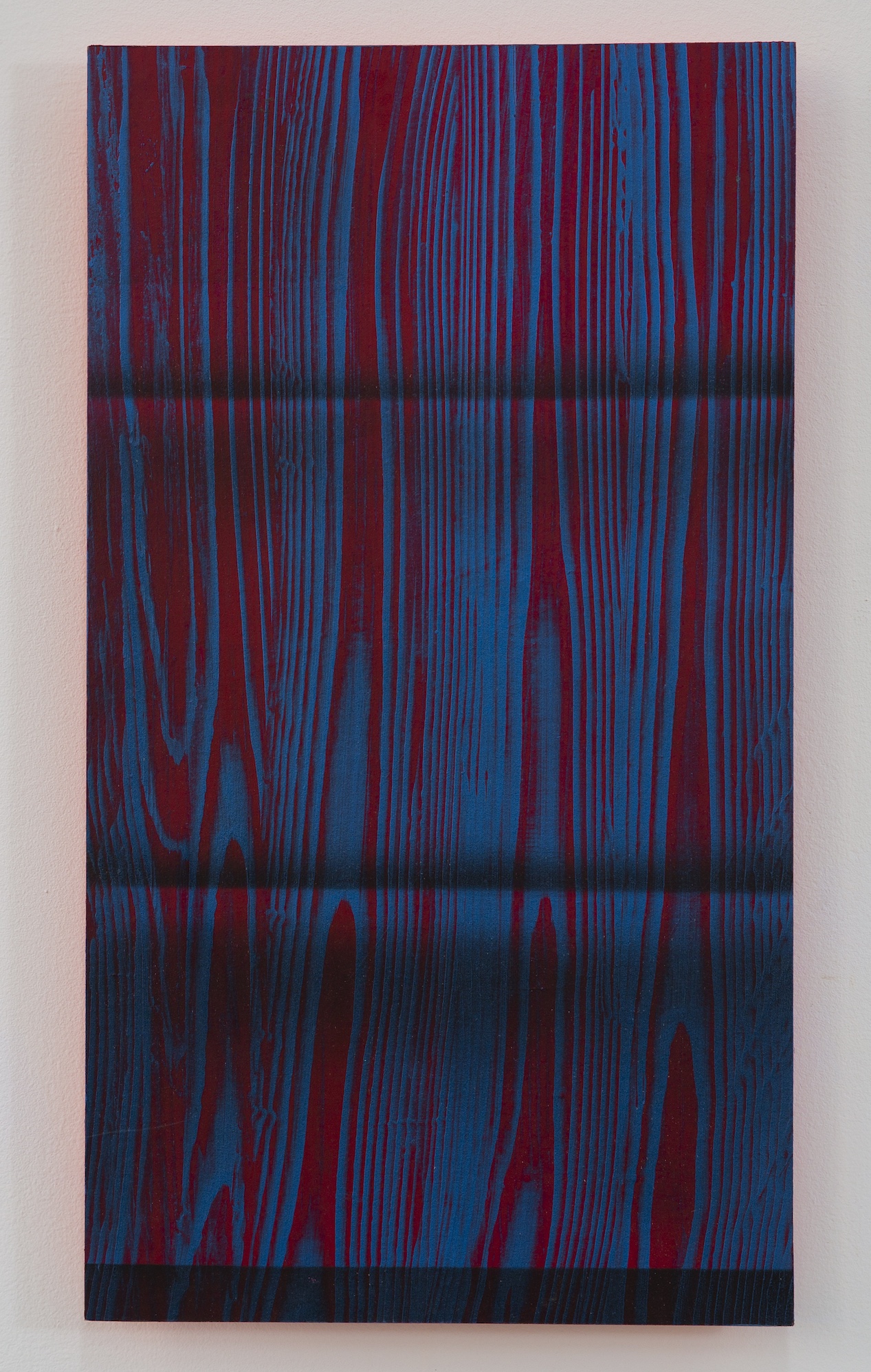
In his last series of works Fu Shuai introduce a technical innovation that he calls "reverse engineering," a process that fundamentally inverts the traditional relationship between painting and its referent. Fu does not simply translate volume through the classical means of chiaroscuro and perspective: he constructs a real spatial presence in order to then collapse it into the two-dimensional plane, without losing its original radiance. The methodology unfolds in three distinct stages: first, paper is physically crumpled, folded, and compressed to construct an actual volumetric form; next, an airbrushed pigment, often incorporating metallic particles that respond dynamically to ambient light, is applied from a single, predetermined viewpoint, allowing the paint to function not as a descriptive medium but as a recording apparatus; finally, the paper substrate is carefully unfolded and flattened, returning the three-dimensional object to the pictorial plane while preserving what Fu evocatively terms the "light-shadow memory" of its brief existence in space. This approach situates the work in a hybrid zone, between the indexicality of the photographic medium and pictorial fabrication, between automatic capture and human intervention. The images produced are less paintings than archives: they precisely document the encounter of light and matter in a unique spatiotemporal instant.
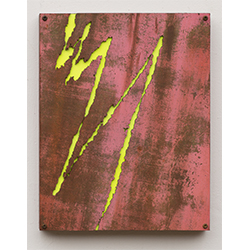
This technique has important consequences for how we see images today. Unlike classical trompe-l'oeil where the artist tries to deceive our eye through skill, Fu's works have a real, physical basis. The shadows and highlights we see on the canvas are not painted in an illusionistic manner: they are actual traces of a three-dimensional object, captured by the airbrush like a kind of photograph. The droplets of paint, according to Fu, function like photons striking photographic film. They faithfully record the areas exposed to light and those in shadow on the crumpled paper. When we look at these works, we don't see a simple imitation of a relief form, but the ghostly imprint of that form, a spatial presence that has been transformed into pure image. Fu doesn't create illusions, he unveils them. He reveals the hidden depth in the flat surfaces of our screen-based world.
Fu Shuai's practice is a sustained archaeological investigation of the epistemological crisis that defines contemporary visual culture. We inhabit a moment, in which the deceptiveness of visual perception is no longer simply an optical game but our fundamental existential condition. When painting appears more materially convincing than physical reality, when flat illusions prove more dimensionally persuasive than authentically three-dimensional entities, when industrial surfaces evoke organic processes more effectively than nature itself, we are not simply confronted with the virtuosity of an individual artist but with the essential character of a world in which images have definitively supplanted material presence. Fu's practice neither laments this condition nor offers nostalgia for an unmediated relationship to the real. Instead, through its rigorous material investigations and conceptual precision, it provides the analytical tools necessary to navigate and critically understand our contemporary landscape that is hype realistically simulated, absolutely hyper realistic.
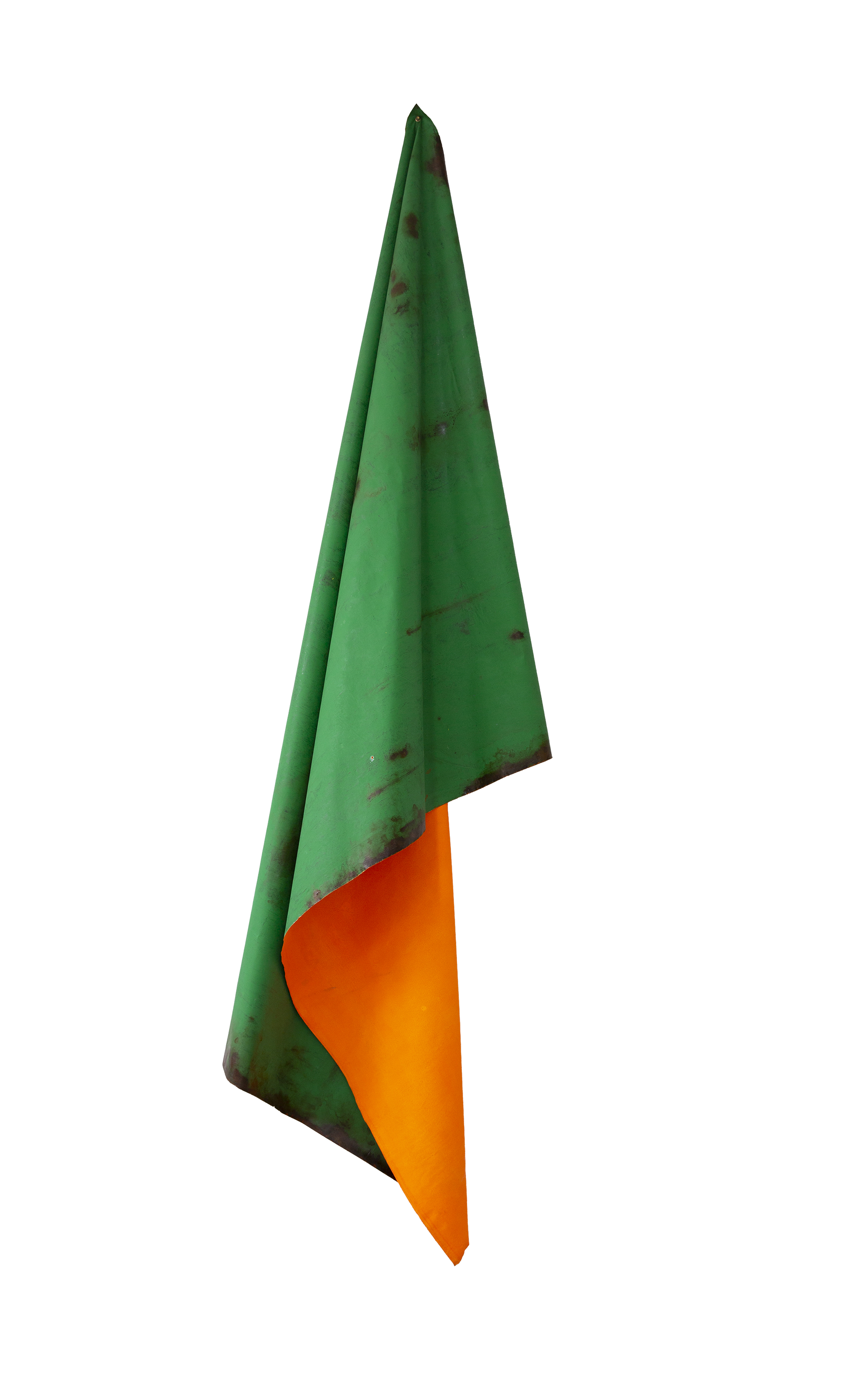
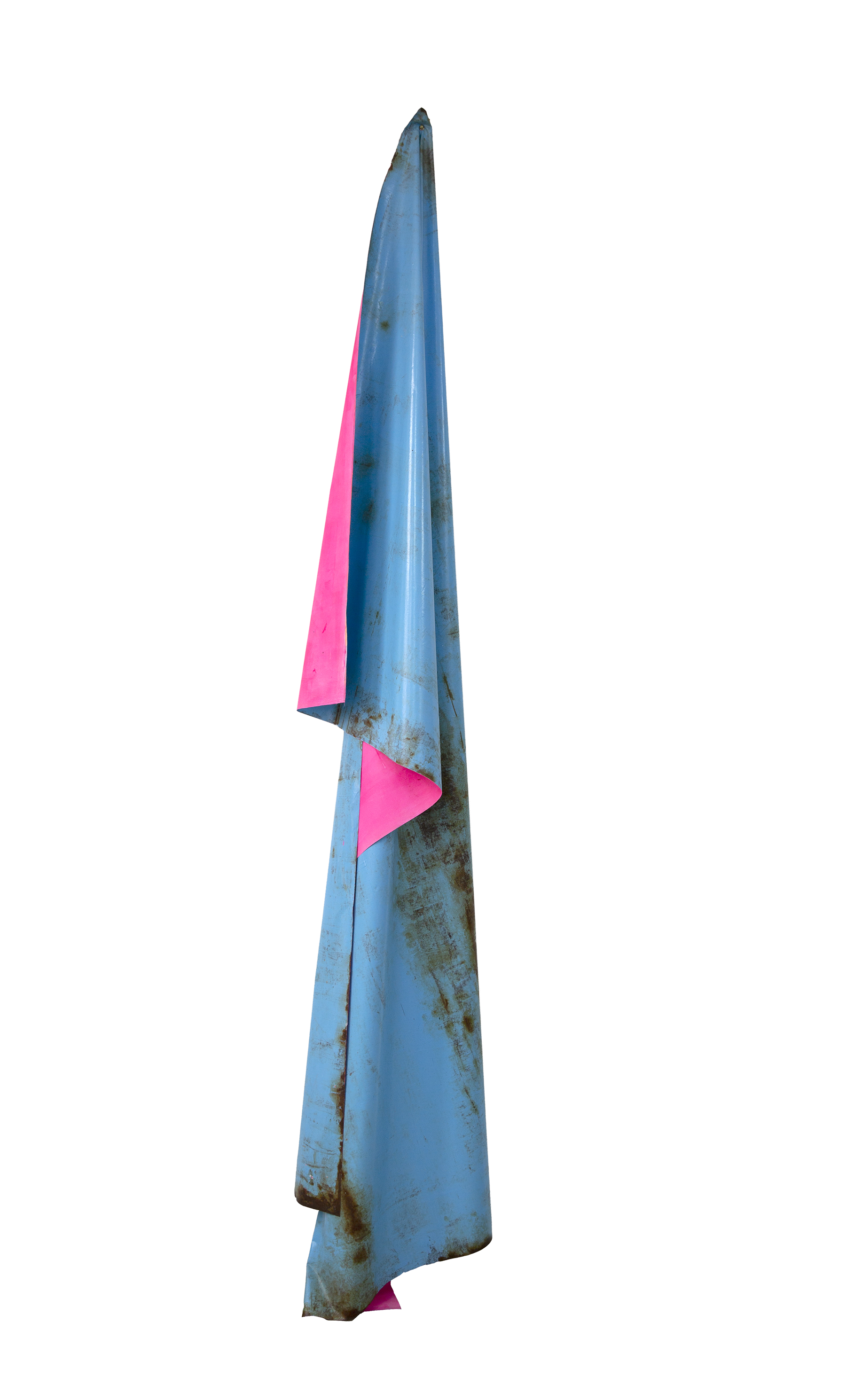
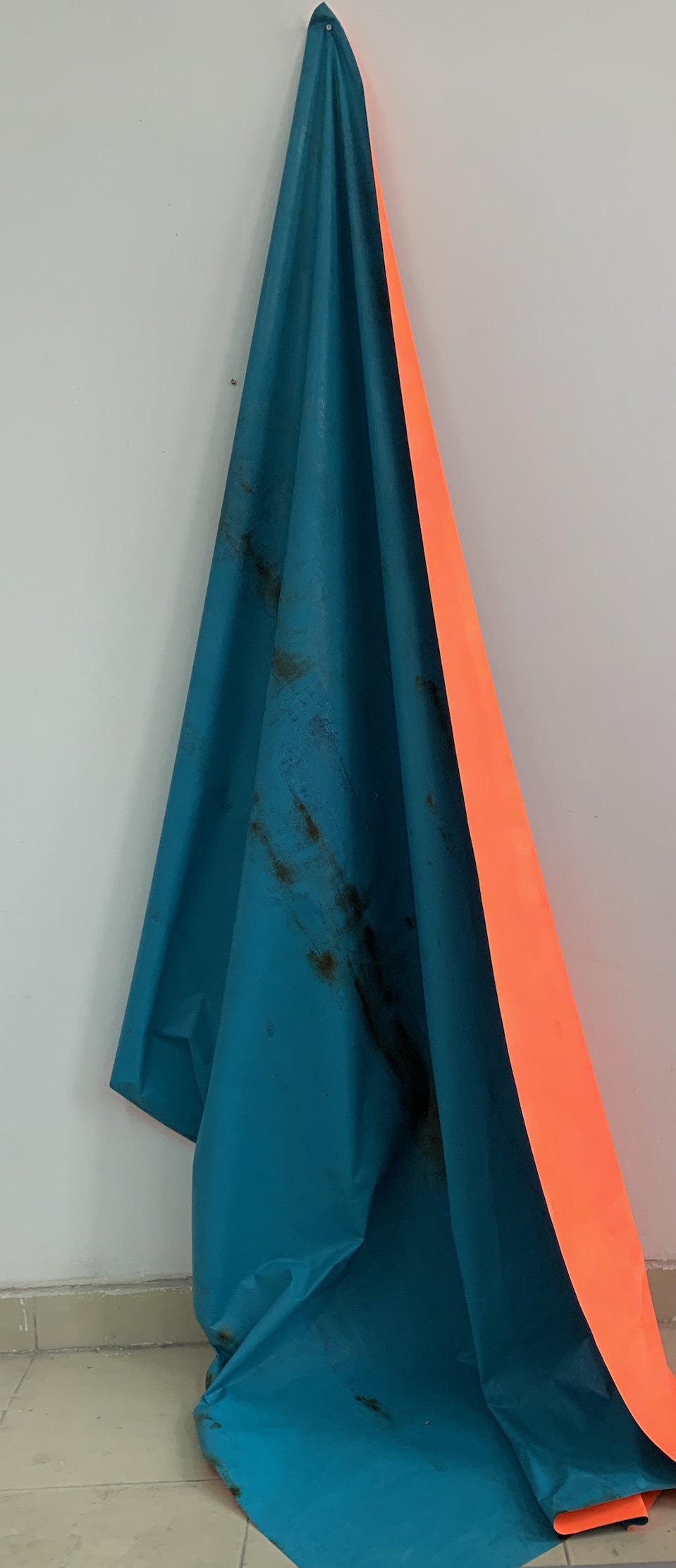
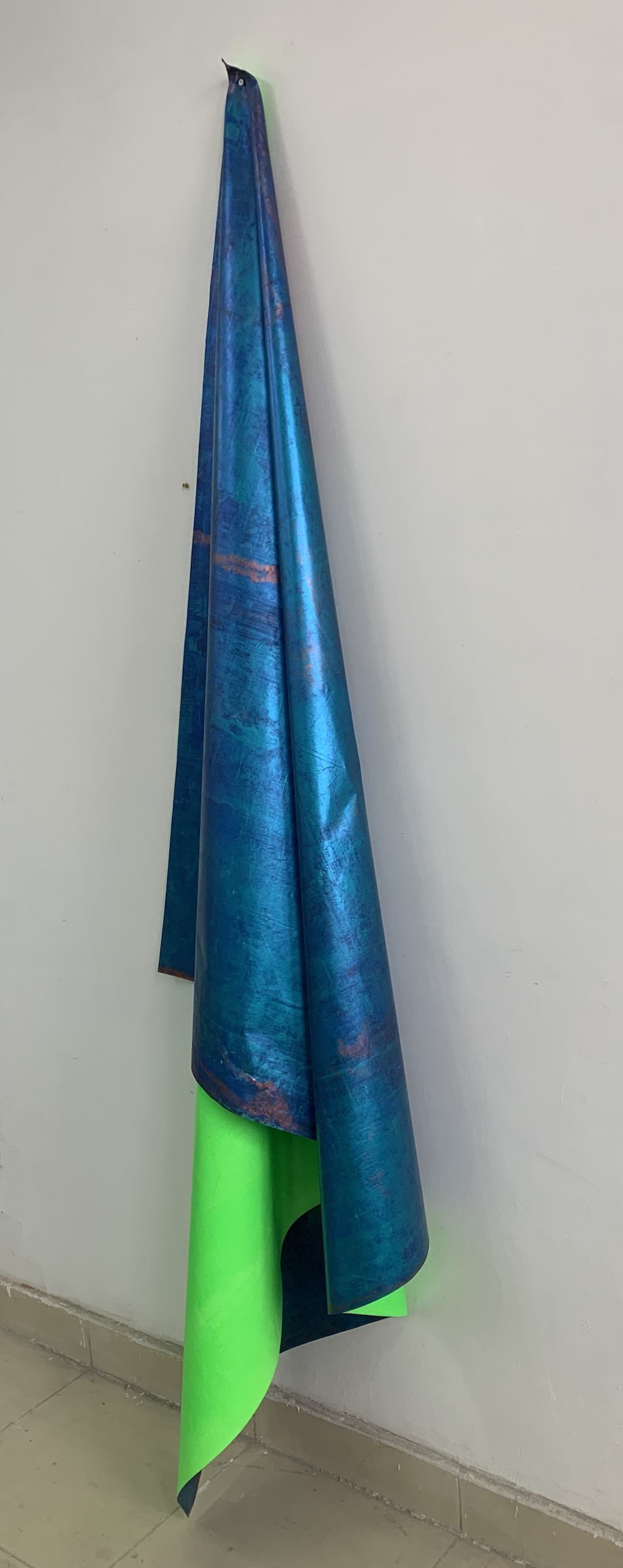
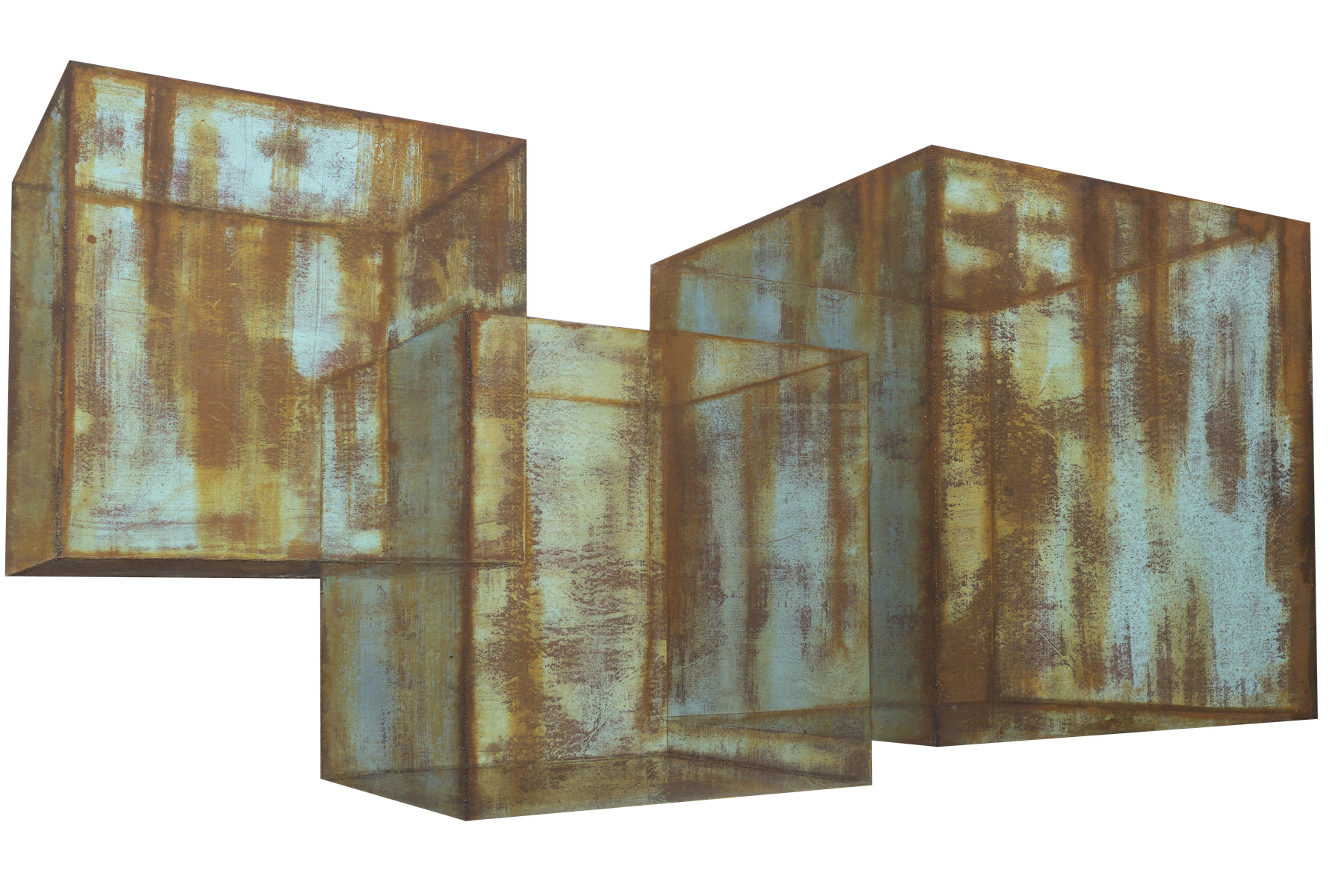
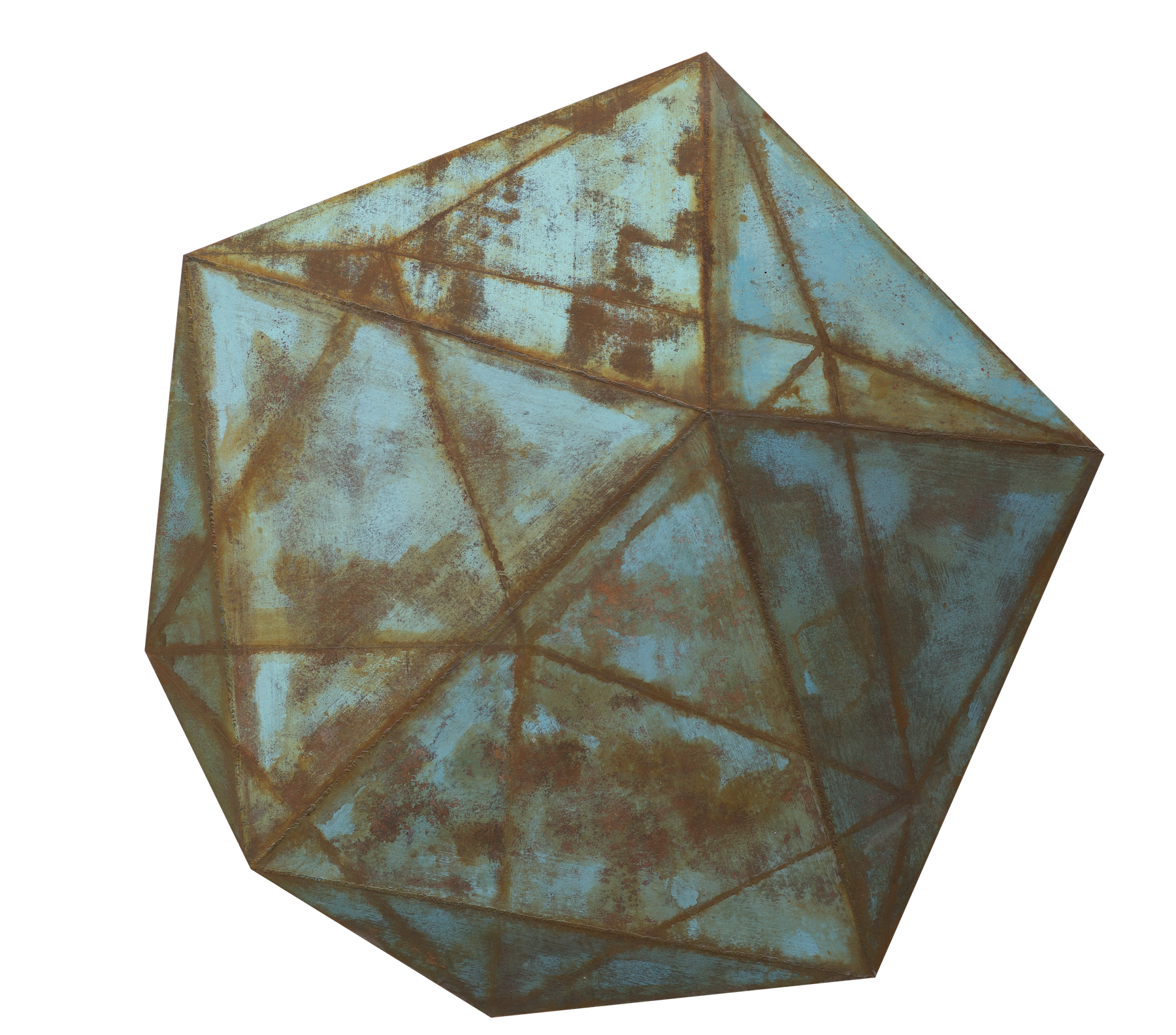
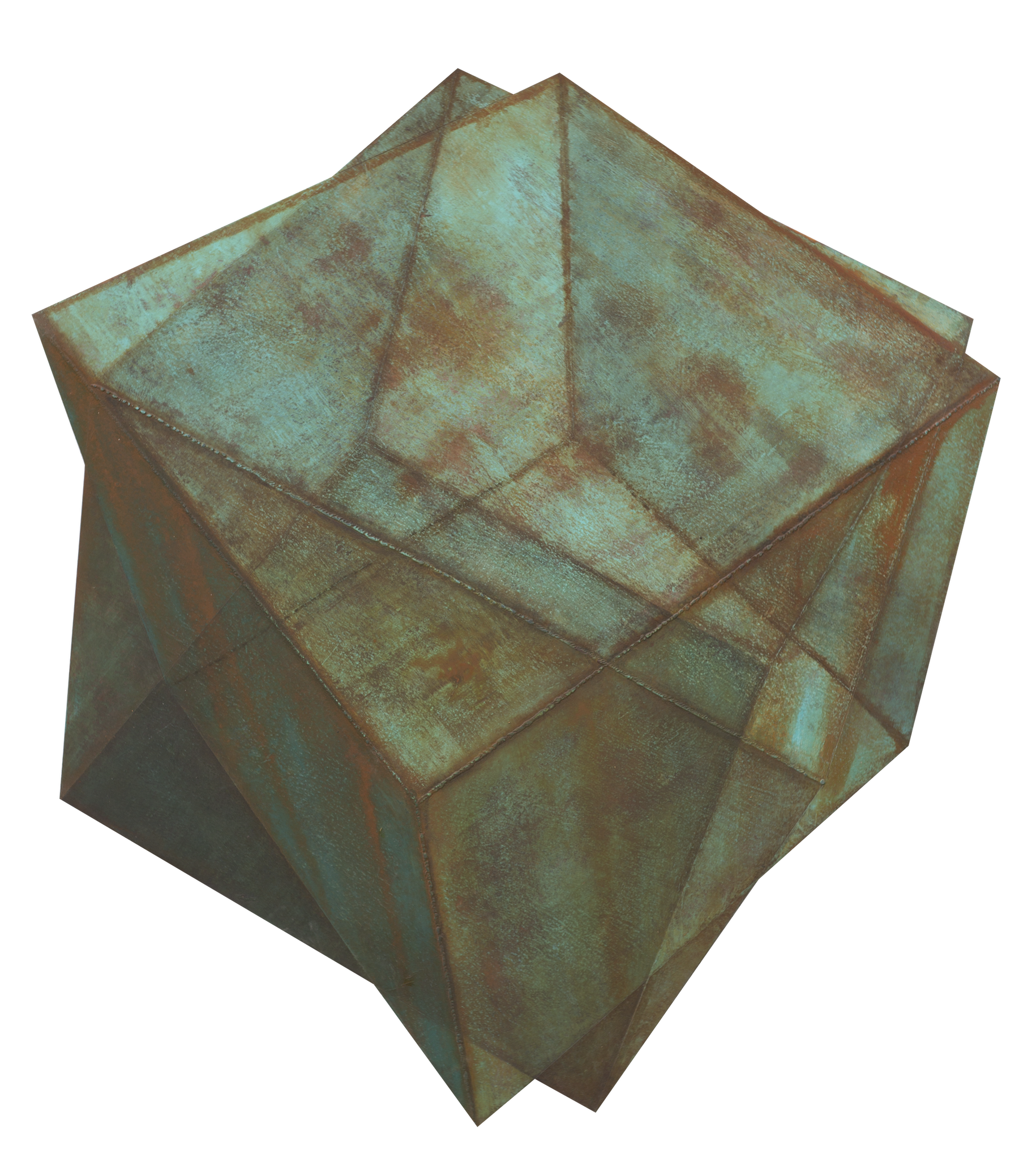
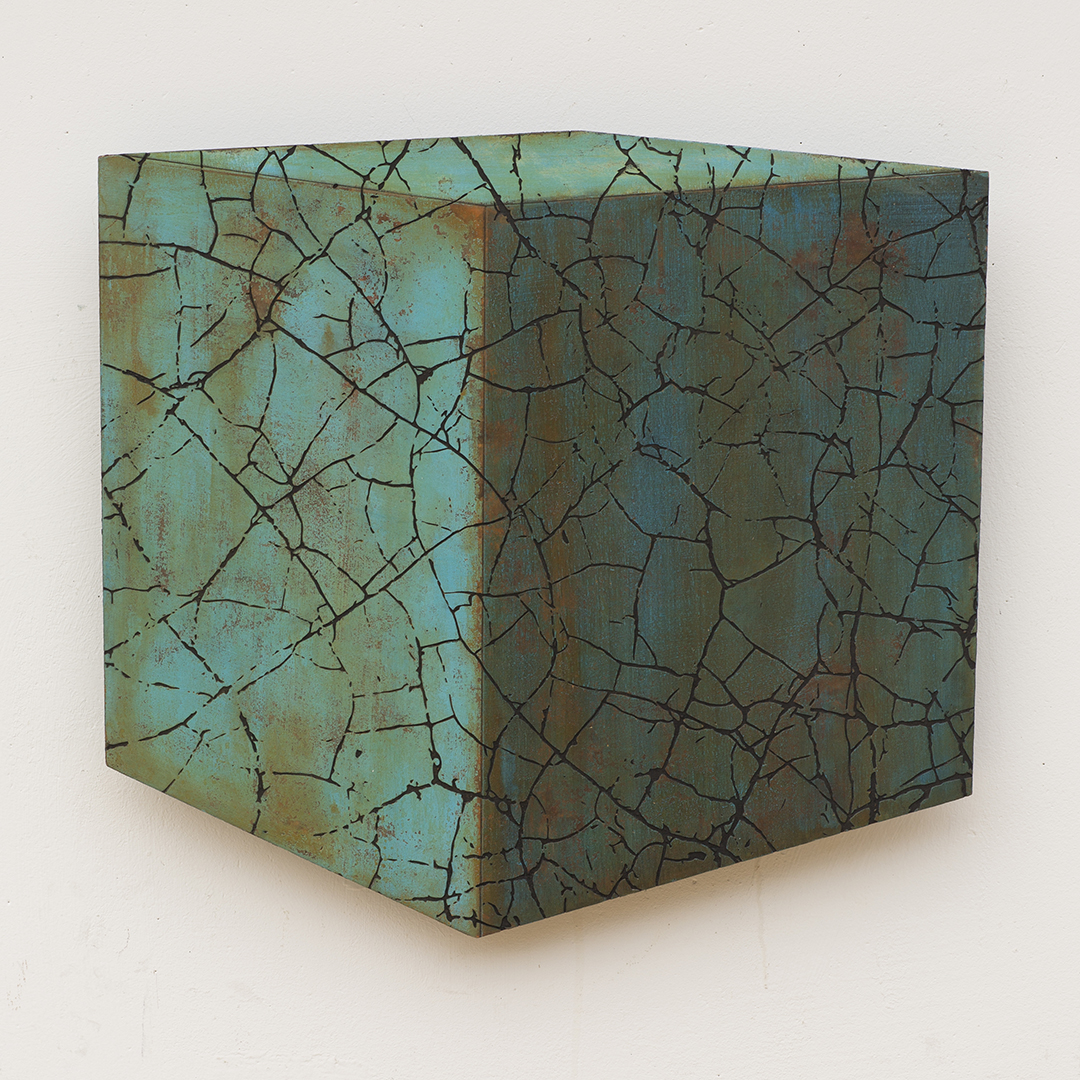
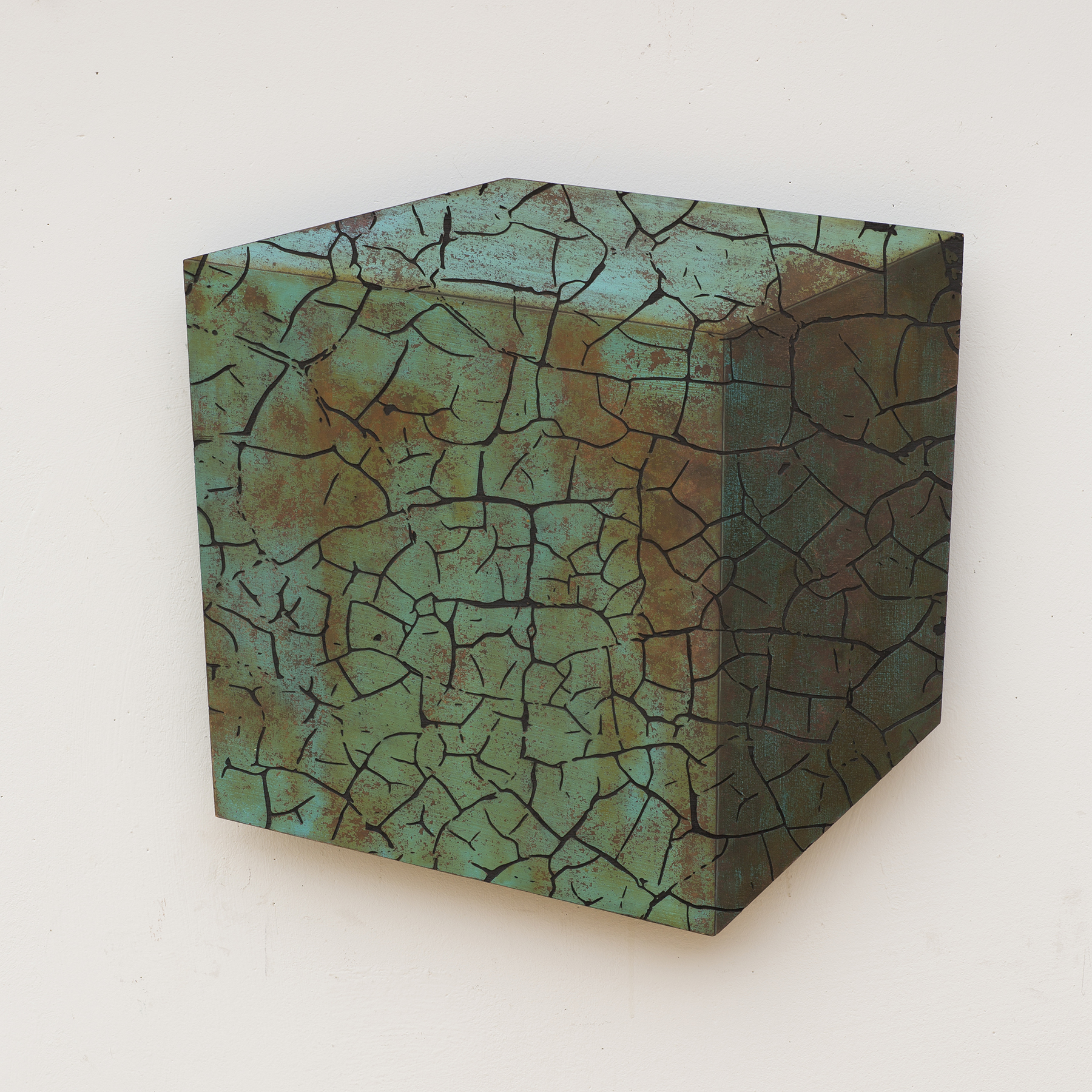


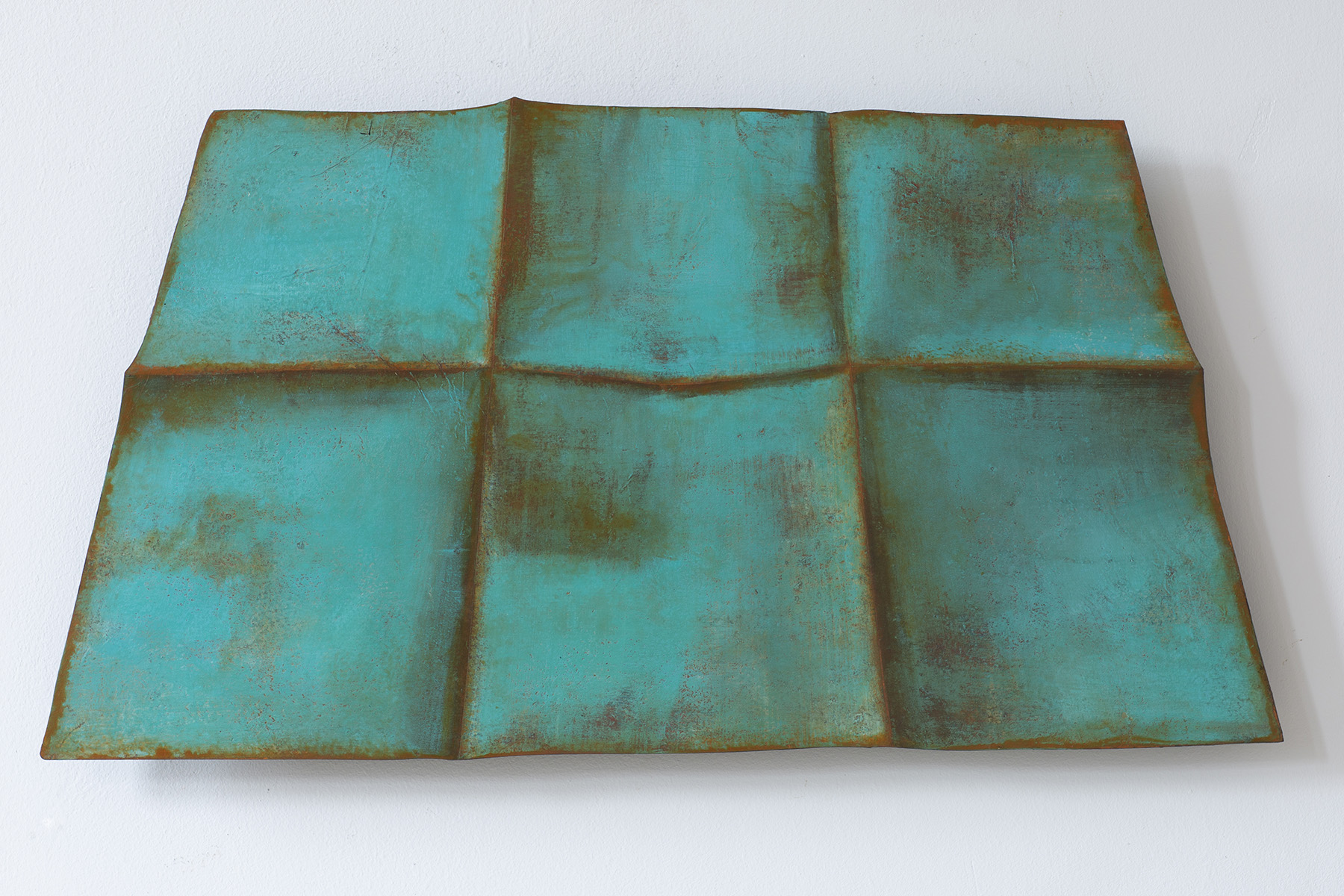
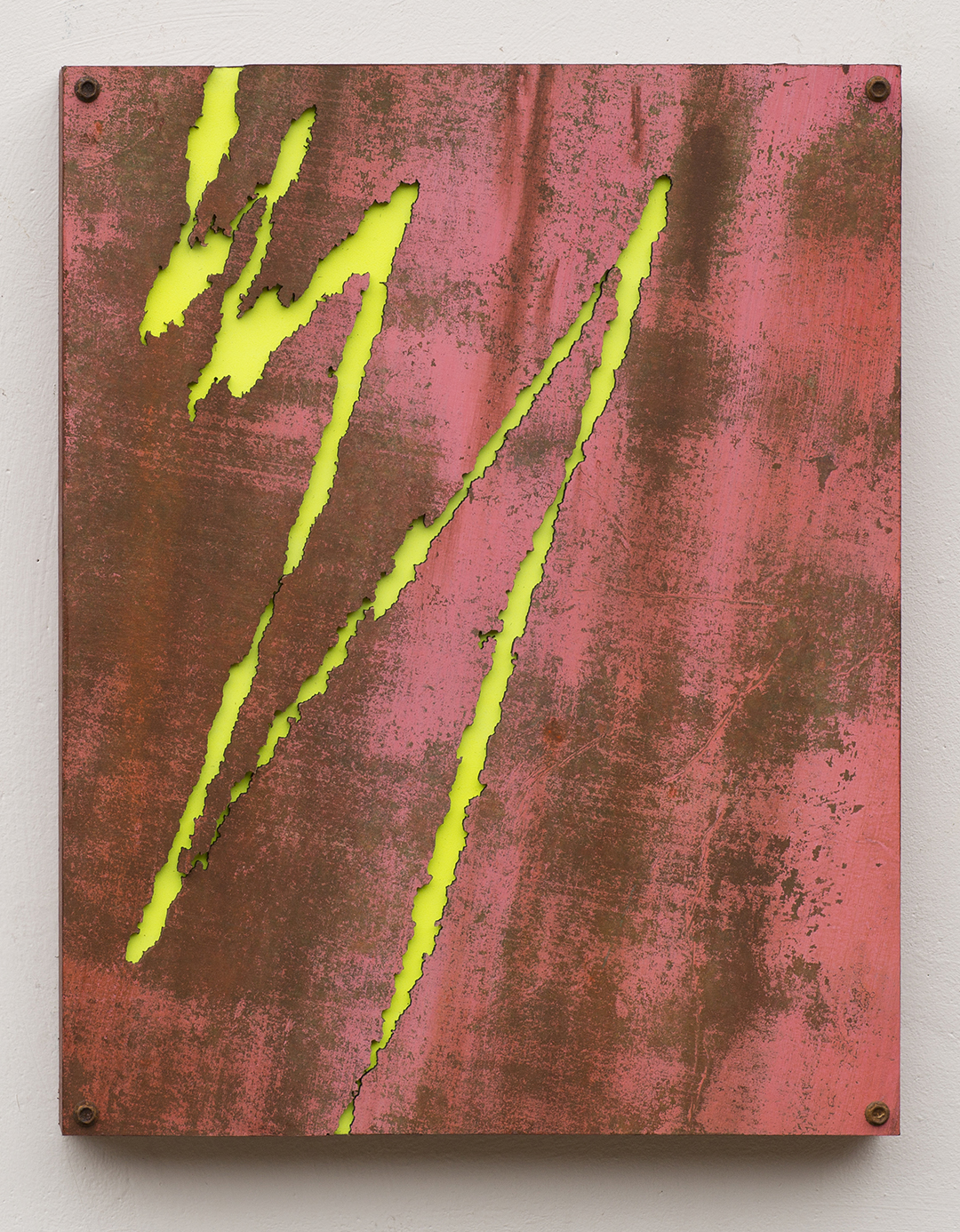
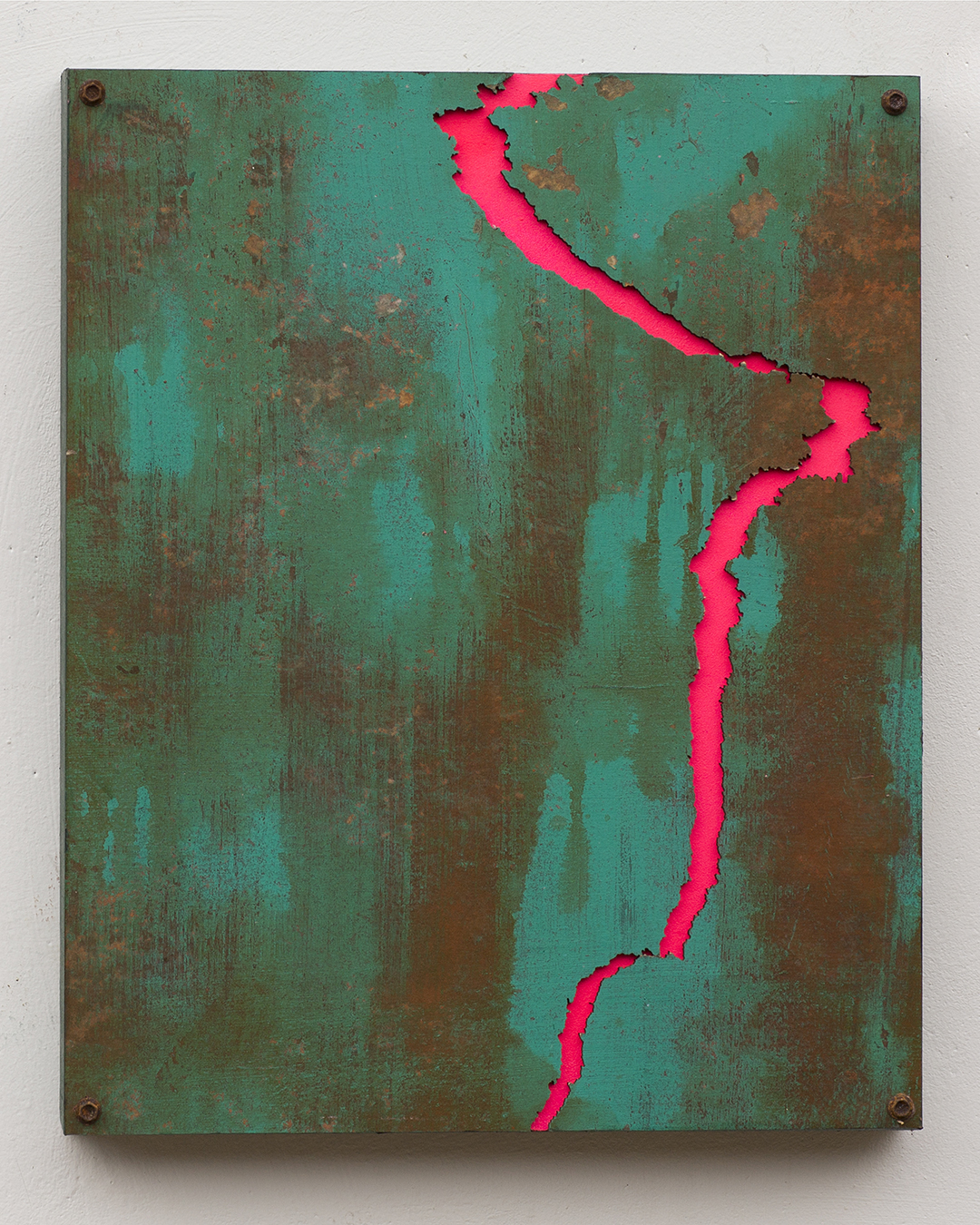
For over a decade, Fu has occupied a distinctive position within Chinese contemporary art through his signature technique of transforming paper, one of the most humble and fragile substrates, into meticulously crafted simulacra of oxidized and corroded metal. His earlier works demonstrated perfect mastery of material deception, deploying traditional construction and meticulous textural rendering to create what appeared to be decomposing industrial surfaces bearing the temporal inscription of rust, wear, and obsolescence. In this new body of work, however, Fu abandons representation entirely in favor of a radical methodology that positions Light itself as both generative medium and conceptual subject of the practice.
Fu Shuai posits that in our contemporary hyperreal condition, where the virtual has not simply infiltrated but exhaustively colonized and rewritten the material world, the role of the artist is no longer to represent illusion through mimetic skill but to document the ontological collapse between the dimensional and the flat, the physically present and the photographically recorded, the materially existing and the purely optical.
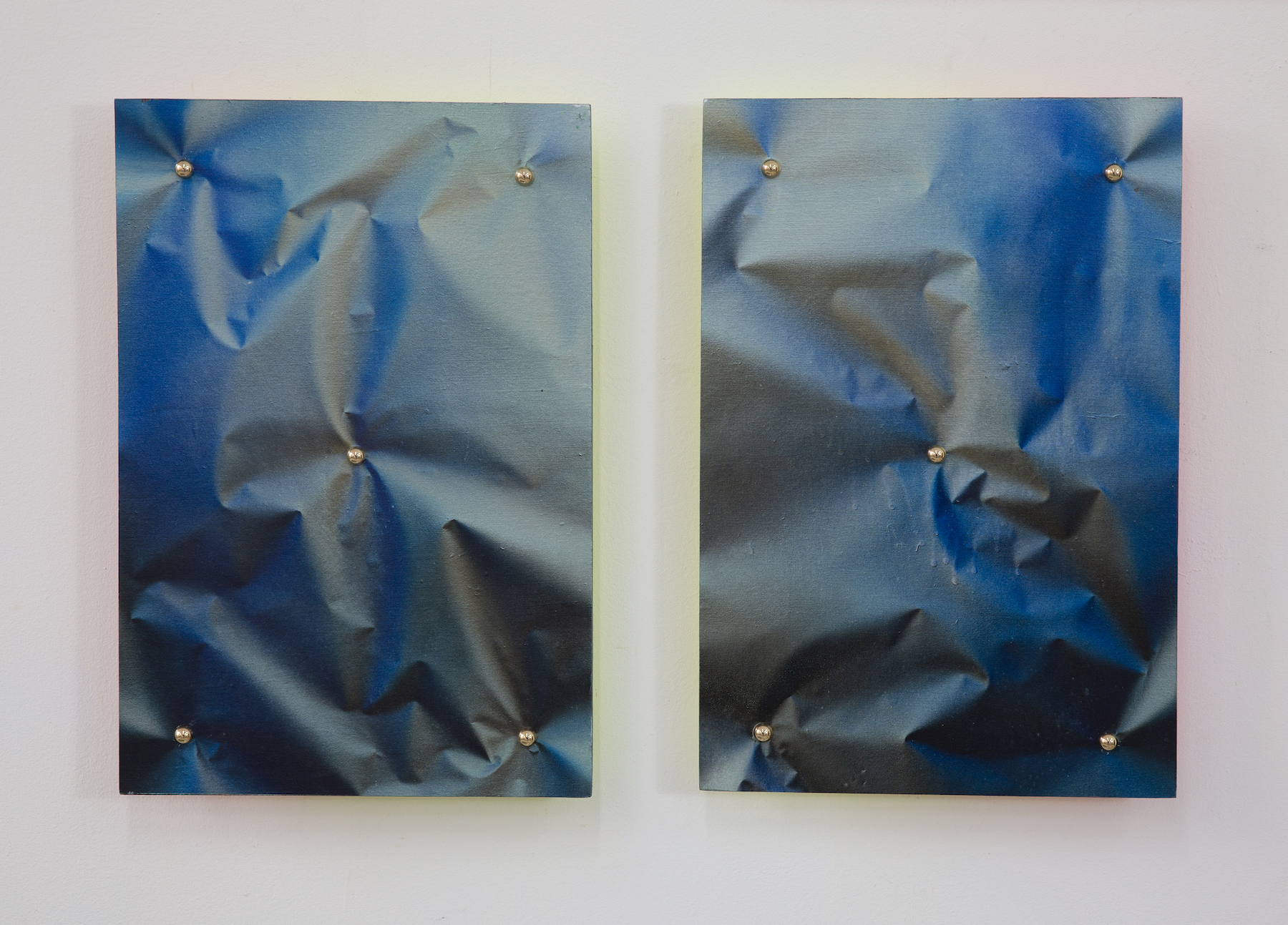
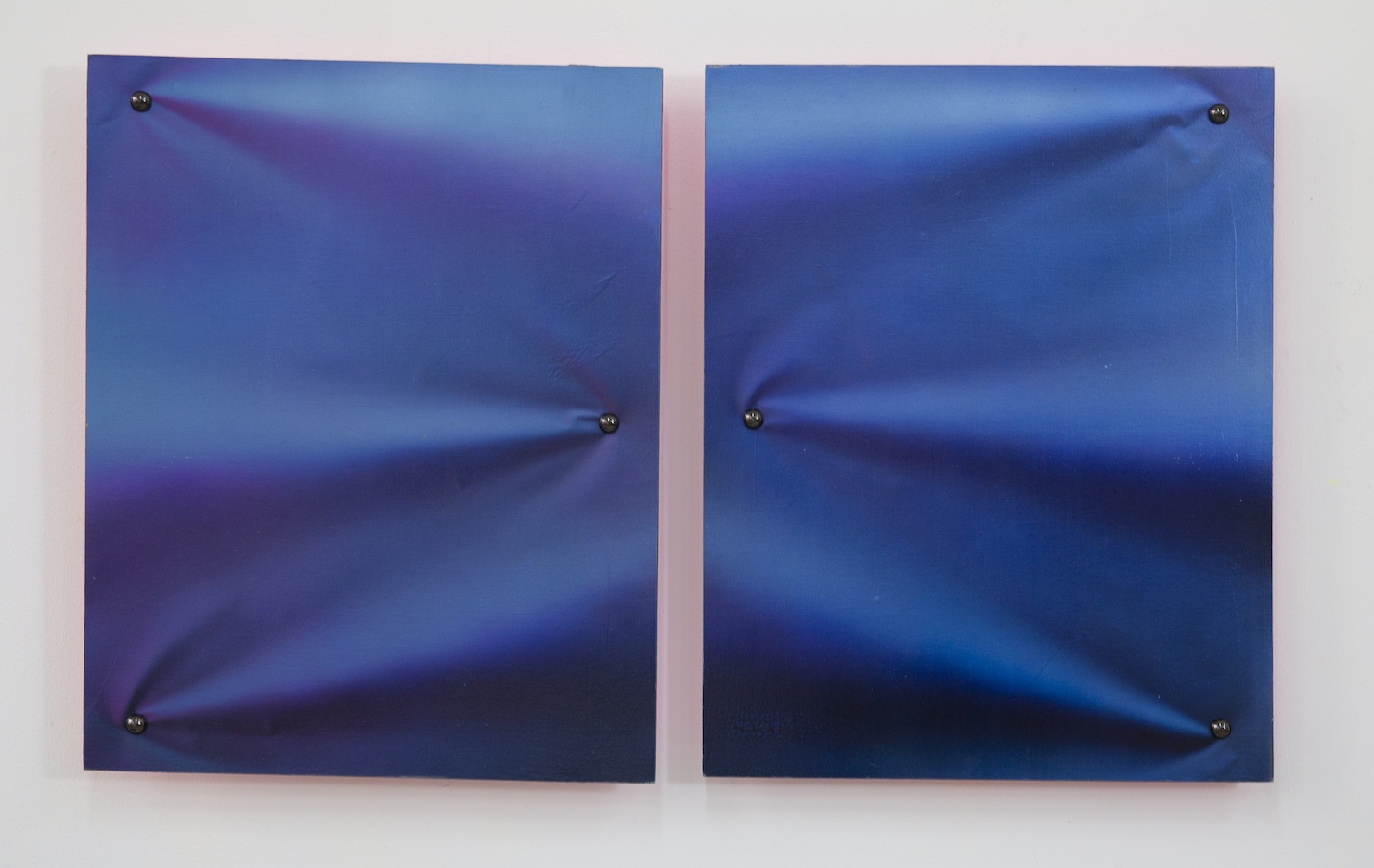
In his last series of works Fu Shuai introduce a technical innovation that he calls "reverse engineering," a process that fundamentally inverts the traditional relationship between painting and its referent. Fu does not simply translate volume through the classical means of chiaroscuro and perspective: he constructs a real spatial presence in order to then collapse it into the two-dimensional plane, without losing its original radiance. The methodology unfolds in three distinct stages: first, paper is physically crumpled, folded, and compressed to construct an actual volumetric form; next, an airbrushed pigment, often incorporating metallic particles that respond dynamically to ambient light, is applied from a single, predetermined viewpoint, allowing the paint to function not as a descriptive medium but as a recording apparatus; finally, the paper substrate is carefully unfolded and flattened, returning the three-dimensional object to the pictorial plane while preserving what Fu evocatively terms the "light-shadow memory" of its brief existence in space. This approach situates the work in a hybrid zone, between the indexicality of the photographic medium and pictorial fabrication, between automatic capture and human intervention. The images produced are less paintings than archives: they precisely document the encounter of light and matter in a unique spatiotemporal instant.
This technique has important consequences for how we see images today. Unlike classical trompe-l'oeil where the artist tries to deceive our eye through skill, Fu's works have a real, physical basis. The shadows and highlights we see on the canvas are not painted in an illusionistic manner: they are actual traces of a three-dimensional object, captured by the airbrush like a kind of photograph. The droplets of paint, according to Fu, function like photons striking photographic film. They faithfully record the areas exposed to light and those in shadow on the crumpled paper. When we look at these works, we don't see a simple imitation of a relief form, but the ghostly imprint of that form, a spatial presence that has been transformed into pure image. Fu doesn't create illusions, he unveils them. He reveals the hidden depth in the flat surfaces of our screen-based world.
Fu Shuai's practice is a sustained archaeological investigation of the epistemological crisis that defines contemporary visual culture. We inhabit a moment, in which the deceptiveness of visual perception is no longer simply an optical game but our fundamental existential condition. When painting appears more materially convincing than physical reality, when flat illusions prove more dimensionally persuasive than authentically three-dimensional entities, when industrial surfaces evoke organic processes more effectively than nature itself, we are not simply confronted with the virtuosity of an individual artist but with the essential character of a world in which images have definitively supplanted material presence. Fu's practice neither laments this condition nor offers nostalgia for an unmediated relationship to the real. Instead, through its rigorous material investigations and conceptual precision, it provides the analytical tools necessary to navigate and critically understand our contemporary landscape that is hype realistically simulated, absolutely hyper realistic.

1985 Born in Taiyuan, Shanxi Province, China P.R.
2008 Bachelor Degree, Tianjin Academy of Fine Arts, Major in Free Painting Department
2010 Exchange student at Staatliche Akademie der Künste Karlsruhe, study under Prof. Leni Hoffmann
2011 Master Degree, Free Painting Department, Tianjin Academy of Fine Arts, study under Prof. Deng Guoyuan
SOLO EXHIBITIONS
2026
The Intermediate State FU SHUAI Solo Exhibition, Art+ Shanghai Gallery
2025
Negotiated Ecologies: Neon, Lakes, and Landfills, TOKU Gallery, Nanjing, China
2022
Zeittief Gegittert, TOKU Gallery, Nanjing, China
2021
2½D, Art+ Shanghai Gallery, Shanghai, China
2019
The Logic of the Iron Cage, Linda Gallery, Beijing, China
Xia Xi, Art+ Shanghai Gallery, Shanghai, China
2017
Visuality & Crevice, SunSun Gallery, Tianjin, China
2016
Fu Shuai: The Anomalous Order, Asia Art Center, Beijing, China
2012
Get Lucid, Kunstverein Letschebach, Durlach, Germany
GROUP EXHIBITIONS
2026
Between Order and Emergence, Group Exhibition, Art+ Shanghai Gallery, Shanghai
2025
Move, Slowness, Gather — Second Skin, TOKU Gallery, Nanjing, China
Paper Weights, Art+ Shanghai Gallery, Shanghai, China
The Vine of Perception: A Dialogic Show of Sino-French Artists, Pascal Art Gallery, Tianjin, China
2023
The Surge of Forms, hiart space, Shenzhen, China
Diversity of Forms, Sailing Space, Shanghai, China
Gone to See a Man About a Dog, Luisenstr. 32, Karlsruhe, Germany
2022
The 4th Academic Experimental Art Documentary Exhibition, Ceramic Art Avenue Art Gallery, Jingdezhen, Jiangxi, China
2021
Seasons Insight, Mountain Art Foundation + Frank Lin Art Center, Beijing, China
Daily Rituals, Yi Art Institute, Hefei, China
Contemplate Horizon, Linda Gallery, Beijing, China
Limited Opening, Art Museum of Nanjing Normal University, Nanjing, China
Bachelard's Room, DADE Gallery, Shenzhen, China
2020
The Signature Art Prize of Artcloud China 2019/2020 Exhibition, Shenzhen, China
2019
NINININI PENG neewhom, Gebäude im Passagehof 24, Karlsruhe, Germany
2018
Chinese Contemporary Artist TAM Nomination Exhibition, Today Art Museum, Beijing, China
XuYu — A Fleeing Moment, CIPA Gallery, Beijing, China
The Palpable Soul of the Surface, Art+ Shanghai Gallery, Shanghai, China
2017
China Spirit — The 4th China Oil Painting Exhibition (Abstract), Today Art Museum, Beijing, China
Wall Power — Wallpost Artist Exhibition, Beijing Times Art Museum, Beijing, China
Deconstructing Buyology: Remaking to Resist in an Age of Consumption, Baitasi Hutong Art Gallery, Beijing, China
Early Style Art Project, SunSun Gallery, Tianjin, China
Wall Power — The Second Wallpost Artist Exhibition, Today Art Museum, Beijing, China
Virtual is Reality, CAFA Art Museum, Beijing, China
2016
Look-15, Fuxi Art Space, Beijing, China
Old New Stand, Vacuum Gallery, Beijing, China
2015
2015 ART NOVA 100, Beijing Agricultural Exhibition Museum, Beijing, China
Youth Plus, Museum of Contemporary Art Beijing, Beijing, China
144=441, Künstlerhaus Bregenz, Bregenz, Austria
The Civil Power, Beijing Minsheng Art Museum, Beijing, China
2014
The Process in Art-1, BTTI International Art Center, Tianjin, China
1-3-301, The Home Art Project, Tianjin, China
Pluck the Laurel — Chinese New Painting Award, Hi Art Center, Beijing, China
2013
Not There — Space Regeneration Project #6, Beijing, China
Side of the Road — Space Regeneration Project #5, Tianjin, China
Look! Look! Look! — Space Regeneration Project #4, Tianjin, China
ARE YOU OK — Space Regeneration Project #3, Tianjin, China
Pass — Space Regeneration Project + Back Yard, Zibo, Shandong, China
Samt & Sonders, German Embassy in China, Beijing, China
Paper. Being Cross Year Art Exhibition, Tianjin Art Museum, Tianjin, China
2012
Spot Light, Bund18 Gallery, Shanghai, China
COME IN PLEASE — Space Regeneration Project #2, Tianjin, China
Ellipticity II, Academy of Fine Arts Karlsruhe, Karlsruhe, Germany
2011
kl_asse_Zwischenlager, Bremerhaven Art Club, Bremerhaven, Germany
2010
New Star Art Festival, Chengdu New Exhibition Center, Sichuan, China
Summer Exhibition, Karlsruhe Academy of Fine Arts, Karlsruhe, Germany